





































The cryptocurrency market continues to evolve at a remarkable pace. While Bitcoin remains the dominant store of value and Ethereum leads in smart contract innovation, investors increasingly search for promising3 Promising Altcoins to Accumulate altcoins to accumulate in 2026 that offer higher growth potential. As the digital asset ecosystem matures, attention has shifted toward networks that provide scalability, real-world utility, and infrastructure-level services.
In 2026, the focus is no longer on speculative hype alone. Market participants are evaluating blockchain fundamentals, developer activity, institutional adoption, tokenomics, and ecosystem expansion. Against this backdrop, three projects stand out for their resilience, innovation, and long-term positioning: Solana (SOL), Avalanche (AVAX), and Chainlink (LINK).
These altcoins represent different segments of the blockchain economy—high-performance Layer 1 infrastructure and decentralized oracle services—making them strategically relevant in the next phase of crypto growth. This article examines why SOL, AVAX, and LINK are among the most promising altcoins to accumulate in 2026, analyzing their technological edge, ecosystem growth, and potential market catalysts.
The 2026 Crypto Landscape: Why Altcoins Matter More Than Ever
The crypto cycle has historically rewarded early adopters of innovative networks. However, the environment in 2026 is more sophisticated. Institutional investors are more active, regulatory frameworks are clearer in major jurisdictions, and decentralized finance (DeFi) has evolved beyond experimental phases into structured financial ecosystems.
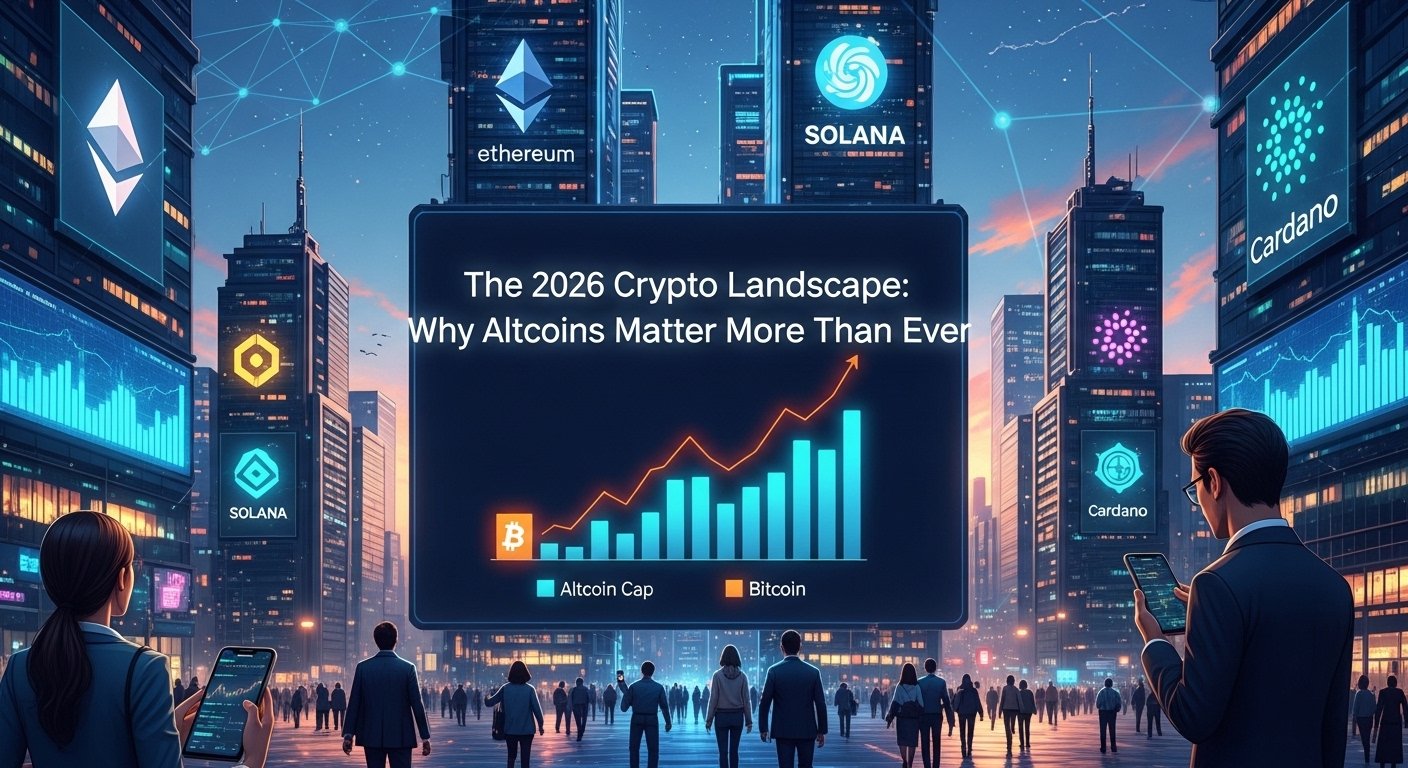
Altcoins now serve specific roles within the blockchain stack. Some act as high-throughput smart contract platforms, others power decentralized applications, and some provide critical infrastructure such as cross-chain interoperability and oracle services. As adoption increases, capital flows tend to favor networks with strong fundamentals and sustainable token utility.In this environment, identifying promising altcoins to accumulate in 2026 requires a focus on scalability, developer traction, network reliability, and long-term relevance. SOL, AVAX, and LINK meet these criteria from distinct angles.
Solana (SOL): High-Speed Blockchain Built for Mass Adoption
Solana’s Technical Architecture and Performance Edge
Solana has positioned itself as one of the fastest and most cost-efficient Layer 1 blockchains. Its unique Proof-of-History consensus mechanism, combined with Proof-of-Stake, enables high throughput and low latency. For developers building decentralized applications, this architecture translates into faster confirmation times and minimal transaction fees.
Speed and cost efficiency matter in 2026 because user expectations have shifted. Retail and institutional participants alike demand blockchain networks that perform comparably to traditional financial systems. Solana’s ability to process thousands of transactions per second gives it a competitive advantage in areas such as decentralized exchanges, NFT marketplaces, gaming, and real-world asset tokenization.
The network’s infrastructure improvements following earlier congestion challenges have strengthened investor confidence. Stability and uptime are critical metrics for institutional adoption, and Solana has demonstrated meaningful resilience.
Expanding Ecosystem and Developer Momentum
A blockchain’s long-term success depends heavily on ecosystem growth. Solana’s ecosystem includes decentralized finance protocols, NFT platforms, Web3 gaming projects, and payment integrations. Developer activity remains strong, supported by grants, hackathons, and venture funding.
In 2026, Solana’s appeal extends beyond retail traders. Institutional capital is increasingly exploring high-performance chains capable of supporting tokenized assets, stablecoins, and enterprise use cases. As digital asset infrastructure expands, SOL benefits from its utility as the native token used for transaction fees and staking. When evaluating promising altcoins to accumulate in 2026, ecosystem vitality and network usage metrics are key indicators. Solana’s growth trajectory suggests sustained relevance within the broader crypto economy.
Tokenomics and Investment Thesis for SOL
SOL’s tokenomics revolve around staking rewards and transaction fee utility. As network usage grows, demand for SOL naturally increases. Staking participation also contributes to supply dynamics by reducing circulating liquidity.
For long-term investors, the investment thesis centers on adoption growth, developer expansion, and Solana’s positioning as a scalable alternative to other smart contract platforms. While volatility remains inherent in crypto markets, SOL’s infrastructure-level importance strengthens its accumulation case.
Avalanche (AVAX): Scalable Infrastructure for Custom Blockchains
Avalanche’s Subnet Model and Institutional Appeal
Avalanche differentiates itself through its innovative subnet architecture. Subnets allow developers and enterprises to create customized blockchains tailored to specific regulatory, performance, or compliance requirements.This modular approach appeals to institutional players seeking controlled environments for tokenized securities, financial instruments, or enterprise-grade applications.
Avalanche’s consensus mechanism delivers high throughput and near-instant finality, making it suitable for financial use cases where speed and reliability are critical. In 2026, as real-world asset tokenization gains momentum, Avalanche’s flexible infrastructure positions AVAX as one of the promising altcoins to accumulate in 2026 for exposure to enterprise blockchain growth.
DeFi, Gaming, and Real-World Asset Expansion
Avalanche’s ecosystem has expanded into decentralized finance, gaming, and asset tokenization. Its compatibility with Ethereum tooling simplifies migration for developers while maintaining high performance standards.
The rise of real-world asset tokenization is particularly significant. As traditional financial assets such as bonds, equities, and real estate become tokenized, scalable and compliant blockchain networks are essential. Avalanche’s subnet model aligns with this trend, potentially driving sustained AVAX demand.
AVAX Token Utility and Long-Term Value Drivers
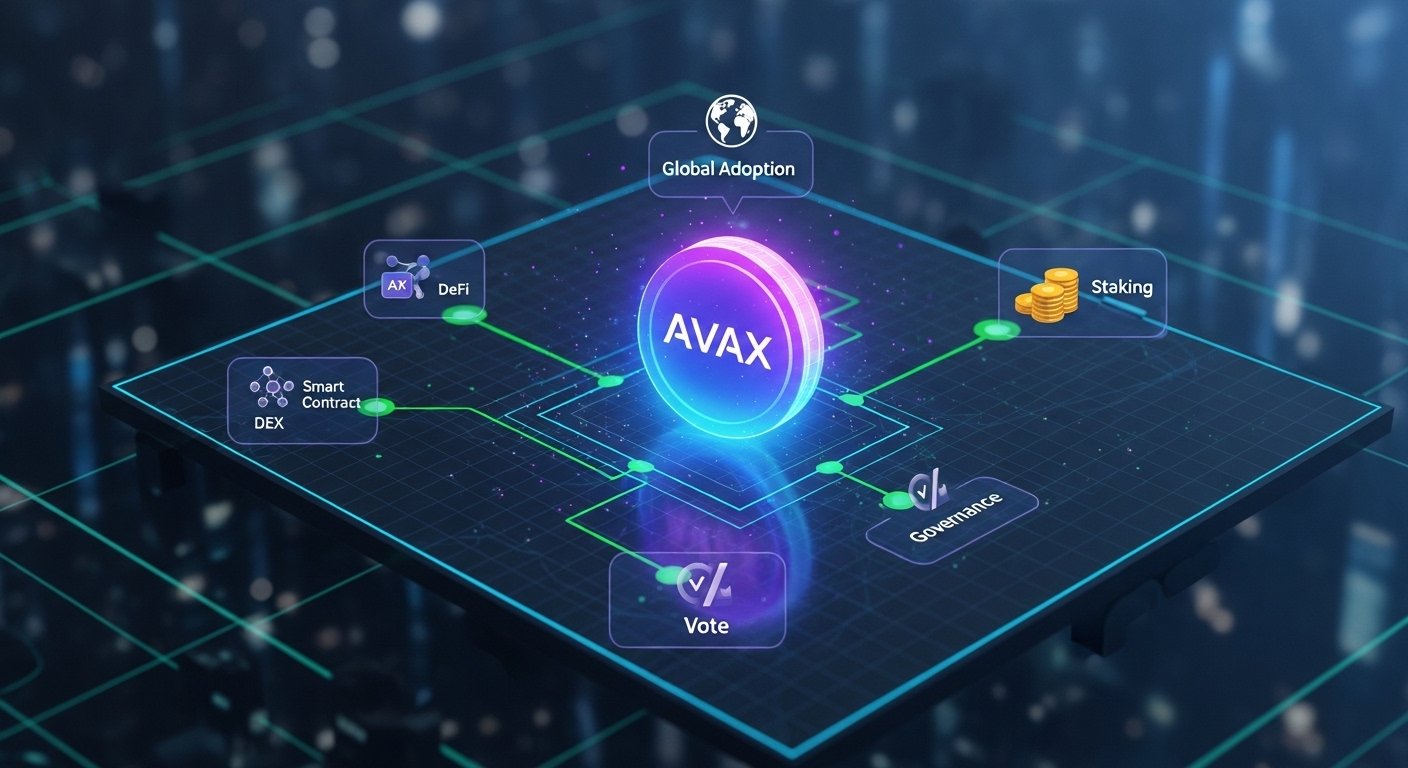
AVAX serves as the network’s utility token, used for transaction fees, staking, and subnet creation. As new subnets launch, AVAX demand can increase due to staking and operational requirements. For investors assessing promising altcoins to accumulate in 2026, AVAX offers diversified exposure. It bridges decentralized finance, enterprise blockchain solutions, and customizable infrastructure—three areas expected to grow substantially in the coming years.
Chainlink (LINK): The Backbone of Decentralized Data
Why Oracles Are Critical to Blockchain Growth
Chainlink occupies a different but equally vital role in the blockchain ecosystem. While Solana and Avalanche focus on smart contract execution, Chainlink provides secure and reliable external data to those contracts through decentralized oracle networks.
Smart contracts cannot access off-chain data independently. Chainlink bridges this gap, enabling use cases such as decentralized finance price feeds, insurance contracts, and cross-chain interoperability. As blockchain adoption expands into real-world finance and enterprise applications, oracle reliability becomes indispensable.
Cross-Chain Interoperability and Enterprise Integrations
In 2026, cross-chain communication is increasingly important. The blockchain landscape is multi-chain, with assets and applications distributed across numerous networks. Chainlink’s cross-chain interoperability solutions enhance connectivity, allowing smart contracts to communicate securely across ecosystems.
Enterprise adoption also strengthens Chainlink’s investment narrative. Financial institutions and corporations exploring tokenization require trusted data feeds and secure infrastructure. Chainlink’s established reputation in the oracle sector makes LINK a strategic accumulation candidate.
LINK Token Economics and Strategic Importance
LINK tokens are used to pay node operators for providing data services. As decentralized applications grow, demand for oracle services expands. This utility-driven demand supports LINK’s long-term value proposition.
When identifying promising altcoins to accumulate in 2026, infrastructure tokens like LINK deserve serious consideration. While less speculative than meme-driven assets, infrastructure plays a foundational role in blockchain scalability and reliability.
Comparing SOL, AVAX, and LINK: Complementary Exposure
Although SOL, AVAX, and LINK operate in different niches, they are not direct competitors. Instead, they represent complementary layers within the blockchain stack. Solana offers high-performance smart contract execution. Avalanche provides customizable infrastructure and subnet scalability. Chainlink delivers essential oracle services and cross-chain communication.
For investors constructing a diversified altcoin portfolio, exposure to multiple blockchain layers can mitigate risk. By accumulating assets that power execution, infrastructure, and data delivery, investors align with the broader evolution of decentralized technology.
Risks and Considerations Before Accumulating Altcoins
Despite strong fundamentals, altcoins remain volatile. Regulatory developments, macroeconomic conditions, and technological competition can influence price trajectories. Additionally, network upgrades and ecosystem shifts can alter long-term outlooks.
Investors evaluating promising altcoins to accumulate in 2026 should conduct thorough research, assess risk tolerance, and consider dollar-cost averaging strategies. Portfolio allocation should reflect individual financial goals and time horizons.
Long-Term Outlook for Altcoins in 2026 and Beyond
The narrative around altcoins has matured. Rather than focusing solely on short-term price action, investors now examine developer growth, network activity, and institutional engagement.
Solana’s scalability, Avalanche’s modular infrastructure, and Chainlink’s oracle dominance position them as structurally relevant assets. As blockchain technology integrates more deeply into finance, gaming, and enterprise systems, these networks could benefit from sustained adoption.
Accumulating promising altcoins to accumulate in 2026 is not merely about chasing momentum. It involves identifying blockchain ecosystems that demonstrate technological durability, strategic partnerships, and real-world utility.
Conclusion
As the cryptocurrency market evolves in 2026, selecting the right altcoins requires a disciplined, fundamentals-driven approach. Solana (SOL), Avalanche (AVAX), and Chainlink (LINK) stand out due to their technological strengths, expanding ecosystems, and infrastructure-level importance.
Solana delivers speed and scalability for decentralized applications. Avalanche offers customizable subnets and enterprise adaptability. Chainlink underpins the entire ecosystem by enabling secure off-chain data integration.
Together, these three projects represent distinct yet interconnected pillars of the blockchain economy. For investors seeking promising altcoins to accumulate in 2026, SOL, AVAX, and LINK offer compelling exposure to the next phase of crypto innovation.
FAQs
Q: Why are SOL, AVAX, and LINK considered promising altcoins to accumulate in 2026?
They address critical blockchain needs: scalability, customizable infrastructure, and decentralized data services. Their established ecosystems and growing adoption strengthen long-term investment potential.
Q: Is Solana a good long-term investment?
Solana’s high-speed architecture, active developer community, and expanding ecosystem position it as a strong Layer 1 contender, though investors must consider volatility and competition.
Q: What makes Avalanche different from other smart contract platforms?
Avalanche’s subnet model allows customizable blockchains tailored for enterprises and specific use cases, providing flexibility that many competitors lack.
Q: Why is Chainlink important in the crypto ecosystem?
Chainlink enables smart contracts to access real-world data securely through decentralized oracles, making it essential for DeFi, tokenization, and cross-chain interoperability.
Q: Should I diversify when accumulating altcoins in 2026?
Diversification can reduce risk. Holding assets across different blockchain layers—such as execution, infrastructure, and oracle services—may provide balanced exposure within the crypto market.
Also More: Crypto Market Rally Why Bitcoin and Altcoins Are Surging