


































The word “altseason” gets thrown around a lot, but few traders pause to define what it actually looks like under the hood. An altseason is not just a moment when a couple of buzzy tokens double overnight; it’s a sustained period when altcoins across sectors outperform Bitcoin on a risk-adjusted basis. Historically, this phase has unfolded after liquidity returns to crypto, Bitcoin dominance bends lower, and capital rotates down the risk curve from BTC to higher-beta assets. If you understand the signals, you can prepare a watchlist, time entries more intelligently, and manage risk without succumbing to the hype.
This guide explains the core indicators that hint a potential altseason is forming, the categories of top altcoins to watch, and how to translate market structure into a disciplined plan. You will also learn how on-chain metrics, funding rates, open interest, network activity, and stablecoin supply add context to the charts. The goal is a practical framework: read the signs, assemble a thesis, and execute with clarity. While nothing here is financial advice, these ideas will help you filter noise, identify credible momentum, and avoid the pitfalls that often arrive when crypto market cycles accelerate. Let’s start by defining what an altseason really is—and isn’t.
What Exactly Is an Altseason?
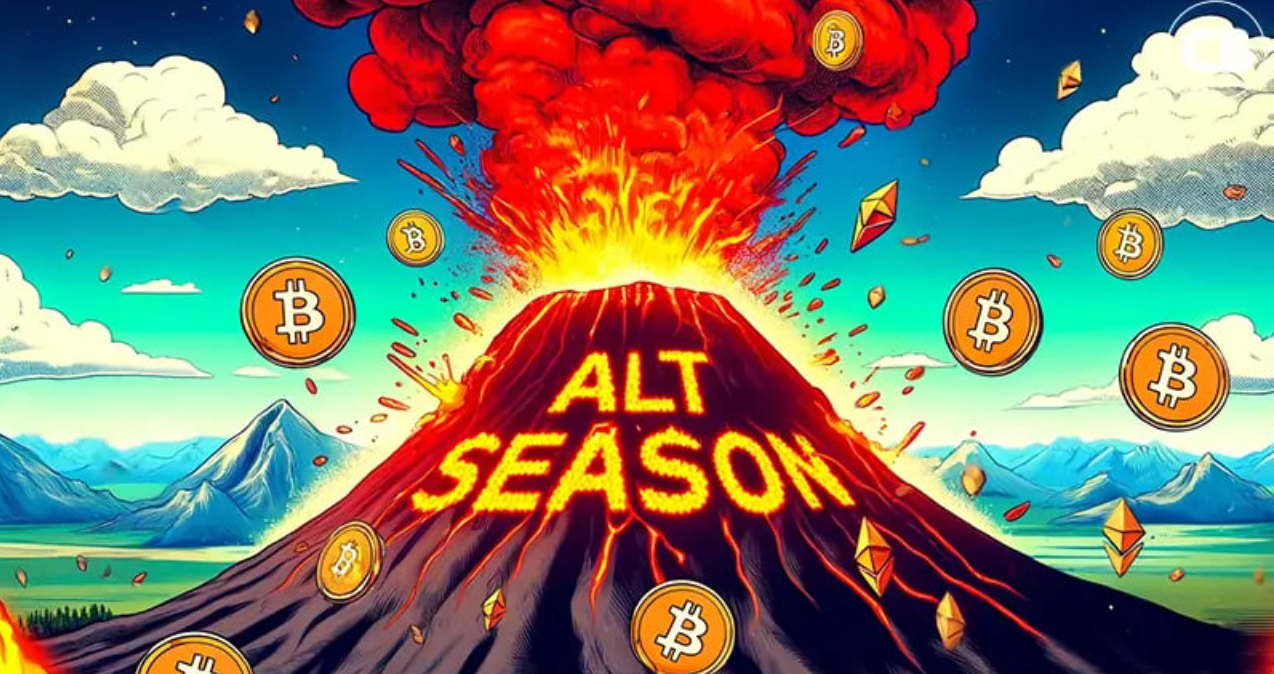
An altseason is a market phase when altcoins broadly outperform Bitcoin for weeks or months, not just days. You’ll often see the total crypto market cap excluding BTC expanding faster than Bitcoin’s market cap, while BTC consolidates or trends up more slowly. In other words, altseason typically requires a bullish or at least constructive backdrop rather than a fearful one. Traders crowd into higher beta assets because volatility is rewarded and the liquidity environment is supportive.
Crucially, altseason is not the same as a meme-coin week or a single sector pump. It’s wider participation: Layer-1 and Layer-2 protocols, DeFi blue chips, interoperability plays, oracles, gaming tokens, and even later-cycle NFT infrastructure can rally in overlapping waves. Breadth matters. If the rallies are narrow and fleeting, the conditions may not be robust enough yet.
The Core Signals That Hint an Altseason Is Brewing
Bitcoin Dominance Rolling Over
A classic tell is when Bitcoin dominance stalls and begins to trend lower while Bitcoin’s price holds steady or grinds up. This implies capital is rotating rather than exiting crypto altogether. Traders feel confident enough to move down the risk ladder, allocating to altcoins with higher potential upside. Watch for lower highs on dominance charts during multi-week periods; when that aligns with rising total market cap, you’ve got a stronger signal.
Total Market Cap ex-BTC Accelerating.
Track the total crypto market cap excluding Bitcoin. Sustained higher highs and higher lows—especially breaking above prior cycle resistance—suggest altcoins are attracting fresh bids. When this metric outpaces Bitcoin’s growth for a meaningful stretch, it indicates a secular rotation rather than a short-lived chase.
Stablecoin Supply and Liquidity Expansion
Altseasons thrive on liquidity. Growth in stablecoin supply, rising spot volumes, and deeper order book liquidity reflect new or reactivated capital. Stablecoin inflows often serve as dry powder for risk-on rotations. Combine this with improving depth-of-market conditions, and you have fuel for multi-sector moves.
On-Chain Activity and Network Fees
Healthy altseason setups usually coincide with rising on-chain activity, spiking transaction counts, elevated network fees on busy chains, and swelling TVL (Total Value Locked) in DeFi. Pay attention to active addresses, new addresses, and smart contract interactions. If usage is expanding while the open prices are based on or trending, the alignment is constructive.
Derivatives: Funding Rates and Open Interest
Derivatives don’t cause altseasons, but they reveal positioning. Moderately positive funding rates and rising open interest in altcoin perpetuals suggest sustained interest without extreme leverage. When funding becomes overly frothy across the board, corrections often follow. Use derivatives data as a risk thermometer rather than a standalone buy signal.
Social and Developer Activity
Search trends, social sentiment, and developer commits aren’t foolproof, but they help confirm narrative strength. If a sector’s GitHub activity and dev-ecosystem metrics are trending up while social chatter grows more informed (not just euphoric), it bolsters the quality of the move. Pair soft signals with harder metrics like usage and liquidity.
Top Altcoins to Watch by Theme
Layer-1 Smart Contract Platforms
Competition among Layer-1 networks ebbs and flows with throughput, fees, tooling, and developer mindshare. In an altseason, credible L1s often lead early because they capture both speculation and real users. If fees are low, blockspace is abundant, and apps are shipping, the conditions are favorable. Monitor validator decentralization, security track records, and tokenomics such as staking rewards and inflation schedules. Stability, speed, and ecosystem health separate substance from sizzle.
Layer-2 Scaling Solutions
As demand for blockspace rises, Layer-2 systems—rollups, validiums, and state channels—benefit from cost efficiency. Track bridged asset growth, unique users, and sequencer revenue as proxies for adoption. Builders want cheaper, faster rails without sacrificing security assumptions. If L2 fee markets heat up and the data availability stack matures, downstream applications—from DeFi to gaming—can flourish.
DeFi and Liquid Staking
When risk appetite returns, DeFi blue chips frequently re-rate. Watch DEX volumes, lending utilization, liquid staking penetration, and yield sustainability. Protocols with proven token sinks, balanced emissions, and sticky TVL often outperform during sustained cycles. Cross-chain liquidity and composability can be a catalyst when bridges are stable and audits are robust.
Real-World Assets (RWA)
Tokenized real-world assets—from treasuries to credit instruments—have evolved from concept to production. In better liquidity conditions, RWAs can anchor yields, attract institutions, and deepen on-chain collateral markets. Assess issuer credibility, custody, legal structure, and oracle design. If RWA rails scale safely, more capital can cycle into adjacent categories.
Interoperability and Modular Stacks
Interoperability is the connective tissue. Cross-chain messaging, modular blockchains, and shared security frameworks enable liquidity and users to migrate more fluidly. Keep an eye on relayer economics, light client progress, and sovereign rollup adoption. When these primitives harden, they expand the addressable market for many altcoins simultaneously.
AI + Crypto
The AI + crypto intersection is still young but increasingly compelling. Compute marketplaces, decentralized inference, and data provenance layers are drawing developer attention. Here, you need to separate marketing from math: verify throughput, latency claims, and real integrations. If oracles, verifiable compute, and scalable storage align, the category can outpace during risk-on windows.
Oracles, Data Availability, and Indexing
Behind every dApp is data. Oracles secure price feeds and external events; data availability solutions keep rollups honest; indexers make blockchain data queryable. These are infrastructure-heavy plays where adoption is visible via integrations, requests per second, latency, and reliability SLAs. During an altseason, as application load grows, the picks-and-shovels often appreciate.
Gaming and NFT Infrastructure
It’s tempting to chase eye-catching NFT floors or viral games, but the more durable plays tend to be infrastructure: wallet UX, SDKs, marketplaces, and scaling tuned for game loops. Track daily active users, retention, and in-game economy health. If fees are negligible and onboarding is seamless, sticky growth can follow price.
How to Build a Watchlist and Entry Strategy
Start with Narratives, Then Validate with Data
Begin with a thesis: perhaps Layer-2 expansion plus DeFi revivals. Draft a watchlist that samples leaders and credible challengers. Then, validate with on-chain metrics, developer activity, and liquidity signals. You are looking for alignment between story and statistics.
Tokenomics and Emissions Matter
A brilliant product can be kneecapped by poor tokenomics. Study emission schedules, vesting cliffs, treasury management, staking, and buyback/burn mechanics. A token drowning in emissions may face constant sell pressure even during a bullish backdrop. Conversely, tokens with measured issuance and genuine utility sinks can outperform.
Liquidity, Depth, and Listings
Thin liquidity can exaggerate moves both ways. Prefer assets with meaningful spot volumes, deep order books, and reputable listings. Spread your orders to avoid slippage, and note when market makers are active. In altseason, liquidity can appear quickly—but it also vanishes quickly during drawdowns.
Chart Structure and Market Regimes
Use technicals to refine timing. Look for high-timeframe bases, clear breakers, constructive retests, and rising relative strength versus BTC and ETH. When funding rates are moderate and open interest grows steadily, breakouts have better follow-through. Avoid entries into vertical candles; wait for consolidations that respect prior resistance as support.
Risk Management and Sizing
Altseason can feel like a money printer—right up until it doesn’t. Define invalidations, set stop losses, and size positions so a string of losses is survivable. Consider tiered profit-taking into strength, and keep a cash or stablecoin buffer for volatility. If the thesis breaks—say Bitcoin dominance surges—reduce risk and reassess.
Case Studies from Previous Cycles (What They Teach)
In prior cycles, altseasons often followed a period when Bitcoin led aggressively out of a bear market. After BTC consolidated, capital rotated. DeFi summer showed how TVL growth and yield innovation can ignite a sector. Later, NFT infrastructure runs illustrated how user experience and cultural narratives pull in new demand. In each case, breadth expanded, derivatives interest rose, and stablecoin inflows underpinned spot bids. When funding overheated, sharp mid-cycle corrections cleared leverage before trends resumed. The lesson: altseason is a sequence of rotations, not a single event. Anticipate the baton pass from L1s to L2s to application layers, and position with discipline.
Red Flags and Mistakes to Avoid
The biggest trap is conflating weekly meme-coin surges with market-wide rotation. If Bitcoin dominance keeps climbing, it’s not altseason. Beware low-float tokens with aggressive emissions, opaque treasuries, and unaudited contracts. Watch out for wash trading, mercenary liquidity, and influencer-driven pumps. If funding rates go vertical across many pairs and open interest spikes without spot confirmation, the odds of a flush increase. Finally, avoid narratives that lack concrete on-chain adoption—downloads, users, revenue, and integrations must show up somewhere measurable.
A Practical Altseason Checklist
First, confirm regime: a rising total market cap ex-BTC, stalling Bitcoin dominance, and growing stablecoin supplies indicate constructive rotation. Second, validate participation: multiple sectors showing improvement in on-chain activity, TVL, and developer momentum. Third, test durability: moderate funding, rising but not euphoric open interest, and healthy spot volumes. Fourth, select leaders: strong relative strength, clear market structure, sensible tokenomics, and sufficient liquidity. Fifth, define risk: pre-planned invalidations, sane position sizing, and rules for profit-taking.
See More: Top Altcoins to Watch in 2025: A Comprehensive Guide for Smart Crypto Investors
Category Spotlights: What to Watch Within Each Theme
Throughput, Fees, and Ecosystem Gravity
For Layer-1 platforms, performance metrics matter. As demand rises, can the network maintain low latency and predictable fees? Are developers shipping wallets, tooling, and SDKs that reduce friction? Are validators decentralized with strong client diversity? Protocols that scale without compromising security often absorb capital first during altseason.
Sequencers, Bridges, and DA
Layer-2 solutions win when they deliver cheaper blockspace with robust safety guarantees. Monitor sequencer reliability, withdrawal times, and bridge security. As data availability options expand, L2 cost curves improve, and applications gain headroom. If users migrate en masse and fee markets heat up, L2 tokens can capture value via revenue, staking, or governance—depending on token design.
DeFi: Sustainable Yields and Real Revenue
The best DeFi protocols knit together strong unit economics and credible revenue share or buyback policies. Track DEX volumes, liquidity mining incentives, and risk frameworks for lending markets. Protocols that serve as collateral hubs or payment rails become harder to dislodge, attracting sticky TVL during altseason.
RWA: Bridges to Traditional Yield
In RWA, tokenization pipelines, issuer transparency, and compliance guardrails are critical. When macro yields fall or risk appetite rises, RWA platforms can still anchor portfolios. If credit primitives mature on-chain and oracle integrity holds, RWAs can spark a second-order boom in DeFi credit markets.
AI + Crypto: Verifiable Compute and Data Quality
AI requires verifiable inputs and computation. Networks that offer proof-of-compute, data provenance, or privacy-preserving inference may stand out. Partnerships with model providers and credible benchmarks can separate durable platforms from fleeting hype.
Oracles, DA, and Indexing: The Middleware Moat
Middleware is sticky. Once integrated, oracles and indexers are costly to replace, creating a moat. Reliability, latency, and SLA adherence become competitive advantages. As altseason drives usage, reliable middleware captures value as critical infrastructure.
Gaming & NFTs: Onboarding and Retention
For gaming, look for daily active users, retention cohorts, and seamless onboarding. Custodial or smart-account wallets, gas abstraction, and in-game marketplaces help convert curiosity into engagement. In NFT infrastructure, royalty mechanics and creator tools can catalyze healthier ecosystems beyond speculative cycles.
Building Your Personal Altcoin Playbook
Construct a process you can repeat. Start each week by reviewing Bitcoin dominance, market cap ex-BTC, and stablecoin flows. Scan sector-level charts to spot emergent relative strength. Read developer updates and roadmaps to anticipate catalysts. Maintain a top-tier list and a farm-team list, promoting tokens when data validates the story and demoting when it doesn’t. Document entries, invalidations, and post-mortems. The discipline turns volatility into opportunity.
Risk, Time Horizons, and Psychology
Altseason rewards patience and punishes impatience. If you chase vertical candles, you volunteer for drawdowns. If you anchor to a thesis and ignore new data, you court avoidable losses. Manage horizons: long-term conviction pairs well with dollar-cost averaging into strong bases; short-term trading demands crisp rules and faster exits. Recognize the psychological cycle—fear of missing out peaks near tops, while skepticism lingers at bottoms. Your edge is preparation plus probabilistic thinking.
Conculsion
A potential altseason doesn’t arrive with a welcome banner. It emerges from a set of consistent signals: weakening Bitcoin dominance, strengthening total market cap ex-BTC, expanding stablecoin supply, rising on-chain activity, and constructive derivatives positioning. Within that backdrop, the top altcoins to watch tend to cluster in credible themes—Layer-1, Layer-2, DeFi, RWA, interoperability, AI + crypto, oracles, and gaming/NFT infrastructure. Combine narrative awareness with hard data, respect risk, and let the market confirm your thesis. When in doubt, zoom out: altseason is a phase within broader crypto market cycles. Read the signs, write your plan, and execute it with consistency.
FAQs
Q: What is the simplest indicator that altseason may be starting?
A multi-week rollover in Bitcoin dominance alongside rising total market cap ex-BTC is the cleanest tell. It implies rotation rather than flight from crypto and often precedes broad altcoin outperformance.
Q: How important are on-chain metrics in timing entries?
They’re valuable for confirmation. Increasing active addresses, transaction throughput, fees on busy chains, and growing TVL in DeFi support the idea that demand is real, not purely speculative. Pair them with price structure and liquidity data.
Q: Should I focus on one sector or diversify across themes?
Diversifying across strong themes—Layer-2, DeFi, RWA, interoperability, or AI + crypto—can reduce idiosyncratic risk while still capturing upside. Size positions according to conviction, tokenomics, and liquidity.
Q: How do derivatives like funding rates factor into risk?
Moderately positive funding rates with steady open interest can support trends, but extreme funding across many pairs often precedes pullbacks. Treat derivatives as a sentiment gauge, not a standalone trigger.
Q: What are the biggest mistakes traders make during altseason?
Chasing parabolic moves, ignoring emission schedules, underestimating liquidity risk, and neglecting invalidations. Another common error is treating a narrow pump as proof of market-wide rotation. Demand breadth and data before sizing up.