





































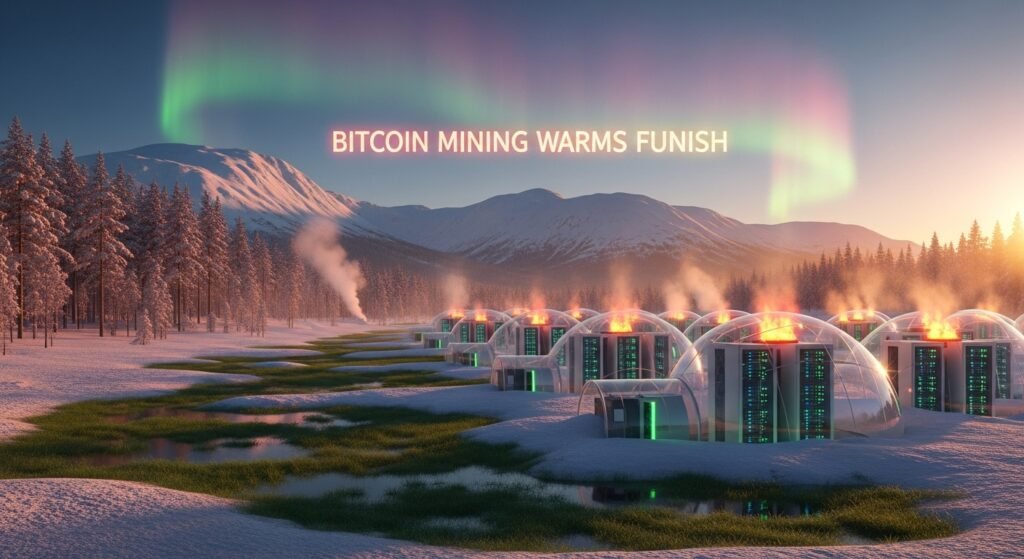
People often describe Bitcoin mining as a distant industrial process—loud warehouses, endless machines, and tight margins. Finland tells a more practical story. Many households now treat Bitcoin mining as both a network function and a heat source. In a country that takes winter seriously, miners don’t just crunch hashes; they also warm rooms, basements, and workspaces. Finnish homeowners increasingly ask a simple question: if mining rigs generate heat anyway, why not use that heat to stay comfortable?
At the same time, users across the world don’t want hardware at home. They want exposure to mining economics without dealing with noise, ventilation, repairs, or firmware. That preference helps a cloud mining platform gain traction, because it offers a service model instead of a DIY engineering project.
These two trends move in opposite directions—one brings mining closer to daily life, the other pushes it into hosted infrastructure—but both trends reshape how people think about Bitcoin mining. Finland’s heat-reuse setups show how miners can deliver real-world utility. Cloud services show how platforms can package mining access for convenience-focused users. Together, they highlight a broader shift: miners now compete on energy strategy, system design, and user experience, not only on raw hashrate.
Why Finland Naturally Supports Home-Heating Bitcoin Mining
Finland’s climate and energy culture make home-heating Bitcoin mining feel logical. Long winters push households to plan heating carefully, and many people already invest in efficiency through insulation and smart controls. When a miner converts electricity into heat, a Finnish household can treat that heat as a feature instead of a problem.
Miners don’t create “free energy,” but they can improve overall efficiency when a household needs heat anyway. A well-designed system lets the same electricity purchase deliver comfort and hashing at the same time. That dual-purpose outcome explains why Bitcoin mining heat has started to sound practical in Finland.
Mining Rigs Act Like Electric Heaters With Extra Output
An ASIC miner behaves like a powerful electric heater that also produces hashrate. It draws electricity and turns most of it into heat. Traditional electric heaters do the same conversion, but they don’t secure the network or generate any mining rewards. If your home needs warmth, you can value the heat first and then treat the Bitcoin yield as an additional upside.
This framing helps people avoid unrealistic expectations. You don’t have to “beat the system” for the idea to make sense. You simply need a setup that uses the heat effectively and runs safely.
Cold Outdoor Air Makes Thermal Control Easier
Finland’s cold air gives home miners a real advantage. Many home setups keep miners within safe operating temperatures more easily during winter months. Stable thermals can protect hardware and keep performance consistent. Homeowners can also manage airflow more efficiently when outside temperatures stay low. 
Noise still matters, though. Finnish home miners often reduce noise through enclosed spaces, acoustic insulation, and careful placement. When people design for comfort from day one, they keep mining from disrupting daily life.
How Finnish Homes Use Bitcoin Mining Heat in Practice
Homeowners don’t rely on a single method to use mining heat. Instead, they experiment with setups that match their space, tolerance for noise, and heating needs. Some people heat a single room with a miner. Others distribute warm air more widely using ducting and controlled airflow. The best solutions keep air clean, temperatures stable, and maintenance manageable.
Room Heating Works Fast, Whole-Home Strategies Work Smarter
A simple approach places the miner in a room that benefits from extra heat, such as an office, basement, or garage. This method requires minimal modification, and it delivers immediate warmth. You can direct airflow to improve comfort and avoid hotspots.
Whole-home strategies require more planning. Homeowners may route warm air through ducts or integrate airflow into existing ventilation paths. These setups can spread heat more evenly, but they demand attention to filters, dust control, and safety. A miner moves a lot of air, so homeowners must keep filters clean to protect both the household and the hardware.
Smart Controls Help Balance Comfort and Hashrate
Households often treat Bitcoin mining as one part of a heating plan, not the entire plan. For example, a miner can supply baseline warmth, while a conventional heating system handles peak cold spells. Smart thermostats and scheduling can help households adjust runtime so the miner supports comfort without overheating rooms.
This mindset changes the goal. Instead of running the miner 24/7 at maximum intensity, homeowners aim for a balanced strategy that matches their heating demand and lifestyle.
The Economics: Heating Savings Plus Mining Revenue
People always ask the same question: “Does this actually pay?” The answer depends on electricity costs, miner efficiency, Bitcoin price, network difficulty, pool fees, and maintenance. Finland adds one more variable that matters a lot: heat value. If a miner replaces a meaningful portion of paid heating, the household can lower the effective cost of Bitcoin mining.
You should still treat mining revenue as variable. The network constantly adjusts, and the market cycles. But a household can lock in a consistent benefit: heat.
Difficulty and Halving Shape Returns Over Time
Bitcoin adjusts difficulty to keep block times consistent. When miners add more hashrate to the network, each individual miner typically earns a smaller share unless they upgrade efficiency or expand. The halving reduces the block subsidy on a schedule, which often pushes miners to improve efficiency and optimize costs.
Because these forces compress margins, miners increasingly look for additional value streams. Heat reuse gives home miners a concrete way to extract more value from each kilowatt-hour.
Maintenance and Hardware Wear Still Matter
Home miners must plan for more than electricity. Fans fail, power supplies age, and dust buildup reduces performance. Homeowners also spend time monitoring temperatures and cleaning filters. When people ignore these realities, they usually feel disappointed. When they plan for routine upkeep, they can run Bitcoin mining more smoothly and safely.
Sustainability and Perception in a Nordic Energy Culture
Many critics focus on Bitcoin’s electricity use, and Finland’s energy conversation often emphasizes efficiency. Heat reuse changes the narrative because it reduces waste. When a household uses mining heat to warm living space, it captures value that many industrial setups discard.
This approach doesn’t automatically solve every sustainability concern, but it adds nuance. People can evaluate the system based on how it uses energy rather than assuming every watt produces only noise and heat loss.
Electricity Sources and Grid Awareness Influence Impact
The electricity source matters. A household that uses lower-carbon power or times consumption intelligently can strengthen the sustainability case. People also discuss flexible load behavior—running miners more when electricity feels abundant and less when prices spike or demand rises. Home setups remain small compared to industrial farms, but the principle still shapes how people discuss responsible Bitcoin mining.
Why a Cloud Mining Platform Keeps Gaining Traction
Not everyone wants hardware at home. Many people prefer a service model that removes noise, repairs, and setup complexity. A rising cloud mining platform attracts these users because it offers access to mining economics through hosted infrastructure and simplified dashboards. 
Mining has become more specialized over time. Many users feel that hardware choices, tuning, and maintenance require too much effort. Cloud mining appeals to people who value convenience and predictable operations, even if they accept less direct control.
Convenience Drives Adoption
Cloud services eliminate the need for ventilation planning, dust control, and hardware troubleshooting. Users can choose a plan, track performance, and receive payouts based on contract terms. This convenience makes a cloud mining platform attractive to apartment dwellers, people in warm climates, or anyone who doesn’t want a loud machine at home.
Users Must Demand Transparency and Realistic Claims
Cloud mining also requires caution. A trustworthy cloud mining platform explains pricing, fees, payout formulas, and risks clearly. Mining returns change with Bitcoin price and difficulty, so any promise of guaranteed high profits should trigger skepticism. Users should look for realistic assumptions and clear contract terms, because Bitcoin mining does not produce fixed returns.
Cloud Mining vs. Home Heating Mining: Two Different Paths
Home-heating Bitcoin mining works best for people who need heat and feel comfortable managing hardware. A cloud mining platform works best for people who want mining exposure without home infrastructure and maintenance.
Both models reflect the same market evolution: Bitcoin mining now offers multiple participation styles. Some people integrate mining into household energy systems. Others choose service-based mining access.
Control and Risk Look Different in Each Model
Home mining gives you control over hardware, pool choice, and operating schedules. It also demands responsibility and maintenance. Cloud mining reduces daily effort but often limits user control. The best decision depends on how you value transparency, convenience, and operational involvement.
Heat Adds a Second Value Stream
Heat reuse creates a “two-layer” value proposition: warmth plus potential Bitcoin yield. Cloud mining cannot deliver household heat, so it must compete on contract economics and trust. That difference explains why Finnish home-heating mining feels uniquely compelling.
The Future Bitcoin Mining as Energy Infrastructure
Finland’s home-heating trend hints at a broader future where miners design systems around energy reuse rather than energy disposal. In cold regions, people may increasingly ask where they can use mining heat effectively. In parallel, cloud services will likely keep growing as mining complexity rises and user demand for simplified access increases.
The market will probably support both approaches. Some users will mine at home for warmth and autonomy. Others will choose a cloud mining platform for convenience. Either way, the industry now treats mining as a blend of computation, energy strategy, and system design.
Conclusion
Finland shows how Bitcoin mining can deliver real-world value beyond digital rewards. When households capture mining heat, they transform a common mining “problem” into comfort during long winters. This model doesn’t erase mining risks, but it improves the overall equation by adding a practical benefit that households can use immediately.
At the same time, a rising cloud mining platform draws users who want mining exposure without hardware burdens. Convenience, simplified onboarding, and reduced maintenance drive that traction. Together, these trends show a more mature mining landscape—one that supports both hands-on energy integration and service-based access.
If you explore either path, keep your expectations realistic. Track difficulty, understand the halving, evaluate costs honestly, and avoid promises that ignore mining volatility. When you approach Bitcoin mining with clear assumptions, you can make smarter decisions—whether you want warm rooms in Finland or a simple cloud-based route into mining.
FAQs
Q: Can Bitcoin mining fully heat a Finnish home?
A household can sometimes cover a meaningful portion of heating needs with Bitcoin mining, especially for specific rooms or baseline warmth. Most homes still keep a backup system for extreme cold and broader distribution.
Q: Does heating with Bitcoin mining guarantee profit?
No. Bitcoin mining returns vary with Bitcoin price, difficulty, and hardware efficiency. Heat reuse can improve the overall value by offsetting heating costs, but it doesn’t guarantee profit.
Q: What’s the biggest drawback of home mining for heat?
Noise and airflow management usually create the biggest friction. Dust control and routine maintenance also matter, because miners pull in large volumes of air and run continuously.
Q: Why do people choose a cloud mining platform instead?
People choose a cloud mining platform for convenience. They avoid hardware purchases, heat, noise, repairs, and setup complexity, especially if they live in spaces that can’t support mining rigs.
Q: How do I evaluate a cloud mining platform safely?
Check transparency on fees, payout calculations, contract length, and risk disclosures. Treat guaranteed high returns as a warning sign, because real Bitcoin mining performance changes with Bitcoin price and difficulty.
Also More: Best Bitcoin Mining Hardware 2025 Top ASIC Miners & Complete Buyer’s Guide