







































The U.S. cryptocurrency industry has reached a pivotal moment as lawmakers move closer to establishing a comprehensive regulatory framework. The recent decision by the U.S. Senate to advance a crypto market structure bill signals a shift from years of regulatory uncertainty toward clearer rules for digital assets, blockchain innovation, and investor protection. For an industry that has often operated in legal gray areas, this development represents both an opportunity and a challenge.
The crypto market structure bill aims to define how cryptocurrencies are classified, which federal agencies oversee them, and how exchanges, stablecoin issuers, and decentralized finance platforms must operate within U.S. law. Investors, developers, and institutions are watching closely, as the bill could shape the future of Bitcoin regulation, Ethereum oversight, and the broader digital asset ecosystem for years to come.
This article explores what the Senate’s advancement of the bill really means, why it matters now, how it could reshape U.S. crypto regulation, and what steps remain before it becomes law. By examining the political, economic, and technological implications, we can better understand what’s next for the U.S. crypto market and the global blockchain industry.
What Does It Mean That the U.S. Senate Advanced the Crypto Market Structure Bill?
When the U.S. Senate advances a crypto market structure bill, it means the legislation has successfully moved through a key procedural stage, often involving committee approval or a bipartisan agreement to bring it closer to a full Senate vote. This is significant because many previous crypto-related proposals stalled early due to political disagreements or regulatory complexity.
Advancing the bill reflects growing consensus among lawmakers that digital assets can no longer be regulated through enforcement actions alone. Instead, Congress appears ready to define a clear legal framework for cryptocurrencies, rather than relying on outdated securities and commodities laws. This step does not mean the bill is law yet, but it does indicate momentum that the crypto industry has lacked for years.
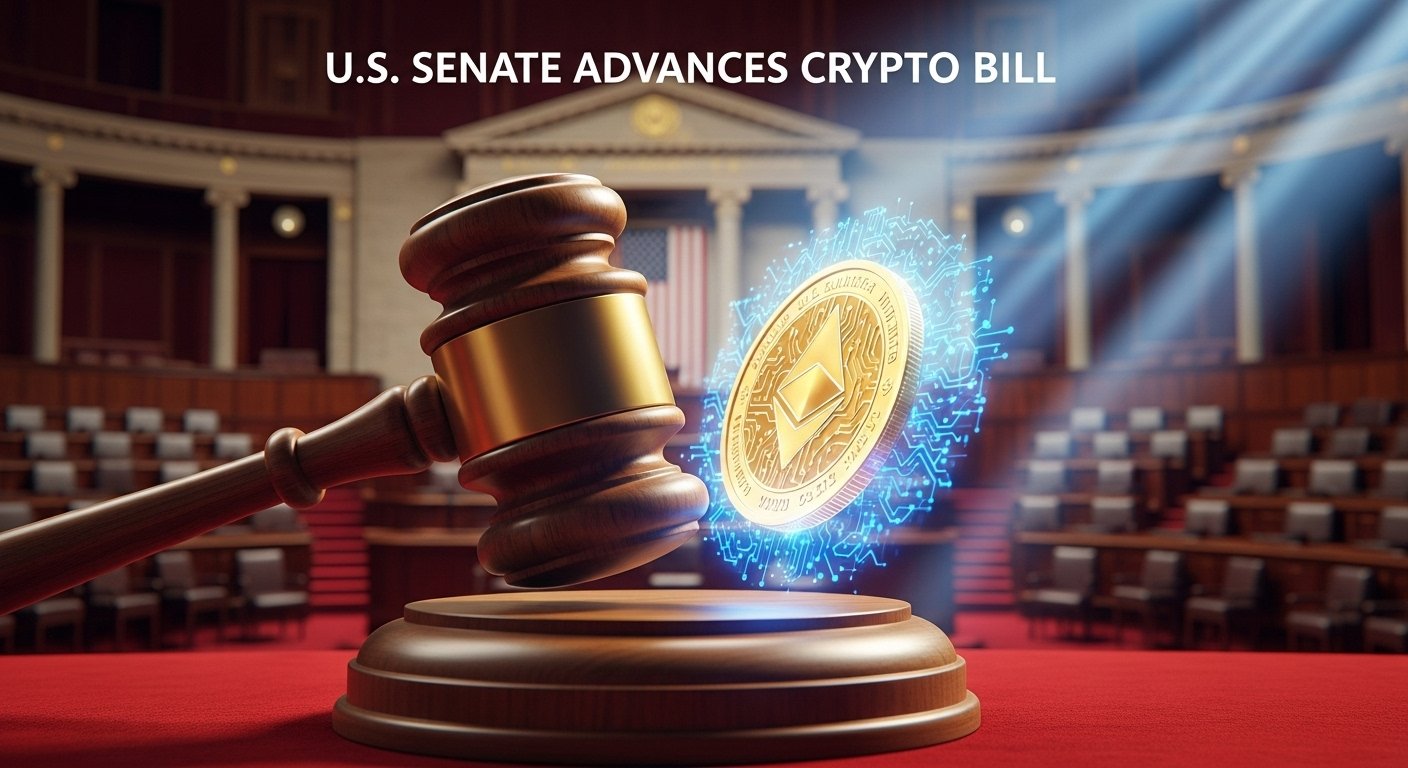
For the market, this progress sends a signal of legitimacy. Regulatory clarity often encourages institutional participation, reduces compliance risk, and fosters innovation. At the same time, it introduces new obligations that could reshape how crypto businesses operate in the United States.
Why Crypto Market Structure Legislation Matters Now
The urgency behind crypto market structure legislation is driven by rapid industry growth and repeated regulatory conflicts. The U.S. crypto market has expanded into a multi-trillion-dollar ecosystem encompassing digital assets, NFTs, stablecoins, and DeFi platforms. Yet regulatory clarity has lagged far behind innovation.
High-profile collapses of crypto exchanges, allegations of market manipulation, and disputes between regulators like the SEC and CFTC have underscored the risks of unclear oversight. Lawmakers increasingly recognize that uncertainty harms consumers and drives innovation offshore.
By advancing a crypto market structure bill, the Senate acknowledges that the U.S. risks losing its leadership in blockchain technology if it fails to modernize financial regulations. The legislation aims to balance investor protection, market integrity, and technological innovation, making it a timely response to mounting pressure from both the industry and global competitors.
Key Objectives of the Crypto Market Structure Bill
At its core, the crypto market structure bill seeks to establish foundational rules that define how digital assets are regulated. One of its primary objectives is to clarify whether cryptocurrencies are securities, commodities, or a new asset class altogether. This distinction is critical because it determines which regulator has authority.
Another major goal is to provide oversight for crypto trading platforms and intermediaries. By setting registration, disclosure, and compliance standards, the bill aims to protect investors without stifling innovation. It also seeks to address gaps in consumer protection that became evident during past market downturns.
Importantly, the bill attempts to create a unified approach rather than fragmented enforcement. This could reduce regulatory overlap and legal uncertainty, offering a clearer path forward for companies operating in the U.S. digital asset market.
SEC vs. CFTC: How the Bill Addresses Regulatory Turf Wars
One of the most contentious issues in U.S. crypto regulation has been the ongoing conflict between the Securities and Exchange Commission (SEC) and the Commodity Futures Trading Commission (CFTC). Both agencies have claimed authority over different aspects of the crypto market, often leading to confusion and litigation.
The crypto market structure bill aims to delineate responsibilities more clearly. Under many proposals, the SEC would oversee digital assets classified as securities, while the CFTC would regulate cryptocurrencies deemed commodities, such as Bitcoin. This clearer division could reduce enforcement-driven regulation and provide companies with more predictable compliance obligations.
Resolving this turf war is critical for market stability. Clear jurisdictional boundaries would help exchanges, developers, and investors understand which rules apply, reducing legal risk and fostering confidence in the U.S. regulatory environment.
Implications for Bitcoin, Ethereum, and Major Cryptocurrencies
For leading digital assets like Bitcoin and Ethereum, the advancement of the crypto market structure bill could bring long-awaited clarity. Bitcoin is widely viewed as a commodity, and the bill may formally recognize it as such, placing it under CFTC oversight. This would reinforce Bitcoin’s status as a decentralized asset rather than a security.
Ethereum’s classification has been more controversial due to its evolution and ecosystem complexity. The bill could establish criteria for determining when a blockchain network transitions from a security-like offering to a decentralized commodity. Such clarity would have significant implications for Ethereum developers, investors, and Layer 2 projects.Overall, clearer rules for major cryptocurrencies could reduce regulatory risk premiums, potentially stabilizing prices and encouraging broader adoption across institutional and retail markets.
How Crypto Exchanges and Platforms Could Be Affected
Crypto exchanges stand to be among the most impacted stakeholders if the bill becomes law. The crypto market structure bill is expected to impose registration and compliance requirements similar to those in traditional financial markets. This could include transparency standards, custody rules, and consumer safeguards.
For large, established exchanges, these requirements may enhance credibility and attract institutional clients. Smaller platforms, however, could face higher compliance costs that challenge their business models. The bill may also address decentralized exchanges, raising complex questions about how decentralized protocols can comply with centralized regulatory frameworks.Ultimately, the legislation could reshape the competitive landscape, favoring compliant platforms while pushing non-compliant actors out of the U.S. market.
Impact on Stablecoins and Payment Tokens
Stablecoins play a crucial role in the crypto ecosystem, serving as a bridge between traditional finance and digital assets. While some stablecoin regulation is addressed in separate legislation, the crypto market structure bill could still influence how these assets are classified and traded.

By clarifying the status of payment tokens and reserve-backed assets, the bill may improve transparency and trust in stablecoins. This could accelerate their adoption for remittances, payments, and decentralized finance applications, while also addressing systemic risk concerns.Clear rules for stablecoins would complement broader crypto regulation, strengthening the overall market infrastructure.
Investor Protection and Consumer Confidence
A major selling point of the crypto market structure bill is enhanced investor protection. By establishing disclosure requirements, market surveillance mechanisms, and enforcement standards, the legislation aims to reduce fraud and manipulation.
For retail investors, clearer rules could improve confidence in participating in crypto markets. For institutional investors, regulatory certainty may unlock larger capital allocations, as compliance risks diminish.Increased consumer confidence often correlates with market maturity. If implemented effectively, the bill could help transition crypto from a speculative niche into a more established asset class.
Political and Bipartisan Support Behind the Bill
The advancement of the bill reflects growing bipartisan recognition that crypto regulation is necessary. While disagreements remain over specifics, lawmakers across party lines increasingly agree that digital assets require tailored legislation rather than piecemeal enforcement.
Bipartisan support improves the bill’s chances of passing the full Senate and surviving the legislative process. It also signals to global markets that the U.S. is serious about developing a coherent crypto policy framework.However, political dynamics remain fluid, and amendments could still reshape the final version of the legislation.
What Are the Next Steps in the Legislative Process?
Although the U.S. Senate has advanced the crypto market structure bill, several steps remain before it becomes law. The bill must pass a full Senate vote, potentially be reconciled with House legislation, and ultimately receive presidential approval.
During this process, amendments may be introduced that alter key provisions. Industry stakeholders will likely lobby lawmakers to shape the final outcome, while regulators prepare for potential implementation.The timeline remains uncertain, but momentum suggests that meaningful crypto legislation is closer than ever before.
How the Bill Could Shape the Future of U.S. Crypto Innovation
If enacted, the crypto market structure bill could redefine the U.S. as a hub for compliant blockchain innovation. Clear rules may encourage startups to build domestically rather than relocating to more permissive jurisdictions.
At the same time, stricter compliance requirements could slow certain forms of experimentation, particularly in decentralized finance. The long-term impact will depend on how regulators interpret and enforce the law.Overall, the bill represents a foundational step toward integrating digital assets into the broader financial system.
Global Implications of U.S. Crypto Regulation
U.S. crypto regulation often sets a global benchmark. As the Senate advances the crypto market structure bill, other jurisdictions may adjust their own policies in response. Clear U.S. rules could influence international standards for digital asset regulation.For global investors and multinational crypto firms, alignment between major markets reduces complexity and compliance costs. The bill’s progress may therefore have ripple effects far beyond U.S. borders.
Challenges and Criticisms of the Crypto Market Structure Bill
Despite its promise, the bill has faced criticism from both industry advocates and skeptics. Some argue that overly rigid rules could stifle innovation or disadvantage decentralized projects. Others worry that regulatory capture could favor large incumbents over startups.Balancing innovation with oversight remains a delicate task. The effectiveness of the bill will depend on thoughtful implementation and ongoing dialogue between regulators and the crypto community.
Conclusion
The decision by the U.S. Senate to advance the crypto market structure bill marks a turning point in the evolution of digital asset regulation. While the bill is not yet law, its progress signals growing political will to provide clarity, protect investors, and support responsible innovation.
For Bitcoin, Ethereum, exchanges, and investors, the coming months will be critical. The final shape of the legislation could determine whether the U.S. emerges as a leader in the next phase of blockchain development or risks falling behind global competitors.As the legislative process unfolds, one thing is clear: crypto regulation in the United States is entering a new era, and the implications will be felt across financial markets worldwide.
FAQs
Q: What is the U.S. crypto market structure bill?
The crypto market structure bill is proposed legislation aimed at defining how digital assets are classified and regulated in the United States, clarifying agency oversight and compliance requirements.
Q: Has the crypto market structure bill become law?
No, the bill has only been advanced by the U.S. Senate. It must still pass further legislative steps before becoming law.
Q: How could this bill affect Bitcoin and Ethereum?
The bill could clarify whether Bitcoin and Ethereum are commodities or securities, reducing regulatory uncertainty and impacting how they are overseen.
Q: Why is regulatory clarity important for crypto markets?
Clear regulations reduce legal risk, protect investors, encourage institutional participation, and support sustainable innovation.
Q: When will the final decision on the bill be made?
There is no fixed timeline, but the advancement of the bill suggests that meaningful progress could occur within the current legislative session.
Also More: Crypto Market Rose Due to Dollar Weakness Why It Matters