






































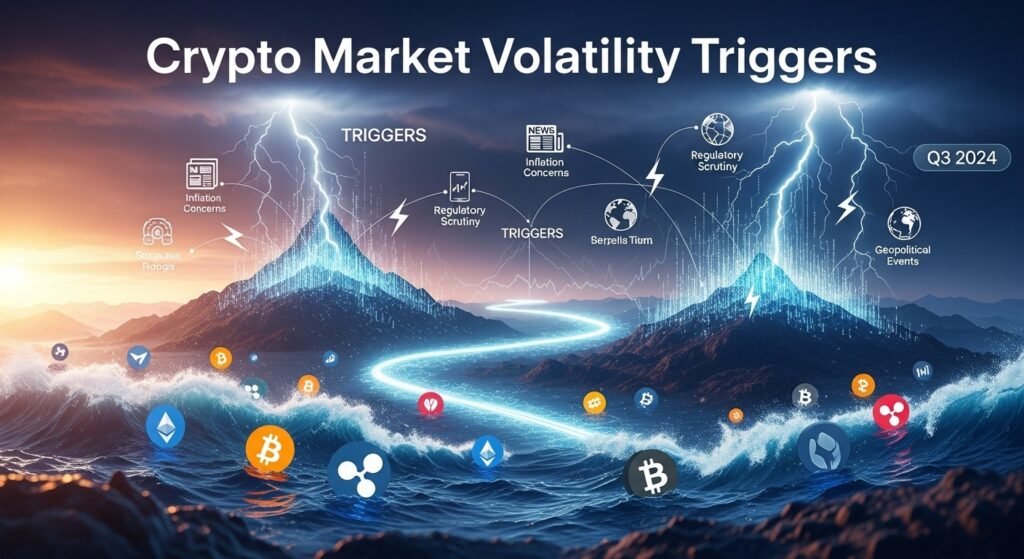
The cryptocurrency market is no stranger to turbulence, but recent events have once again demonstrated just how extreme crypto market volatility can be. In a dramatic sequence of price swings, the digital asset ecosystem witnessed nearly $2.5 billion in Bitcoin liquidations, sending shockwaves through traders, exchanges, and institutional investors alike. Such large-scale liquidations are not merely isolated trading events; they reflect deeper structural dynamics within the crypto derivatives market, leverage-driven speculation, and shifting macroeconomic sentiment.
Bitcoin, often viewed as the bellwether of the broader digital asset industry, experienced rapid price movements that caught both retail and professional traders off guard. As leveraged positions unraveled, forced liquidations accelerated the downward momentum, amplifying losses and intensifying fear across the market. This episode highlights how interconnected factors such as derivatives trading, market sentiment, liquidity conditions, and global economic signals converge to create high-impact volatility.
Understanding why crypto market volatility triggers $2.5 billion in Bitcoin liquidations requires a closer examination of how liquidations work, what drives sudden price fluctuations, and how traders and investors can adapt to these conditions. This article provides a comprehensive, in-depth analysis of the liquidation event, its causes, its consequences for the crypto ecosystem, and what it means for the future of Bitcoin and digital asset markets.
Crypto market volatility and bitcoin liquidations
What is crypto market volatility?
Crypto market volatility refers to the frequency and magnitude of price fluctuations within the cryptocurrency market. Unlike traditional financial markets, crypto operates around the clock, lacks centralized control, and is heavily influenced by sentiment-driven trading. As a result, prices can rise or fall sharply within minutes, creating both opportunities and risks for participants.

Volatility in crypto markets is often higher than in equities or commodities due to lower liquidity in certain trading pairs, speculative behavior, and the rapid dissemination of information through social media. When major price movements occur, they can quickly cascade across exchanges worldwide, leading to widespread trading disruptions and forced position closures.
How bitcoin liquidations work in leveraged trading
Bitcoin liquidations occur primarily in the crypto derivatives market, where traders use leverage to amplify potential gains. Leverage allows traders to borrow funds to open larger positions than their actual capital would normally permit. While this can increase profits during favorable price movements, it also magnifies losses when the market moves against the trader.
When Bitcoin’s price reaches a certain threshold, known as the liquidation price, the exchange automatically closes the trader’s position to prevent further losses. During periods of intense volatility, large numbers of positions can be liquidated simultaneously, resulting in billions of dollars in forced sell-offs or buybacks.
Why crypto market volatility triggered $2.5 billion in bitcoin liquidations
Leverage concentration across crypto exchanges
One of the primary reasons crypto market volatility triggered $2.5 billion in Bitcoin liquidations is the high concentration of leveraged positions across major crypto exchanges. In the days leading up to the event, open interest in Bitcoin futures surged as traders anticipated bullish price action. This buildup created a fragile market structure where even a modest price correction could trigger cascading liquidations.
As Bitcoin’s price began to decline, long positions were liquidated en masse, pushing prices lower and activating additional liquidation levels. This chain reaction is a hallmark of highly leveraged markets and explains how losses can escalate so rapidly.
Sudden shifts in market sentiment
Market sentiment plays a crucial role in driving Bitcoin price movements. News related to macroeconomic policy, regulatory developments, or institutional flows can quickly alter trader expectations. In this case, uncertainty surrounding interest rate decisions, inflation data, and risk asset performance contributed to a shift toward risk-off behavior.
As confidence weakened, selling pressure intensified, and traders rushed to exit positions. The resulting volatility accelerated the liquidation process, reinforcing bearish momentum and increasing total liquidation volumes.
The role of bitcoin derivatives in amplifying volatility
Futures and perpetual contracts
Bitcoin derivatives, particularly futures and perpetual contracts, are central to understanding why liquidations reach such massive figures. These instruments allow traders to speculate on price movements without owning the underlying asset. While derivatives increase market efficiency and liquidity, they also amplify volatility when leverage is excessive.
Perpetual futures, which have no expiration date, are especially popular among traders due to their flexibility. However, funding rates associated with these contracts can signal overcrowded positions. When funding rates become extreme, they often precede sharp market reversals and large-scale liquidations.
Liquidation cascades and market structure
A liquidation cascade occurs when one set of forced liquidations pushes prices into levels that trigger additional liquidations. This phenomenon is common in Bitcoin markets due to the transparency of order books and the clustering of liquidation prices around key technical levels.
During this event, Bitcoin’s price fell rapidly through multiple support zones, each triggering new waves of liquidations. The cumulative effect resulted in $2.5 billion in Bitcoin liquidations, underscoring how market structure and leverage interact to magnify volatility.
Impact of bitcoin liquidations on the broader crypto market
Spillover effects on altcoins
Bitcoin’s dominance in the crypto market means that its price movements heavily influence altcoins. When Bitcoin experiences sharp declines and mass liquidations, altcoins often suffer even greater losses due to lower liquidity and higher volatility.
During this period, many alternative cryptocurrencies saw double-digit percentage drops as traders reduced exposure across the board. This correlation highlights the systemic nature of crypto market volatility and the central role Bitcoin plays in shaping overall market behavior.
Exchange liquidity and risk management
Large-scale liquidations place significant strain on crypto exchanges, testing their liquidity and risk management systems. While major platforms are designed to handle volatile conditions, extreme events can expose vulnerabilities, including temporary outages or delays in order execution.

For traders, these disruptions can exacerbate losses and reduce confidence in centralized platforms. As a result, periods of intense volatility often reignite discussions around exchange transparency, insurance funds, and the importance of robust infrastructure.
Institutional involvement and its influence on volatility
Growing presence of institutional traders
Institutional participation in Bitcoin markets has increased substantially in recent years, bringing deeper liquidity but also new forms of volatility. Institutions often trade large positions using sophisticated strategies, including hedging through derivatives.
When institutions adjust their exposure rapidly in response to macroeconomic signals, their actions can significantly impact price dynamics. The recent liquidation event reflects how institutional flows, combined with retail leverage, can accelerate market movements.
Macroeconomic factors driving bitcoin price swings
Global economic conditions play a pivotal role in shaping Bitcoin’s volatility. Interest rate expectations, currency fluctuations, and geopolitical tensions influence investor appetite for risk assets. As Bitcoin becomes more integrated into traditional financial markets, it increasingly responds to the same macro forces that affect equities and commodities.This convergence means that sudden changes in economic outlook can trigger sharp repricing in Bitcoin, leading to elevated volatility and liquidation risks.
Lessons for traders from the $2.5 billion bitcoin liquidation event
Risk management in volatile crypto markets
One of the clearest lessons from this event is the importance of disciplined risk management. Traders who rely heavily on leverage without adequate stop-loss strategies are particularly vulnerable during volatile periods.
Understanding position sizing, maintaining sufficient margin, and avoiding excessive leverage are essential practices for navigating crypto markets. These principles help mitigate losses and reduce the likelihood of forced liquidations.
Reading market signals and funding rates
Funding rates, open interest, and on-chain metrics provide valuable insights into market sentiment and positioning. Elevated funding rates often indicate crowded trades that are susceptible to sudden reversals.By monitoring these indicators, traders can better anticipate potential volatility spikes and adjust their strategies accordingly, reducing exposure during high-risk periods.
Long-term implications for bitcoin and crypto markets
Market maturation and volatility cycles
While events like this highlight the risks of crypto trading, they also contribute to market maturation. Liquidation-driven downturns often flush out excessive leverage, leading to healthier market conditions over time.
Bitcoin has historically experienced cycles of boom and bust, with each cycle strengthening its infrastructure and investor base. As the market evolves, volatility may gradually decrease, although sharp movements are likely to remain a defining characteristic.
Regulatory considerations and transparency
Large liquidation events draw attention from regulators and policymakers concerned about market stability and investor protection. Increased scrutiny may lead to clearer guidelines for leverage limits, disclosures, and risk management practices across exchanges.While regulation can introduce short-term uncertainty, it may also enhance long-term confidence and stability in the crypto ecosystem.
Conclusion
The episode in which crypto market volatility triggered $2.5 billion in Bitcoin liquidations serves as a powerful reminder of both the opportunities and risks inherent in digital asset markets. Fueled by leverage, shifting sentiment, and macroeconomic uncertainty, the rapid price movements exposed vulnerabilities in trading strategies and market structure.
At the same time, such events are part of Bitcoin’s ongoing evolution. Each cycle of volatility refines the market, strengthens infrastructure, and educates participants about the importance of risk management. For traders and investors, understanding the mechanics behind liquidations and volatility is essential for navigating the crypto landscape with confidence.
As Bitcoin continues to mature and integrate with global financial systems, episodes of extreme volatility may become less frequent but no less impactful. Staying informed, disciplined, and adaptable remains the key to long-term success in the ever-changing world of cryptocurrency.
FAQs
Q: What caused $2.5 billion in Bitcoin liquidations?
The liquidations were primarily caused by extreme crypto market volatility, high leverage in derivatives trading, and a sudden shift in market sentiment that triggered cascading forced position closures.
Q: Are Bitcoin liquidations bad for the market?
While painful in the short term, liquidations can reduce excessive leverage and contribute to healthier market conditions over time.
Q: How do liquidations affect Bitcoin price?
Liquidations often accelerate price movements, as forced selling or buying pushes Bitcoin rapidly through key price levels.
Q: Can traders avoid liquidation during volatile markets?
Yes, traders can reduce risk by using lower leverage, setting stop-loss orders, and maintaining sufficient margin to withstand price swings.
Q: Will crypto market volatility decrease in the future?
As the market matures and liquidity improves, volatility may gradually decline, but sharp price movements are likely to remain a core feature of cryptocurrency markets.