







































Bitcoin difficulty has once again captured the attention of the crypto market after recording a historic 11.16% reduction, marking the largest difficulty drop since China’s 2021 mining crackdown. This adjustment, baked into Bitcoin’s protocol, is more than a technical metric—it is a real-time reflection of miner behavior, network health, energy economics, and broader market sentiment. When difficulty shifts this sharply, it signals underlying structural changes that ripple across miners, investors, and the long-term security of the Bitcoin network.
The recent difficulty reduction comes amid heightened volatility in the crypto market, pressure on mining profitability, rising operational costs, and a shakeout among less efficient mining operations. For seasoned market participants, the move revives memories of the dramatic hash rate collapse in mid-2021, when China’s sweeping ban forced a mass exodus of miners and temporarily destabilized the network. While the current environment is fundamentally different, the scale of the adjustment suggests a significant recalibration is underway.
This article provides an in-depth, human-written analysis of why Bitcoin difficulty logs 11.16% reduction, what it means for Bitcoin miners, how it affects hash rate, mining profitability, and network security, and what investors should expect in the months ahead. By examining historical context, macroeconomic factors, and on-chain data, we aim to deliver a comprehensive, SEO-optimized guide that helps readers understand the importance of this milestone without over-optimization or hype.
Understanding Bitcoin Difficulty and Why It Matters
What Is Bitcoin Difficulty?
Bitcoin difficulty is a dynamic parameter embedded in the Bitcoin protocol that determines how hard it is for miners to solve cryptographic puzzles and add a new block to the blockchain. The system is designed to maintain an average block time of roughly ten minutes, regardless of how much computing power—or hash rate—is participating in the network.

As more miners join and hash rate increases, the protocol raises difficulty to keep block production steady. Conversely, when miners shut down machines and hash rate declines, difficulty adjusts downward. This self-correcting mechanism is one of Bitcoin’s most elegant features, ensuring decentralization and predictable issuance even during periods of extreme stress.
How Difficulty Adjustments Work
Difficulty adjusts every 2,016 blocks, roughly every two weeks. The protocol measures how long it took to mine the previous batch of blocks and compares it to the expected time. If blocks were mined too quickly, difficulty increases; if they were mined too slowly, difficulty decreases.
An 11.16% difficulty reduction is exceptionally large by historical standards. Such a move indicates that blocks were being mined significantly slower than normal, pointing to a sudden and meaningful drop in active mining power across the network.
Bitcoin Difficulty Logs 11.16% Reduction: What Happened?
A Drop Not Seen Since China’s 2021 Mining Crackdown
The last time Bitcoin experienced a difficulty reduction of similar magnitude was in mid-2021, when China banned industrial-scale Bitcoin mining. At that time, over 50% of global hash rate went offline almost overnight, triggering multiple consecutive difficulty drops and temporarily disrupting block production.
Today’s environment is less dramatic but still consequential. The largest difficulty drop since China’s 2021 mining crackdown reflects a combination of economic pressure, regulatory uncertainty, and operational challenges rather than a single government mandate.
Key Drivers Behind the Difficulty Decline
Several interconnected factors contributed to the sharp reduction in Bitcoin difficulty:Rising energy costs have squeezed miner margins, particularly in regions with variable electricity pricing. As power costs surged, many inefficient miners were forced to shut down older hardware.Bitcoin price volatility also played a role. When BTC prices fall or stagnate while costs rise, mining profitability compresses quickly, pushing marginal operators out of the market.
Network upgrades and hardware transitions further amplified the effect. Some miners temporarily powered down operations while upgrading fleets or relocating facilities, reducing active hash rate during the adjustment period.Together, these forces created the conditions for one of the most significant difficulty declines in Bitcoin’s history.
Impact on Bitcoin Miners and Mining Profitability
Relief for Active and Efficient Miners
For miners who remained online through the downturn, the 11.16% reduction in Bitcoin difficulty offers immediate relief. Lower difficulty means fewer hashes are required to mine a block, effectively increasing the probability of earning block rewards for each unit of computing power.
This translates into higher mining profitability, especially for operators with access to cheap electricity and modern, energy-efficient ASIC machines. In the short term, these miners benefit from reduced competition and improved margins.
Accelerating Industry Consolidation
At the same time, the difficulty drop underscores a broader trend of consolidation within the mining industry. Smaller and less efficient operators are increasingly unable to compete, leading to asset sales, mergers, or shutdowns.
This consolidation mirrors patterns seen after previous market stress events, including the 2021 China ban and the 2022 bear market. While fewer miners may sound concerning, the survivors tend to be better capitalized and more technologically advanced, potentially strengthening the network over time.
Hash Rate Decline and Network Security Implications
Understanding the Hash Rate Connection
Bitcoin difficulty and hash rate are closely linked. When hash rate declines sharply, difficulty follows. The recent adjustment confirms that a meaningful portion of mining power went offline during the prior adjustment period.
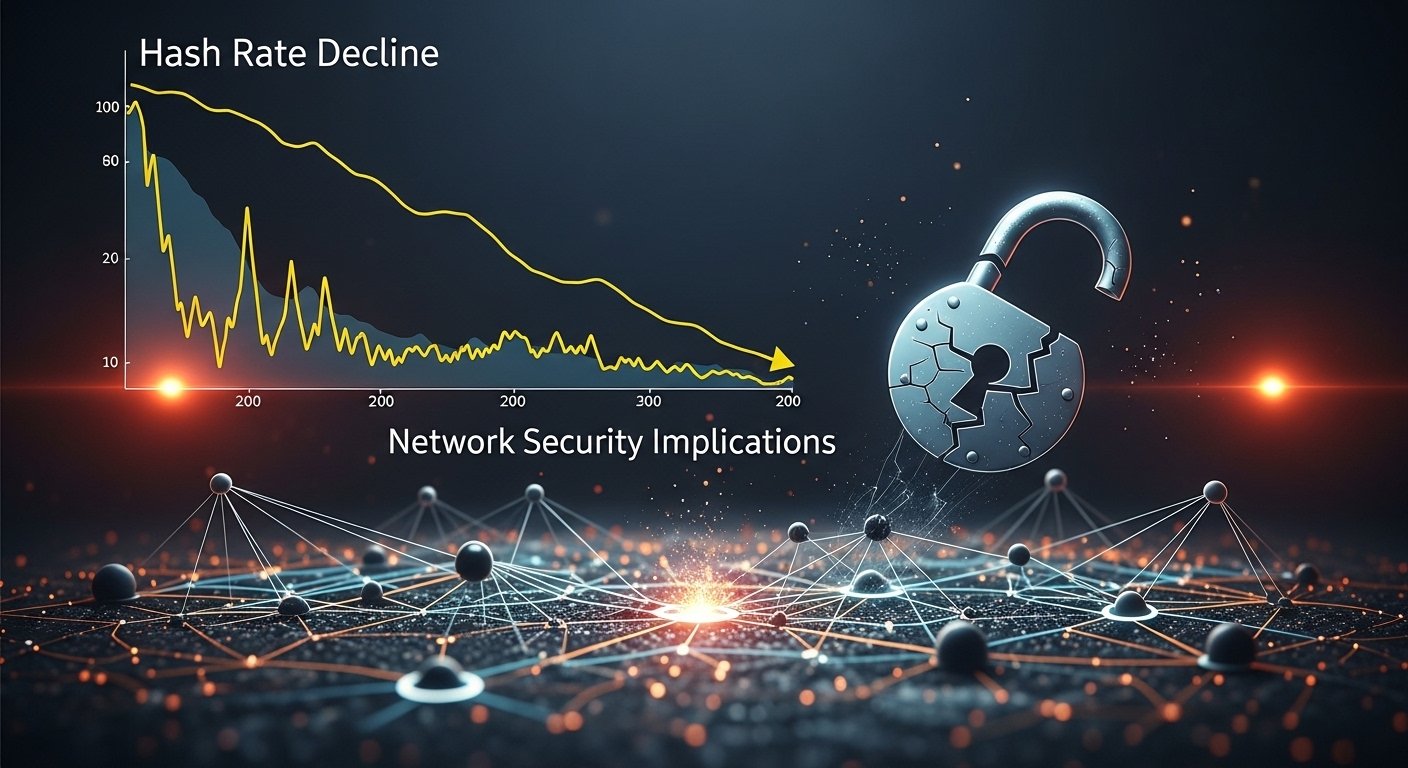
However, a temporary decline in hash rate does not automatically equate to compromised security. Bitcoin’s security model is designed to adapt, and even reduced hash rate levels remain orders of magnitude higher than what would be required to attack the network.
Is Network Security at Risk?
Despite alarmist headlines, Bitcoin’s network security remains robust. The difficulty adjustment mechanism ensures that block times normalize quickly, preserving transaction finality and user confidence.
Historically, periods of hash rate decline have often been followed by renewed investment and recovery as market conditions stabilize. In this sense, the current difficulty reduction may represent a transitional phase rather than a structural weakness.
Comparing the Current Drop to the 2021 China Mining Ban
Similarities Between Then and Now
Both events share a key similarity: a sudden and significant reduction in active mining power that forced the network to recalibrate. In both cases, difficulty adjustments acted as a stabilizing force, preventing prolonged disruption.Additionally, both periods triggered widespread discussion about decentralization, miner resilience, and Bitcoin’s ability to withstand external shocks.
Critical Differences in Context
The differences, however, are just as important. The 2021 China ban was a regulatory shock that permanently reshaped the geographic distribution of mining. The current Bitcoin difficulty logs 11.16% reduction event is primarily driven by economic pressures rather than outright prohibition.
Miners today have more diversified locations, better access to capital markets, and more sophisticated risk management strategies. These factors suggest that recovery may be faster and less chaotic than in 2021.
Market Sentiment and Bitcoin Price Dynamics
Short-Term Market Reactions
In the short term, large difficulty drops often coincide with bearish sentiment. Traders may interpret miner capitulation as a sign of stress, contributing to price volatility.However, historical data shows that miner capitulation phases frequently occur near market bottoms. As inefficient miners exit and selling pressure eases, price stability can improve.
Long-Term Implications for Bitcoin Price
Over the long term, lower difficulty can act as a tailwind for miners, reducing forced selling of BTC to cover operational costs. This dynamic can support price recovery once broader market conditions improve.While difficulty alone does not determine price, it remains an important on-chain indicator for assessing market cycles and miner health.
Broader Economic and Regulatory Factors at Play
Energy Markets and Mining Economics
Global energy markets continue to influence Bitcoin mining economics. Fluctuating natural gas prices, renewable energy adoption, and grid constraints all shape where and how mining operations can remain profitable.Regions with abundant low-cost energy are increasingly attractive, while miners in high-cost jurisdictions face mounting pressure.
Regulatory Uncertainty and Its Role
Although no single regulatory action triggered the current difficulty drop, ongoing uncertainty in key markets has dampened investment sentiment. Compliance costs, taxation, and evolving legal frameworks all contribute to operational risk, influencing decisions to scale up or shut down mining activities.
What This Means for the Future of Bitcoin Mining
A More Efficient and Resilient Network
In many ways, the largest difficulty drop since China’s 2021 mining crackdown may ultimately strengthen Bitcoin. By flushing out inefficient operations, the network becomes leaner and more resilient.Technological innovation, including more efficient ASICs and better cooling solutions, is likely to accelerate as miners adapt to tighter margins.
Potential for Hash Rate Recovery
Historically, significant difficulty drops have been followed by periods of hash rate recovery as conditions stabilize. If Bitcoin prices rebound or energy costs ease, sidelined miners may return, pushing difficulty higher once again.
Conclusion
The moment when Bitcoin difficulty logs 11.16% reduction will stand as a notable chapter in Bitcoin’s ongoing evolution. As the largest drop since China’s 2021 mining crackdown, it highlights the sensitivity of the mining ecosystem to economic pressures while reaffirming the resilience of Bitcoin’s self-adjusting design.
Rather than signaling weakness, the adjustment demonstrates how the network adapts to stress, balances incentives, and preserves security. For miners, it offers short-term relief and long-term lessons. For investors, it provides valuable insight into market cycles and miner behavior. And for the broader crypto community, it reinforces why Bitcoin continues to function reliably, even in turbulent times.As the market digests this development, one thing remains clear: Bitcoin’s difficulty mechanism, once again, has done exactly what it was designed to do.
FAQs
Q: Why did Bitcoin difficulty drop by 11.16%?
Bitcoin difficulty dropped due to a significant decline in active hash rate, driven by rising energy costs, reduced mining profitability, and temporary or permanent shutdowns of mining operations.
Q: Is this difficulty drop bad for Bitcoin?
Not necessarily. While it reflects short-term stress among miners, difficulty adjustments help stabilize the network and can improve profitability for remaining miners.
Q: How does this compare to the 2021 China mining ban?
The scale is similar, but the cause is different. The 2021 drop was driven by regulatory action, while the current decline is mainly economic.
Q: Will Bitcoin’s network security be affected?
Bitcoin’s network remains secure. Even with reduced hash rate, the network operates at a level far above what is needed to prevent attacks.
Q: What should investors watch next?
Investors should monitor hash rate recovery, future difficulty adjustments, energy market trends, and miner balance sheets to gauge the next phase of the Bitcoin cycle.
Also More: Mining Bitcoin U.S. Targets Bitmain for Espionage Risk