







































Few financial assets in history have inspired as much debate, conviction, and controversy as Bitcoin. From its early days as an obscure experiment in cryptography to its rise as a trillion-dollar asset class at various points in time, Bitcoin has consistently divided opinion. Some see it as digital gold, a hedge against inflation, and the foundation of a new financial system. Others view it as a speculative bubble untethered from economic reality. In recent market discussions, a particularly provocative claim has resurfaced: Bitcoin is still about $69,000 too high.
This assertion does not necessarily imply that Bitcoin is worthless. Instead, it suggests that even at significantly lower prices than its historic peaks, Bitcoin remains overvalued when measured against traditional valuation frameworks, utility-based models, and macroeconomic benchmarks. The phrase has become shorthand for a broader skepticism toward the idea that Bitcoin’s market price reflects its intrinsic value.
Understanding why analysts argue that Bitcoin is still about $69,000 too high requires a deeper look at valuation theory, historical price behavior, adoption metrics, and investor psychology. This article explores the foundations of that claim, the counterarguments from Bitcoin proponents, and what it all means for investors navigating an increasingly complex digital asset landscape.
The Origin of the Claim That Bitcoin Is Still About $69,000 Too High
Historical Context Behind the Statement
The idea that Bitcoin is still about $69,000 too high draws symbolic power from Bitcoin’s previous all-time high near $69,000. For critics, that price level represents the peak of speculative excess driven by easy monetary policy, retail euphoria, and aggressive leverage across crypto markets. When prices fell sharply afterward, skeptics argued that the decline was not a correction but a partial return toward fair value.
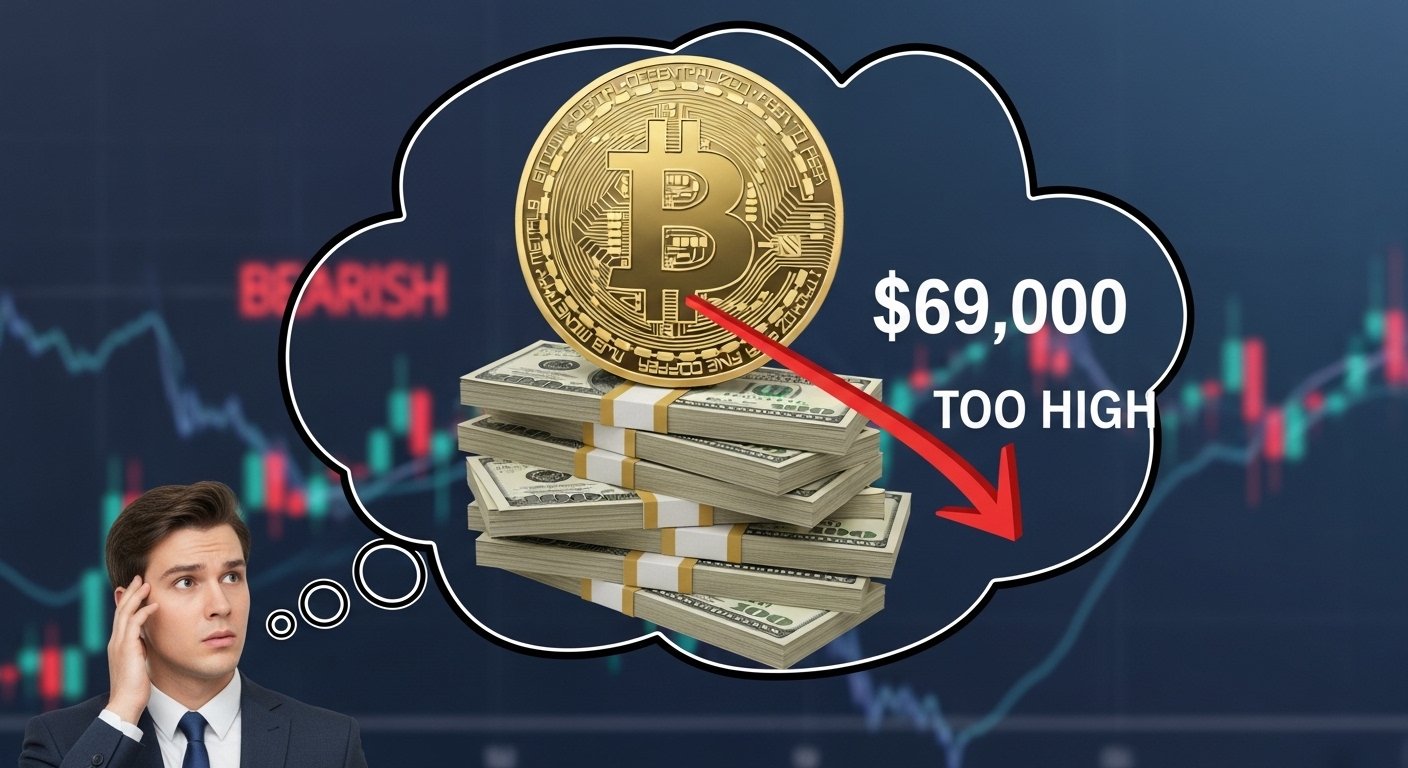
In this context, saying Bitcoin is still about $69,000 too high implies that even after major drawdowns, the asset has yet to reach a valuation grounded in fundamentals. This framing challenges the assumption that market price alone validates Bitcoin’s long-term worth.
Valuation Versus Market Price
Market price reflects what buyers are willing to pay at a given moment, not necessarily what an asset is objectively worth. For traditional assets like equities or bonds, valuation models rely on cash flows, dividends, or earnings. Bitcoin lacks these characteristics, which makes valuation inherently subjective. Critics argue that without cash flow or productive output, Bitcoin’s price is driven almost entirely by sentiment, reinforcing the claim that Bitcoin is still about $69,000 too high.
Understanding Bitcoin Valuation Models
Stock-to-Flow and Its Limitations
One of the most popular frameworks used to justify high Bitcoin prices is the stock-to-flow model, which compares Bitcoin’s scarcity to precious metals like gold. While this model gained attention during bull markets, its predictive failures during downturns have damaged its credibility. When prices diverged significantly from model projections, critics pointed to this as evidence that scarcity alone cannot justify valuation.
If scarcity were sufficient, skeptics argue, Bitcoin would exhibit price stability rather than extreme volatility. This criticism feeds into the narrative that Bitcoin is still about $69,000 too high because its scarcity premium may be exaggerated.
Network Value and Metcalfe’s Law
Another approach uses Metcalfe’s Law, which values a network based on the square of its users. While Bitcoin adoption has grown, usage metrics such as transaction volume and active addresses have not consistently justified market capitalization levels reached during peak cycles. When network growth slows but prices remain elevated, analysts conclude that valuation has outpaced utility, reinforcing the belief that Bitcoin is still about $69,000 too high.
Bitcoin as Digital Gold: Narrative Versus Reality
Comparing Bitcoin and Gold
Bitcoin is often compared to gold due to its capped supply and resistance to debasement. However, gold has thousands of years of history as a store of value, widespread industrial and jewelry use, and relatively low volatility. Bitcoin, by contrast, is barely over a decade old and exhibits extreme price swings.
Critics argue that treating Bitcoin as digital gold prematurely inflates its valuation. From this perspective, Bitcoin is still about $69,000 too high because it has not yet earned the stability and trust that justify gold’s market value.
Store of Value or Speculative Asset?
A true store of value preserves purchasing power over time. Bitcoin’s dramatic drawdowns challenge this role, especially for investors who entered near cycle highs. While long-term holders may still see gains, skeptics emphasize that volatility undermines the store-of-value narrative and supports the argument that Bitcoin remains significantly overvalued.
The Role of Speculation and Market Psychology
Fear, Greed, and Reflexivity
Bitcoin markets are heavily influenced by sentiment cycles. Periods of optimism drive rapid price appreciation, while fear triggers equally sharp declines. This reflexive behavior, where rising prices attract buyers and falling prices repel them, creates bubbles that detach from fundamentals.
When analysts say Bitcoin is still about $69,000 too high, they are often highlighting the lingering effects of speculative excess that have not been fully unwound. Even after corrections, prices may remain elevated relative to underlying adoption and use.
Leverage and Liquidity
The availability of leverage through derivatives amplifies Bitcoin price movements. During bull markets, leveraged positions push prices higher than organic demand would support. When liquidity tightens, these positions unwind violently. Critics argue that current valuations still reflect past leverage-driven inflation, reinforcing the claim that Bitcoin is still about $69,000 too high.
Macroeconomic Conditions and Bitcoin’s Price
Interest Rates and Risk Assets
Bitcoin has increasingly traded like a high-risk technology asset, responding to changes in interest rates and liquidity conditions. When central banks tighten monetary policy, speculative assets typically suffer. Skeptics argue that Bitcoin’s sensitivity to macro conditions contradicts its narrative as an uncorrelated hedge.
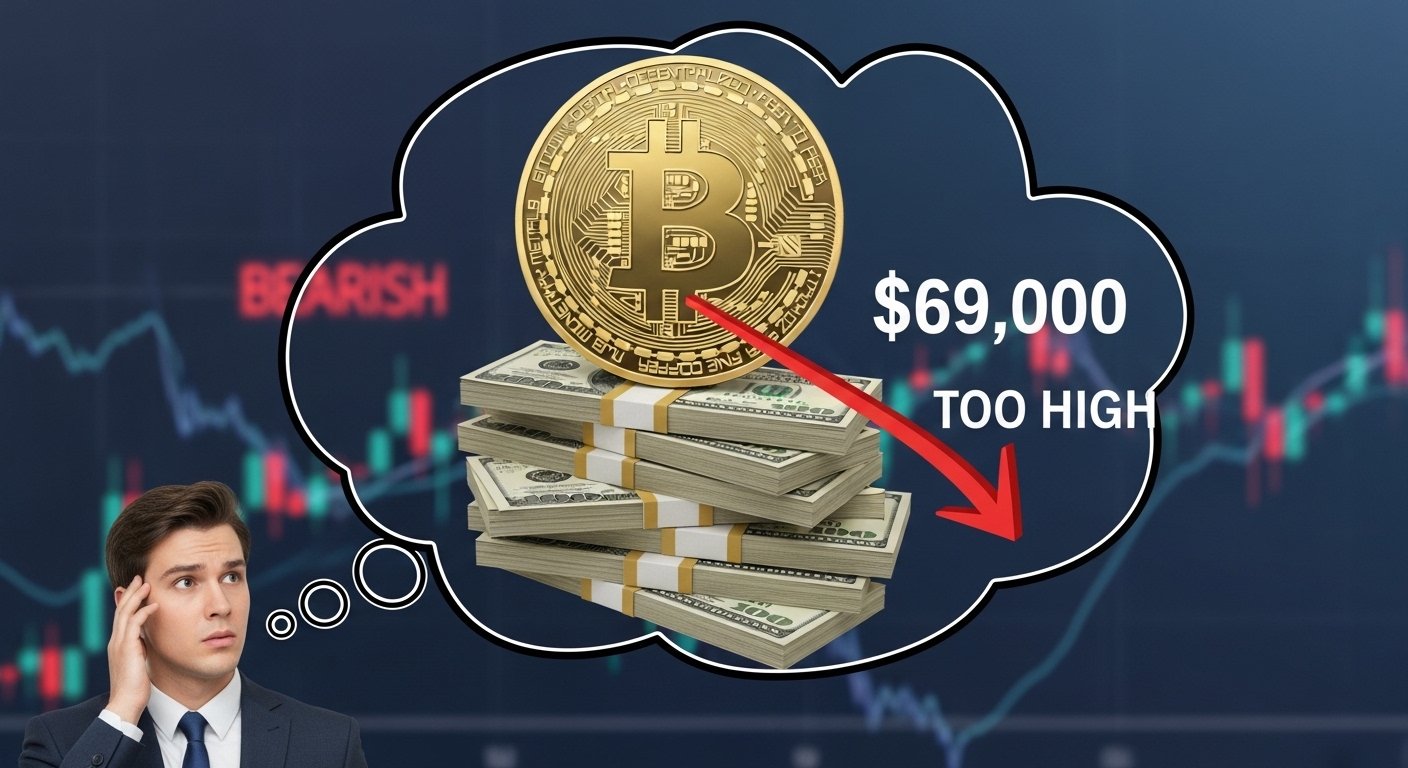
If Bitcoin were truly independent of traditional markets, its valuation might be more defensible. Instead, its behavior supports the view that Bitcoin is still about $69,000 too high relative to its perceived role as a hedge.
Inflation Hedge Debate
While Bitcoin is often promoted as protection against inflation, its real-world performance during inflationary periods has been mixed. In some cases, Bitcoin prices have fallen even as consumer prices rose. This inconsistency fuels doubts about its utility and valuation, strengthening arguments that Bitcoin remains overpriced.
Institutional Adoption: Substance or Symbolism?
Corporate and ETF Involvement
Institutional interest in Bitcoin is frequently cited as validation of its value. However, critics note that much of this involvement is speculative rather than utilitarian. Exchange-traded products and corporate treasury allocations do not necessarily translate into real economic use.
From this angle, institutional adoption may support liquidity but not intrinsic value. As a result, skeptics maintain that Bitcoin is still about $69,000 too high because adoption has not meaningfully increased real-world usage.
Long-Term Commitment Versus Trading Exposure
True institutional belief would involve integrating Bitcoin into payment systems or balance-sheet operations. Instead, much of the exposure remains passive or short-term. This distinction matters when assessing whether Bitcoin’s price reflects lasting demand or transient enthusiasm.
Energy Use, Regulation, and Structural Risks
Environmental Concerns
Bitcoin’s proof-of-work mechanism consumes significant energy, drawing criticism from policymakers and environmental groups. While proponents argue that renewable energy adoption is increasing, uncertainty around regulation remains a risk factor.
If regulatory pressures limit mining or increase costs, Bitcoin’s economic model could be affected. Critics factor this risk into valuation, arguing that Bitcoin is still about $69,000 too high given unresolved environmental and regulatory challenges.
Regulatory Uncertainty
Global regulatory frameworks for cryptocurrencies remain fragmented. Sudden policy changes can impact exchanges, custody solutions, and investor access. This uncertainty introduces a risk premium that critics believe is underappreciated in Bitcoin’s price.
Counterarguments: Why Supporters Disagree
Long-Term Adoption Curve
Bitcoin advocates argue that valuation models fail to account for long-term adoption. They see current prices as early-stage positioning in a global monetary shift. From this perspective, claims that Bitcoin is still about $69,000 too high ignore exponential growth potential.
Monetary Sovereignty and Decentralization
Supporters emphasize Bitcoin’s role as a decentralized alternative to fiat systems. In regions facing currency debasement or capital controls, Bitcoin offers utility beyond speculative value. These use cases, they argue, justify higher valuations over time.
What the Claim Really Means for Investors
Interpreting “Too High” as Risk, Not Zero
Saying Bitcoin is still about $69,000 too high does not mean Bitcoin will go to zero. Rather, it highlights valuation risk and uncertainty. For investors, this framing encourages caution, diversification, and realistic expectations.
Aligning Strategy With Belief
Investors who believe in Bitcoin’s long-term thesis may accept short-term overvaluation as noise. Others may see the claim as a warning to avoid excessive exposure. Understanding where one stands in this debate is critical for informed decision-making.
Conclusion
The assertion that Bitcoin is still about $69,000 too high captures the essence of the ongoing debate around cryptocurrency valuation. It reflects skepticism toward speculative excess, concerns about utility, and doubts about narratives that have driven past bull markets. At the same time, it clashes with deeply held beliefs among Bitcoin supporters who view the asset as transformative and still undervalued in the long run.
Ultimately, Bitcoin’s true value remains a matter of perspective. Whether one sees it as revolutionary technology or an overhyped asset, understanding the arguments on both sides is essential. As markets evolve and adoption either deepens or stagnates, the question of whether Bitcoin is still about $69,000 too high will continue to shape conversations across finance and technology.
FAQs
Q: What does it mean when analysts say Bitcoin is still about $69,000 too high?
It means critics believe Bitcoin’s current valuation remains inflated relative to its fundamentals, utility, and risk profile, using its former all-time high as a symbolic benchmark.
Q: Does this claim suggest Bitcoin has no value?
No, it does not imply Bitcoin is worthless. It suggests that its market price may exceed what skeptics consider fair value.
Q: Why is Bitcoin so hard to value compared to stocks?
Bitcoin does not generate cash flows, dividends, or earnings, making traditional valuation models difficult to apply.
Q: Can Bitcoin still rise in price even if it is overvalued?
Yes, market prices can remain detached from fundamentals for extended periods due to speculation, liquidity, and sentiment.
Q: Should investors avoid Bitcoin because of this argument?
Not necessarily. Investors should assess their risk tolerance, time horizon, and belief in Bitcoin’s long-term thesis before making decisions.
Also More: Bitcoin Bulls Rise as BTC Flirts $112K What Next?