







































As global inflation data begins to cool after years of elevated price pressures, the cryptocurrency market finds itself at a critical crossroads. According to prominent investor and Bitcoin advocate Anthony Pompliano, Bitcoin holders are being tested in a macroeconomic environment that looks very different from the one that fueled the asset’s meteoric rise in 2020 and 2021. When inflation was surging and central banks were aggressively expanding monetary supply, Bitcoin was widely perceived as a hedge against fiat currency debasement. Now, with inflation easing and interest rates stabilizing or even poised to decline in some regions, that narrative is facing renewed scrutiny.
Bitcoin holders are being tested not merely by price volatility but by shifting economic narratives. As inflation eases, investor psychology changes. Risk appetite adjusts. Liquidity conditions evolve. The macro thesis supporting Bitcoin as “digital gold” must compete with renewed confidence in traditional assets. In this environment, conviction, time horizon, and understanding of monetary policy become essential differentiators between long-term investors and short-term speculators.
This article explores why Bitcoin holders are being tested as inflation eases, what Anthony Pompliano’s comments reveal about broader market dynamics, and how macroeconomic forces, monetary policy, and institutional adoption intersect to shape Bitcoin’s next chapter.
The Inflation Narrative That Fueled Bitcoin’s Rise
Bitcoin as a Hedge Against Currency Debasement
During the height of pandemic-era stimulus programs, governments and central banks injected unprecedented liquidity into global financial systems. The Federal Reserve expanded its balance sheet dramatically, while similar actions unfolded at the European Central Bank and other major monetary authorities. Inflation surged to multi-decade highs, prompting investors to seek protection against eroding purchasing power.
Bitcoin was widely marketed as a hedge against inflation due to its fixed supply cap of 21 million coins. The narrative positioned Bitcoin alongside gold as a store of value immune to monetary debasement. Institutional investors, hedge funds, and retail traders embraced the thesis that digital scarcity would preserve value better than fiat currencies during periods of high inflation.
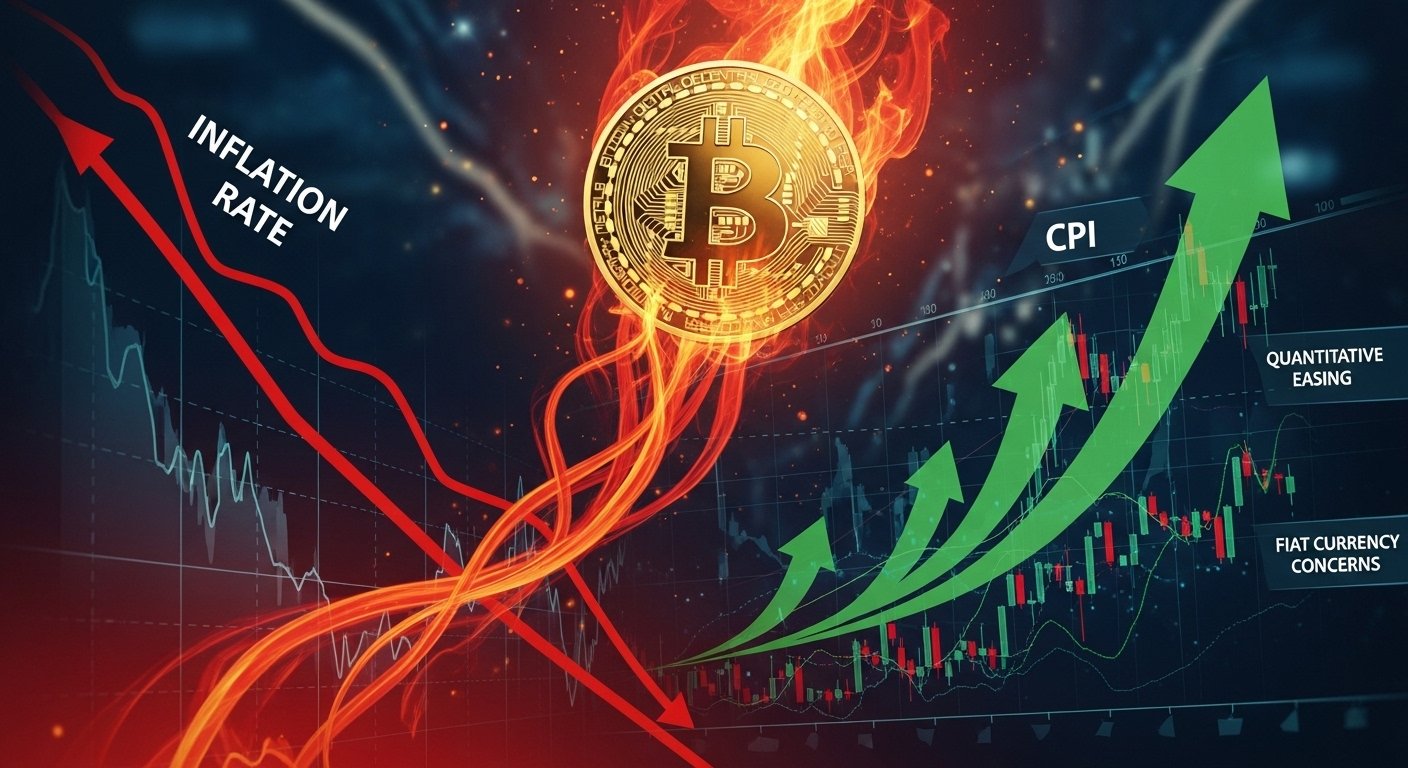
In that macro environment, Bitcoin holders felt validated. Rising inflation appeared to strengthen the case for decentralized, non-sovereign money. The correlation between money supply expansion and Bitcoin price appreciation reinforced bullish sentiment.
The Peak of the Inflation-Driven Rally
Bitcoin’s rally to all-time highs in 2021 coincided Bitcoin Holders Tested as Inflation with massive fiscal stimulus and ultra-loose monetary policy. Investors were flush with liquidity. Real yields were negative. Risk assets—from equities to cryptocurrencies—benefited from abundant capital seeking returns.
As inflation climbed above central bank targets, Bitcoin’s branding as “digital gold” gained traction. Analysts and commentators argued that institutional adoption was accelerating because corporations and funds wanted protection from currency debasement.
However, the macro cycle eventually turned. Central banks began tightening policy, raising interest rates, and shrinking balance sheets. Liquidity contracted. Risk assets corrected sharply. Bitcoin was no exception.
Inflation Eases: A Changing Macro Backdrop
Cooling Consumer Prices and Policy Shifts
Recent data suggests that inflation is moderating across major economies. In the United States, reports from the U.S. Bureau of Labor Statistics show a gradual decline in headline inflation from its peak levels. While prices remain elevated compared to pre-pandemic norms, the trajectory has shifted downward.
As inflation eases, central banks face a different policy calculus. Instead of aggressively hiking rates, policymakers may consider holding steady or eventually easing monetary conditions. This shift changes investor behavior significantly.
When inflation was accelerating, fear dominated the narrative. Investors sought assets perceived as inflation-resistant. Now, as inflation eases, traditional fixed-income instruments offer more attractive yields. Government bonds and high-grade corporate debt become competitive alternatives to speculative assets.
The Psychological Test for Bitcoin Holders
Anthony Pompliano argues that Bitcoin holders are being tested because the original inflation-driven urgency is diminishing. If inflation is no longer spiraling, the immediate fear of fiat debasement fades. The emotional driver behind some Bitcoin purchases weakens.
This creates a divide among market participants. Long-term believers maintain conviction in Bitcoin’s structural value proposition. Short-term traders, who entered during peak inflation narratives, may reassess their positions. Volatility increases as narratives shift. The test is therefore psychological and strategic. Do Bitcoin holders remain confident in the asset’s long-term thesis, or do they retreat as macro conditions evolve?
Anthony Pompliano’s Perspective on Market Cycles
Conviction in a Volatile Asset Class
Anthony Pompliano has consistently emphasized that Bitcoin is a long-duration asset. He argues that short-term macro fluctuations do not negate Bitcoin’s long-term potential as a decentralized monetary network.
From Pompliano’s perspective, easing inflation does not invalidate Bitcoin’s core thesis. Instead, it reveals who invested based on deep understanding versus those driven by temporary fear. Bitcoin holders are being tested because the environment no longer offers the same straightforward macro tailwinds. He frequently underscores that Bitcoin’s value proposition extends beyond inflation hedging. It encompasses censorship resistance, global accessibility, and a transparent monetary policy embedded in code.
Liquidity Cycles and Bitcoin’s Performance
Historically, Bitcoin’s performance has been closely linked to liquidity cycles. When central banks inject liquidity, speculative assets tend to rally. When tightening occurs, volatility increases and valuations compress.
As inflation eases, the question becomes whether liquidity conditions will improve again. If central banks eventually cut rates, risk assets could benefit. But the timing and magnitude of such shifts remain uncertain. Bitcoin holders navigating this period must interpret signals from monetary policy, bond markets, and global capital flows.
The Broader Macroeconomic Context
Interest Rates and Opportunity Cost
One of the most significant factors influencing Bitcoin demand is the level of interest rates. Higher rates increase the opportunity cost of holding non-yielding assets like Bitcoin. Investors can earn attractive returns in Treasury bonds or savings accounts without exposure to extreme volatility.
As inflation eases but rates remain relatively elevated, Bitcoin competes with traditional income-generating instruments. This dynamic pressures speculative flows into digital assets. However, if rate cuts eventually materialize, the relative attractiveness of Bitcoin could improve. Lower yields reduce opportunity cost, potentially reigniting interest in growth-oriented and alternative assets.
The Role of Institutional Adoption
Institutional participation in Bitcoin markets has expanded significantly in recent years. Major asset managers, custodians, and financial firms have introduced crypto products and services. Increased regulatory clarity in certain jurisdictions has also contributed to growing legitimacy.
Institutional investors tend to evaluate Bitcoin within broader portfolio allocation frameworks. For them, easing inflation may reduce the urgency of holding Bitcoin as a hedge, but diversification benefits and asymmetric upside potential remain compelling. This institutional lens differs from retail-driven narratives and may stabilize markets over time.
Bitcoin Beyond the Inflation Hedge Narrative
Digital Gold or Risk Asset?
One of the core debates is whether Bitcoin functions primarily as digital gold or as a high-beta risk asset correlated with equities. During tightening cycles, Bitcoin often moved in tandem with technology stocks, suggesting sensitivity to liquidity rather than purely inflation expectations.

As inflation eases, the digital gold narrative faces renewed scrutiny. Gold historically performs well during periods of economic uncertainty and declining real yields. Bitcoin’s track record is shorter and more volatile. Nevertheless, proponents argue that Bitcoin’s fixed supply and decentralized architecture give it unique attributes distinct from traditional commodities.
Structural Scarcity and Network Effects
Bitcoin’s supply schedule is transparent and predictable. Halving events reduce issuance over time, reinforcing scarcity. Unlike fiat currencies, whose supply can expand in response to economic crises, Bitcoin’s issuance is algorithmically constrained.
Network effects also strengthen over time as more participants join the ecosystem. Developers, miners, institutional custodians, and retail users contribute to a resilient infrastructure. These structural features persist regardless of short-term inflation trends.
Volatility as a Feature, Not a Bug
Testing Investor Time Horizons
Bitcoin’s price volatility is often cited as a weakness. However, long-term investors argue that volatility is inherent in emerging technologies and monetization phases. As inflation eases, volatility may increase due to shifting narratives.
Bitcoin holders are being tested because sideways or corrective markets require patience. In euphoric bull markets driven by inflation fears, conviction feels easy. In calmer macro environments, patience is harder. Those with multi-year horizons may view volatility as an accumulation opportunity. Short-term traders may struggle with drawdowns and narrative fatigue.
Market Sentiment and Behavioral Finance
Behavioral finance principles play a critical role. Fear of missing out during high inflation can drive rapid price appreciation. Conversely, diminishing urgency can reduce speculative demand. Investor psychology often oscillates between extremes. As inflation eases, complacency may replace panic. Bitcoin’s cyclical nature suggests that sentiment shifts frequently precede major moves. Understanding these psychological dynamics is essential for navigating the market.
Regulatory Developments and Market Maturity
Increasing Oversight and Clarity
Regulatory clarity has been gradually improving in key markets. While uncertainty remains, frameworks are emerging that define compliance requirements for exchanges, custodians, and issuers. Greater regulatory transparency can attract institutional capital, even in periods of easing inflation. Legitimacy reduces perceived risk and broadens participation. However, regulatory developments can also introduce short-term volatility, particularly if new restrictions or compliance burdens arise.
Global Adoption Trends
Bitcoin adoption continues to expand globally, particularly in regions experiencing currency instability or capital controls. In emerging markets, Bitcoin’s appeal extends beyond inflation hedging to include financial inclusion and cross-border payments. Even as inflation eases in developed economies, structural challenges in other regions sustain demand for decentralized alternatives.
The Long-Term Outlook for Bitcoin Holders
Navigating Transitional Phases
Market cycles are transitional by nature. Inflation surges, central banks tighten, inflation cools, and policy eventually shifts again. Bitcoin exists within this broader macro rhythm. Bitcoin holders who understand cyclical dynamics may be better equipped to weather periods of narrative transition. Easing inflation does not necessarily signal the end of Bitcoin’s relevance. Instead, it marks a new phase requiring recalibrated expectations.
Strategic Positioning and Risk Management
Long-term investors often emphasize disciplined allocation, risk management, and diversified portfolios. Bitcoin can function as a high-conviction allocation within a broader strategy rather than an all-or-nothing bet. As inflation eases, recalibrating position sizes and time horizons may help investors maintain conviction without overexposure to volatility.
Conclusion
Bitcoin holders are being tested as inflation eases, but the test is less about the asset’s intrinsic properties and more about investor conviction. During periods of rising inflation, the macro narrative was clear and compelling. Now, as inflation moderates and central banks adjust policy, the urgency behind the inflation hedge thesis has diminished.
Anthony Pompliano’s comments underscore a broader truth: Bitcoin’s long-term value proposition extends beyond short-term macro cycles. Structural scarcity, decentralized governance, and expanding adoption remain intact. However, market psychology and liquidity conditions continue to shape price action.
For Bitcoin holders, this period represents a proving ground. Those with long-term conviction may view easing inflation as a temporary shift in narrative rather than a fundamental threat. As always in cryptocurrency markets, patience, discipline, and macro awareness remain critical.
FAQs
Q: Why are Bitcoin holders being tested as inflation eases?
As inflation eases, the urgency behind Bitcoin’s inflation hedge narrative weakens. Investors must rely on long-term conviction rather than short-term macro fear.
Q: What did Anthony Pompliano say about Bitcoin and inflation?
Anthony Pompliano emphasized that Bitcoin holders are being tested during periods of easing inflation, highlighting the importance of long-term belief in Bitcoin’s structural value.
Q: Does easing inflation hurt Bitcoin’s price?
Not necessarily. While easing inflation can reduce immediate demand driven by hedging concerns, other factors such as liquidity cycles and institutional adoption also influence price.
Q: Is Bitcoin still considered a hedge against inflation?
Bitcoin is often described as digital gold due to its fixed supply. However, its short-term price movements are influenced by broader market conditions and investor sentiment.
Q: Should investors sell Bitcoin if inflation declines?
Investment decisions depend on individual risk tolerance, time horizon, and portfolio strategy. Easing inflation alone does not determine Bitcoin’s long-term viability.