








































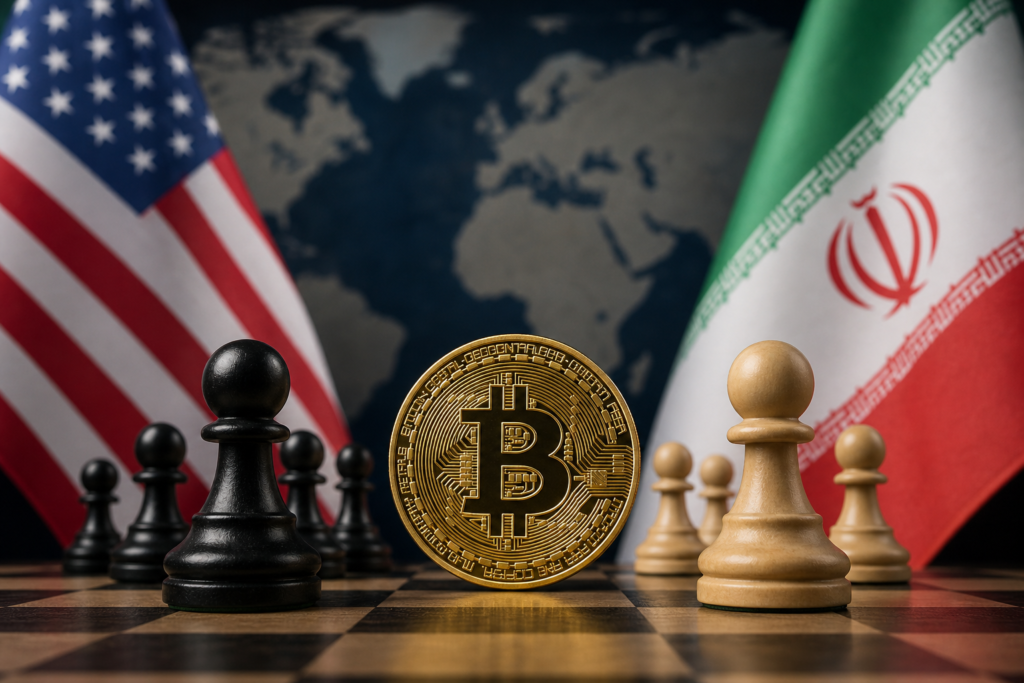
The long-standing geopolitical tension between the United States and Iran has entered a new digital phase, where financial warfare is no longer limited to banks, oil exports, or trade agreements. Instead, it has expanded into the rapidly evolving world of cryptocurrency. In this new environment, both nations are engaged in a crypto cat-and-mouse game over sanctions, using advanced technologies to either bypass or enforce economic restrictions.
For Iran, cryptocurrency has become a strategic lifeline. Years of economic sanctions have restricted its access to global banking systems, forcing the country to explore alternative financial tools. Digital currencies such as Bitcoin, stablecoins, and decentralized finance platforms offer new ways to move money across borders without relying on traditional intermediaries.
On the other side, the United States is working aggressively to maintain the effectiveness of its sanctions by developing tools to monitor blockchain activity, identify suspicious transactions, and freeze digital assets. This ongoing struggle highlights a major shift in global finance, where decentralization challenges traditional systems of control.
This article explores how the United States and Iran are engaged in a crypto cat-and-mouse game over sanctions, examining the strategies, technologies, and broader implications shaping this modern financial conflict.
The Background of US Sanctions on Iran
Economic Restrictions and Financial Isolation
US sanctions against Iran have been a central part of foreign policy for decades. These measures were initially introduced to address concerns related to nuclear development, regional influence, and security issues. Over time, they have evolved into a complex framework designed to isolate Iran from the global financial system.
Sanctions have targeted key sectors such as oil exports, banking, and international trade. Iranian banks have been cut off from global networks, making it extremely difficult for the country to conduct international transactions. This isolation has significantly impacted Iran’s economy, leading to currency depreciation, inflation, and limited access to foreign investment.
Expansion into the Digital Space
As technology advanced, the United States expanded its enforcement strategies beyond traditional financial systems. Regulatory authorities began focusing on digital platforms, recognizing that cryptocurrency could be used to bypass sanctions. This marked the beginning of a new era where blockchain monitoring and crypto regulation became essential tools in sanctions enforcement.
Iran’s Use of Cryptocurrency to Bypass Sanctions
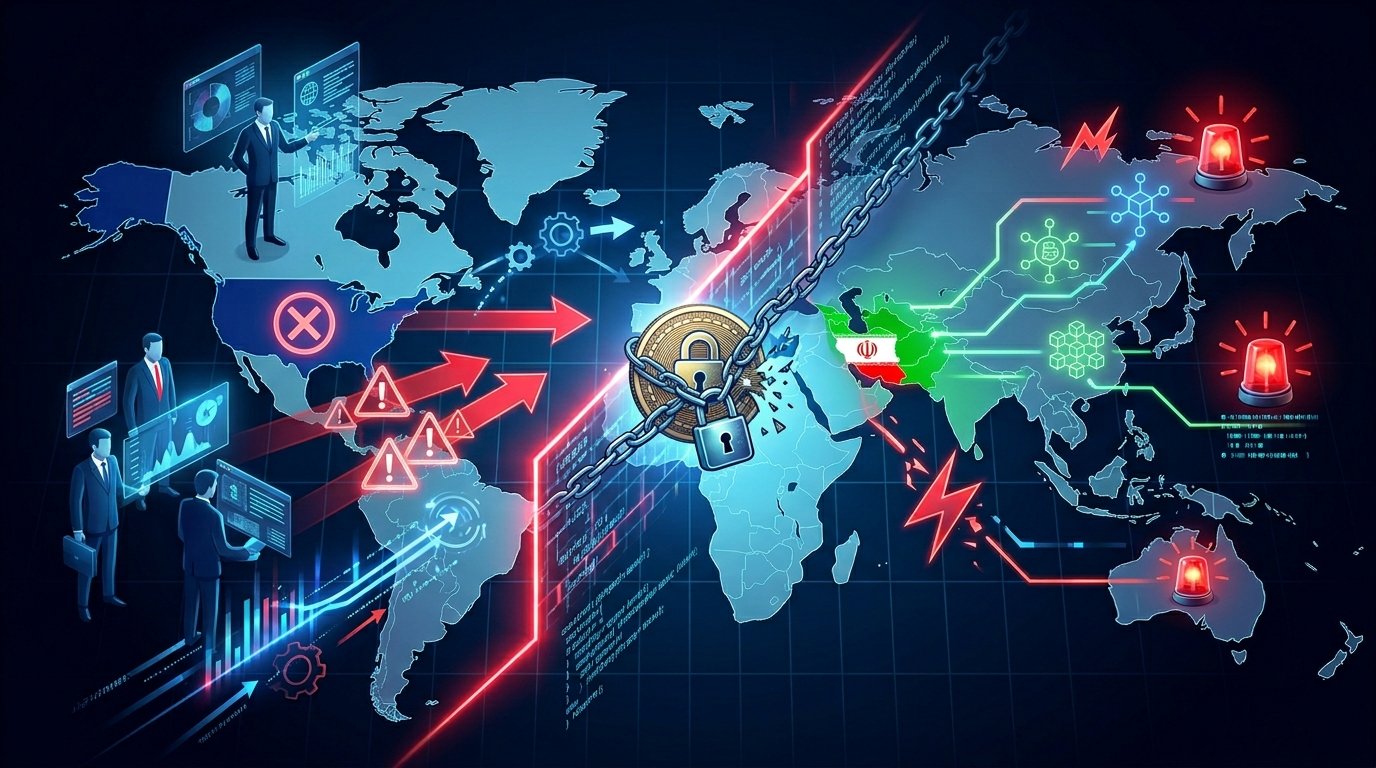
Why Cryptocurrency Appeals to Iran
Cryptocurrency provides Iran with an alternative financial system that operates outside traditional banking structures. The decentralized nature of blockchain technology means that transactions can occur without the need for intermediaries such as banks, which are heavily regulated and monitored.
This makes cryptocurrency particularly attractive for a country under strict sanctions. Iran can use digital assets to pay for imports, receive payments, and transfer funds internationally without relying on systems controlled by Western institutions.
Growth of the Crypto Economy in Iran
Iran has actively embraced cryptocurrency as part of its economic strategy. The government has legalized crypto mining under certain conditions and encouraged its use in international trade. This has led to the development of a growing crypto ecosystem that includes exchanges, mining operations, and digital payment networks.
Many individuals in Iran also use cryptocurrency as a hedge against inflation and currency instability. As a result, adoption has increased significantly, making digital assets an important part of the country’s financial landscape.
The Role of Crypto Exchanges and Financial Networks
Domestic Exchanges and Global Access
Crypto exchanges play a critical role in Iran’s strategy to bypass sanctions. These platforms allow users to buy, sell, and transfer digital assets, effectively connecting the domestic economy with global markets.
Some exchanges have been linked to large transaction volumes, facilitating the movement of funds for both individuals and institutions. These platforms often operate within a complex regulatory environment, balancing local compliance with the need to maintain access to international markets.
Advanced Financial Techniques
Iranian entities have adopted sophisticated methods to move funds through the crypto ecosystem. These include the use of multiple wallets, token conversions, and decentralized platforms to obscure transaction trails.
Such techniques make it difficult for authorities to track the origin and destination of funds, creating a constantly evolving challenge for enforcement agencies.
The US Strategy to Counter Crypto-Based Sanctions Evasion
Monitoring Blockchain Activity
The United States has invested heavily in blockchain analytics to track cryptocurrency transactions. Unlike traditional banking systems, blockchain transactions are publicly recorded, allowing analysts to trace the flow of funds across networks.
By identifying patterns and linking wallet addresses to known entities, authorities can detect suspicious activity and take action against those involved in sanctions evasion.
Sanctions and Asset Seizures
US authorities have expanded sanctions to include digital assets and wallet addresses. This means that specific wallets can be blacklisted, preventing them from interacting with regulated platforms.
In addition, law enforcement agencies have successfully seized large amounts of cryptocurrency linked to illicit activities. These actions demonstrate the growing capability of governments to enforce sanctions in the digital space.
The Technological Arms Race
Transparency Versus Privacy
One of the defining features of cryptocurrency is its transparency. Every transaction is recorded on a public ledger, making it possible to trace financial activity. However, this transparency is counterbalanced by tools designed to enhance privacy.
Iranian users and networks often rely on techniques such as mixing services, decentralized exchanges, and cross-chain transactions to obscure their activity. This creates a continuous cycle where enforcement agencies develop new tracking methods while evaders find new ways to avoid detection.
Limitations of Enforcement
Despite significant advancements, enforcing sanctions in a decentralized system remains challenging. Transactions can be executed quickly and across multiple platforms, making it difficult to intervene in real time.
This highlights the reactive nature of current enforcement strategies, where authorities often respond to activity after it has already occurred.
Cryptocurrency as a Tool of Economic Warfare
A New Financial Battlefield
The use of cryptocurrency in the US-Iran conflict represents a shift in how economic warfare is conducted. Digital assets have become tools for both resistance and enforcement, transforming the nature of sanctions.
For Iran, cryptocurrency offers a way to maintain economic activity despite restrictions. For the United States, it presents a challenge to the effectiveness of traditional sanctions.
Global Impact
This crypto cat-and-mouse game has implications beyond the US and Iran. It raises important questions about the future of financial systems, the role of decentralization, and the ability of governments to regulate digital assets.
As more countries explore the use of cryptocurrency, similar dynamics could emerge in other geopolitical contexts.
The Role of Stablecoins and Decentralized Finance
Importance of Stablecoins
Stablecoins have become a key component of Iran’s crypto strategy. Unlike volatile cryptocurrencies, stablecoins maintain a consistent value, making them ideal for transactions and trade.
However, stablecoins also introduce new points of control. Issuers have the ability to freeze assets, which can be used as a tool for enforcement.
Decentralized Finance Opportunities
Decentralized finance platforms enable users to conduct transactions without intermediaries. This reduces the effectiveness of traditional regulatory measures and provides additional avenues for sanctions evasion.
At the same time, the transparency of blockchain technology allows for advanced monitoring, creating a complex balance between freedom and control.
Recent Developments in the Crypto Conflict
Recent developments show that the crypto cat-and-mouse game between the United States and Iran is intensifying. Authorities have increased their focus on identifying hidden networks and disrupting financial flows linked to sanctioned entities.
At the same time, Iranian networks continue to adapt, using new technologies and strategies to maintain access to global markets. This ongoing evolution highlights the dynamic nature of the conflict.
Ethical and Regulatory Challenges
Balancing Innovation and Control
The rise of cryptocurrency presents a challenge for regulators. While enforcement is necessary to prevent illicit activity, excessive regulation could stifle innovation and limit the benefits of decentralized technology.
Impact on Ordinary Citizens
Sanctions and enforcement measures often affect ordinary people who rely on cryptocurrency for financial access. This raises important ethical questions about the balance between security and economic freedom.
The Future of the Crypto Cat-and-Mouse Game
The conflict between the United States and Iran in the crypto space is likely to continue evolving. Advances in technology, including artificial intelligence and blockchain analytics, will play a key role in shaping future strategies.
At the same time, the increasing adoption of cryptocurrency worldwide suggests that digital assets will remain an important factor in global finance and geopolitics.
Conclusion
The crypto cat-and-mouse game between the United States and Iran represents a significant shift in the nature of economic warfare. As Iran uses cryptocurrency to bypass sanctions and the United States develops new tools to enforce them, the conflict highlights both the potential and the challenges of digital finance.
This ongoing battle underscores the need for balanced regulation, technological innovation, and international cooperation. As cryptocurrency continues to evolve, its role in global geopolitics will only become more significant.
FAQs
Q. Why does Iran rely on cryptocurrency?
Iran uses cryptocurrency to bypass restrictions on traditional banking systems and maintain international financial activity.
Q. How does the US enforce crypto-related sanctions?
The US uses blockchain analytics, sanctions wallet addresses, and seizes digital assets linked to illicit activities.
Q. Are cryptocurrencies completely anonymous?
No, most cryptocurrencies are pseudonymous, meaning transactions can be traced using advanced analytics tools.
Q. What role do stablecoins play in sanctions evasion?
Stablecoins provide price stability, making them useful for transactions, but they can also be controlled by issuers.
Q. Will crypto make sanctions ineffective?
Not entirely, but it does make enforcement more complex and requires new strategies and technologies.