






































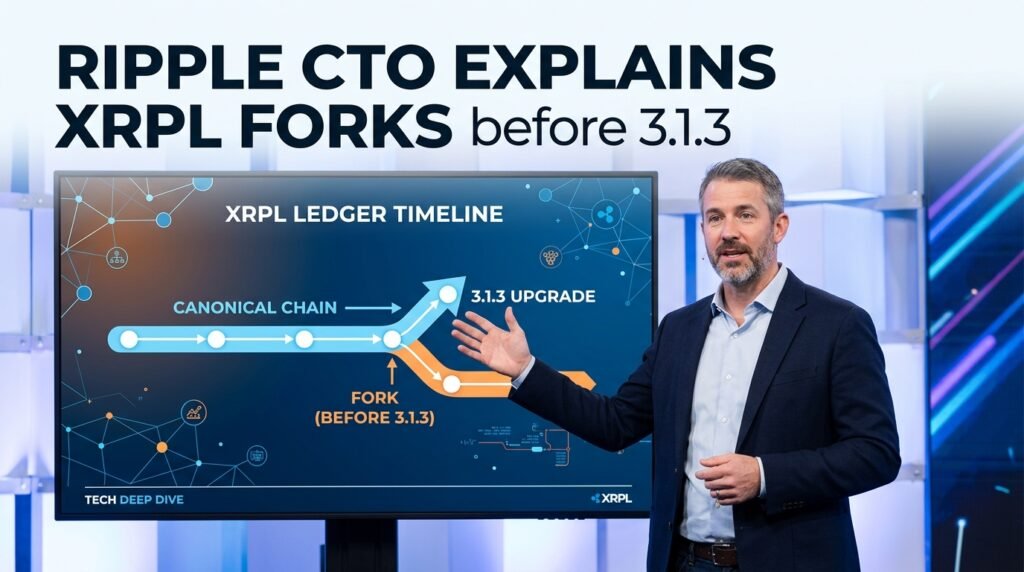
The conversation around XRPL consensus evolution has intensified after recent discussions in the crypto community about network stability, governance decisions, and upcoming protocol changes. At the center of this debate is the statement and clarification from the Ripple CTO, who has been actively addressing concerns related to XRPL hard forks before 3.1.3 deadline. As expectations rise for the next phase of the XRP Ledger ecosystem, developers, validators, and investors are closely analyzing what these changes could mean for the future of the network.
The discussion around XRPL hard forks before 3.1.3 deadline has sparked fresh questions about validator coordination and amendment adoption. Some traders fear network fragmentation. Others worry about operational disruptions during the upgrade process. Schwartz addressed these concerns directly and explained why XRPL works differently from many traditional blockchain systems.
Unlike Bitcoin and some proof-of-work chains, XRPL does not depend on mining competition. The XRP Ledger uses a validator-based consensus system that keeps the network aligned. This design lowers the risk of permanent blockchain splits. Still, validators must upgrade on time to maintain compatibility with the network.
This article explains the Ripple CTO’s comments in detail. It also explores how XRPL upgrades work, why the 3.1.3 deadline matters, and what the future may hold for the XRP Ledger ecosystem.
Understanding the XRPL Consensus Model
The XRP Ledger uses a unique structure that differs from many popular blockchain networks. This structure plays a major role in the discussion about XRPL hard forks before 3.1.3 deadline.
How XRPL consensus works
XRPL relies on decentralized validators instead of miners. Validators communicate with each other and confirm transactions through consensus rounds. This process allows the network to settle transactions quickly and efficiently.
The XRP Ledger can process transactions within seconds. It also consumes far less energy than proof-of-work blockchains. These advantages have helped XRPL maintain strong interest among financial institutions and payment companies.
Validators choose trusted node lists and compare transaction proposals during each consensus round. Once most validators agree, the ledger closes and confirms the transactions.
Why XRPL avoids traditional hard forks
Bitcoin and Ethereum can experience blockchain splits when communities disagree on upgrades. XRPL operates differently. The network uses coordinated amendments instead of competitive chain branching.
David Schwartz explained that XRPL rarely experiences permanent chain divergence. Validators usually coordinate upgrades before amendments activate. This process keeps the ledger unified and stable.
The term XRPL hard forks before 3.1.3 deadline can therefore create confusion. In most cases, users refer to temporary incompatibility issues rather than permanent chain splits.
Ripple CTO’s Explanation of XRPL Hard Fork Concerns
The Ripple CTO, David Schwartz, has been instrumental in clarifying misconceptions surrounding XRPL upgrades. His explanation of XRPL hard forks before 3.1.3 deadline focuses on the difference between theoretical fork risks and practical network behavior.
Clarifying the meaning of “hard fork” in XRPL context
In traditional blockchain systems, a hard fork represents a permanent divergence in the blockchain where two separate chains continue independently. However, the Ripple CTO has repeatedly pointed out that XRPL’s architecture does not support this type of divergence under normal conditions.
Instead, what the community sometimes refers to as a “hard fork” is actually a protocol amendment transition, where nodes upgrade their software to maintain compatibility with the network. If a subset of validators fails to upgrade before the 3.1.3 deadline, they may temporarily fall out of sync, but this does not automatically create a competing ledger.
This clarification is central to understanding why XRPL hard forks before 3.1.3 deadline are more about operational coordination than existential network splits.
The role of validator agreement
According to the Ripple CTO, the strength of XRPL lies in its validator agreement process, which ensures that only validated and agreed-upon transactions are finalized. Validators independently decide which version of the software to run, but they must align with the broader consensus rules to remain effective participants in the network.
If validators delay upgrades beyond the 3.1.3 deadline, they risk being excluded from consensus participation. This creates a natural incentive structure that minimizes fragmentation while maintaining network integrity.
The Importance of the 3.1.3 Amendment Deadline
The upcoming 3.1.3 update is not just a minor patch; it represents a significant step in the ongoing evolution of the XRP Ledger. The discussion around XRPL hard forks before 3.1.3 deadline is largely driven by the implications of this upgrade.
What the 3.1.3 update represents
The 3.1.3 version introduces improvements in protocol stability, performance optimization, and validator coordination mechanisms. These changes are designed to enhance transaction throughput and ensure smoother consensus behavior under high network load.
From a technical perspective, this update strengthens the decentralized ledger infrastructure by improving how validators communicate and reach agreement. This is especially important as XRPL continues to scale and integrate more complex financial applications.
Why deadlines matter in XRPL upgrades
Unlike loosely coordinated blockchain ecosystems, XRPL relies heavily on synchronized adoption. The 3.1.3 deadline ensures that validators upgrade within a defined timeframe to maintain network uniformity.
The Ripple CTO has explained that missing such deadlines does not immediately break the network, but it does create inefficiencies and potential exclusion from consensus. This is why discussions around XRPL hard forks before 3.1.3 deadline are primarily focused on ensuring smooth transition rather than fear of fragmentation.
Governance, Decentralization, and Network Coordination
One of the most debated topics in the XRPL ecosystem is the balance between decentralization and coordinated governance. The Ripple CTO’s comments shed light on how these two concepts interact within the framework of XRPL hard forks before 3.1.3 deadline discussions.
On-chain governance without mining competition
Unlike proof-of-work networks, XRPL does not rely on mining incentives or competitive block production. Instead, governance is achieved through validator consensus and community-driven amendment processes.
This model allows for faster decision-making but also requires higher levels of coordination. The 3.1.3 upgrade is a perfect example of how governance operates in practice, with validators collectively deciding to adopt changes that improve network performance.
Ripple’s role in ecosystem coordination
David Schwartz has consistently emphasized that while Ripple contributes to development, it does not control the XRPL network. Instead, it acts as one of many participants in a broader ecosystem.
This distinction is crucial when discussing XRPL hard forks before 3.1.3 deadline, as it highlights the decentralized nature of decision-making while acknowledging Ripple’s influential role in protocol development.
Technical Risks and Stability Considerations
Even though XRPL is designed to avoid traditional forks, the Ripple CTO has acknowledged that upgrade transitions like 3.1.3 can introduce temporary risks if not properly coordinated.
Potential synchronization issues
If a significant number of validators fail to upgrade in time, the network could experience temporary inconsistencies in transaction validation. While this does not result in a permanent fork, it may lead to reduced efficiency or temporary ledger disagreements.
These risks are precisely why discussions around XRPL hard forks before 3.1.3 deadline are taken seriously by developers and infrastructure providers.
Mitigation strategies in place
The XRPL ecosystem includes multiple safeguards to prevent disruption during upgrades. These include advance communication of amendment changes, automated validation checks, and community monitoring of upgrade adoption rates.
The Ripple CTO has highlighted that these mechanisms are designed to ensure that even if some validators lag behind, the network continues to function with minimal disruption.
The Future of XRPL Upgrades Beyond 3.1.3
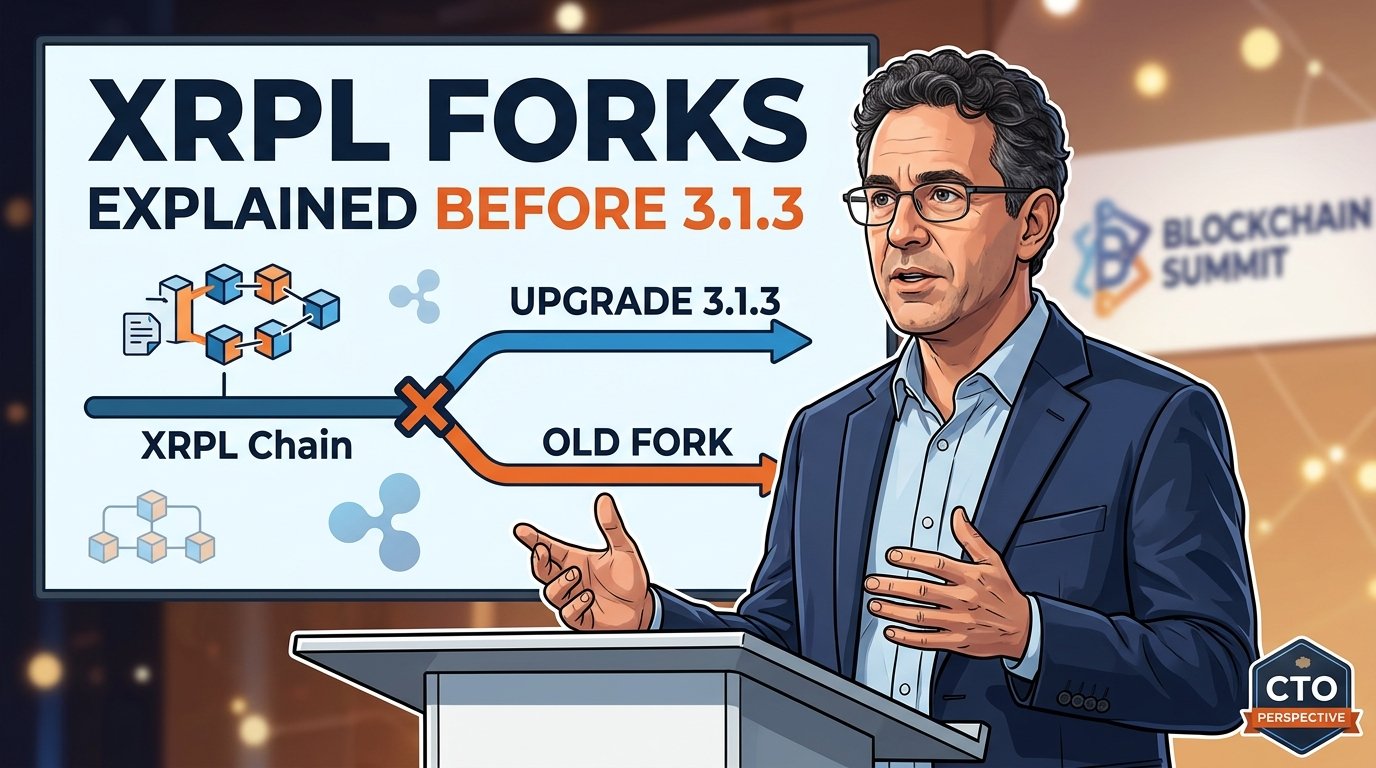
Looking beyond the current update cycle, the XRP Ledger is expected to continue evolving with more advanced features related to scalability, interoperability, and smart contract capabilities.
Continuous protocol evolution
The XRPL development roadmap suggests that future updates will focus on expanding functionality while maintaining the network’s core efficiency. This means that discussions similar to XRPL hard forks before 3.1.3 deadline will likely continue as part of the normal upgrade lifecycle.
Strengthening decentralized infrastructure
As adoption grows, the importance of robust validator coordination will increase. The Ripple CTO has indicated that future upgrades will aim to make transitions even smoother, reducing the likelihood of any operational disruptions during amendment rollouts.
Conclusion
The Ripple CTO’s explanation of XRPL hard forks before 3.1.3 deadline highlights a fundamental truth about the XRP Ledger: it is designed to avoid traditional blockchain fragmentation while still allowing for structured and coordinated upgrades. Rather than representing a risk of chain splits, the 3.1.3 deadline serves as a coordination mechanism that ensures validators remain aligned and the network continues to operate efficiently.
With Ripple continuing to contribute to ecosystem development and experts like David Schwartz providing technical clarity, the XRPL ecosystem remains focused on stability, scalability, and long-term resilience. As the network evolves, understanding these upgrade processes will remain essential for developers, investors, and the broader crypto community.