Understanding Bitcoin Season and Market Cycles
What Is Bitcoin Season?
A Bitcoin season refers to a period in the cryptocurrency market when Bitcoin significantly outperforms altcoins. During this phase, most of the market’s capital flows into Bitcoin, increasing its dominance relative to other digital assets.
This typically happens during times of uncertainty or when new money enters the crypto space. Investors often view Bitcoin as the safest and most established asset, making it the primary choice for capital allocation.
How Bitcoin Dominance Reflects Market Trends
Bitcoin dominance is a key metric used to measure Bitcoin’s share of the total cryptocurrency market capitalization. When dominance rises, it indicates that Bitcoin is gaining strength compared to altcoins.
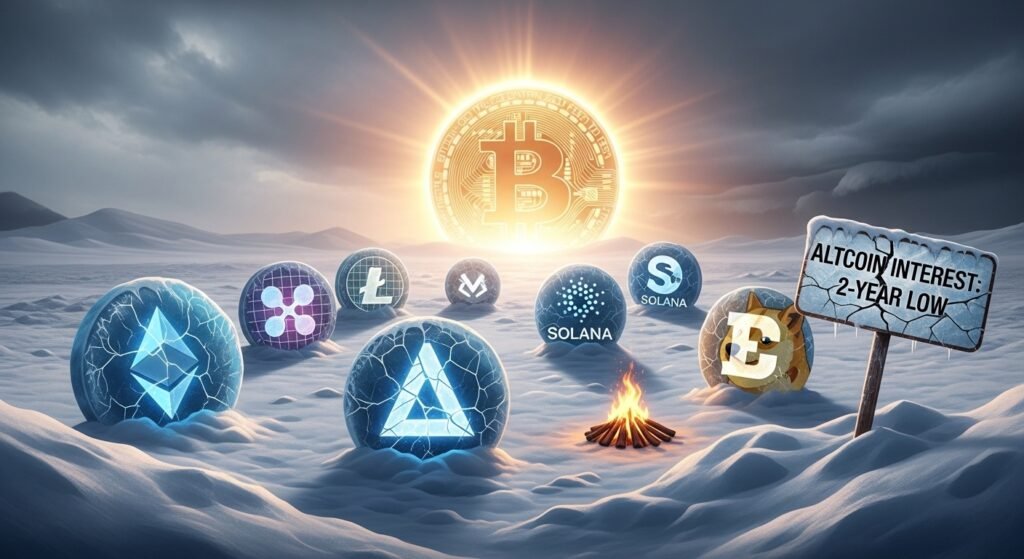
Currently, the rise in dominance aligns with the narrative that altcoin interest has hit a 2-year low, reinforcing the idea that investors are consolidating their positions in Bitcoin rather than diversifying into smaller projects.
Why Altcoin Interest Hits a 2-Year Low
Shift Toward Safer Investments
One of the main reasons why altcoin interest hits a 2-year low is the shift toward safer and more reliable investments. In uncertain market conditions, investors tend to reduce exposure to high-risk assets like altcoins and focus on Bitcoin.
Unlike many altcoins, Bitcoin has a proven track record, strong liquidity, and widespread recognition. This makes it a preferred choice during volatile periods.
Institutional Influence on the Market
Institutional investors have played a major role in strengthening Bitcoin’s position. Large financial institutions, hedge funds, and asset managers are increasingly allocating funds to Bitcoin rather than altcoins.
This institutional preference contributes significantly to the ongoing Bitcoin season, as it drives demand and boosts Bitcoin’s market dominance.
Lack of Strong Altcoin Narratives
Another factor behind declining altcoin interest is the absence of compelling narratives. In previous cycles, trends like DeFi (Decentralized Finance), NFTs (Non-Fungible Tokens), and Web3 innovation fueled altcoin rallies.
Currently, the market lacks a dominant theme that could attract widespread attention and investment into altcoins. As a result, interest continues to decline.
Global Economic Uncertainty
Macroeconomic factors have a profound impact on the crypto market. Inflation concerns, interest rate hikes, and geopolitical tensions often lead investors to adopt a risk-averse approach.In such environments, Bitcoin is seen as a store of value, similar to digital gold. This perception further strengthens Bitcoin’s dominance while weakening altcoin demand.
Impact of Monetary Policies
Central bank policies also influence crypto market dynamics. Tight monetary conditions reduce liquidity, making it harder for speculative assets like altcoins to attract investment.This explains why altcoin interest hits a 2-year low during periods of economic tightening, as investors prioritize capital preservation over high-risk opportunities.
Investor Behavior and Market Psychology
Fear and Risk Aversion
Investor psychology plays a crucial role in shaping market trends. During uncertain times, fear dominates decision-making, leading to reduced risk-taking.Altcoins, being more volatile, are often the first to be sold off when market sentiment turns negative. This behavior contributes to the ongoing decline in altcoin interest.
The “Flight to Quality” Phenomenon
The concept of flight to quality is evident in the current market cycle. Investors are moving their funds into assets perceived as more stable and reliable—primarily Bitcoin.This trend reinforces the narrative that Bitcoin season holds strong, while altcoins struggle to maintain relevance.
Comparing Bitcoin and Altcoins in the Current Cycle
Performance Differences
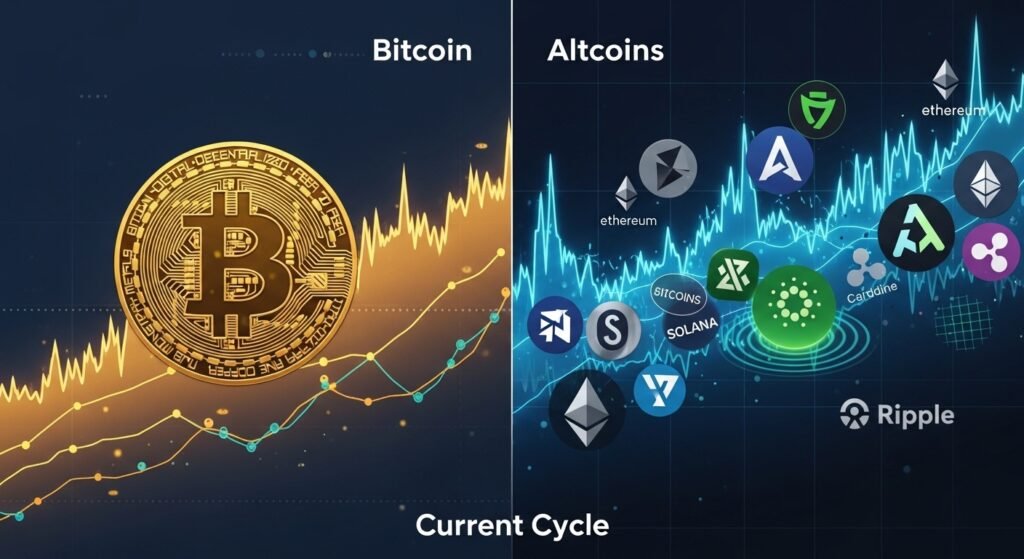
Bitcoin has demonstrated consistent performance compared to altcoins, which have experienced significant volatility and drawdowns. While some altcoins may outperform in short bursts, they often fail to sustain long-term growth.This performance gap is a key reason why altcoin interest hits a 2-year low.
Liquidity and Market Depth
Bitcoin benefits from deeper liquidity and stronger market infrastructure. This makes it easier for large investors to enter and exit positions without significantly impacting prices.Altcoins, on the other hand, often suffer from low liquidity, making them less attractive to institutional investors.
Will Altcoins Make a Comeback?
Historical Patterns Suggest Cycles
Despite the current downturn, history shows that altcoins tend to perform well after Bitcoin rallies. Once Bitcoin stabilizes, investors often rotate profits into altcoins in search of higher returns.This means that the current 2-year low in altcoin interest may not last forever.
Emerging Trends That Could Revive Altcoins
New innovations and narratives could reignite interest in altcoins. Areas such as AI-powered blockchain projects, real-world asset tokenization, and next-generation DeFi platforms have the potential to attract investor attention.If a strong narrative emerges, it could mark the beginning of a new altcoin season.
Strategies for Investors During Bitcoin Season
Focus on Market Trends
Understanding market cycles is essential for making informed investment decisions. During a Bitcoin season, it may be wise to allocate a larger portion of the portfolio to Bitcoin.
Diversification with Caution
While diversification is important, investors should be cautious when investing in altcoins during periods of low interest. Selecting fundamentally strong projects can help mitigate risks.
Long-Term Perspective
Adopting a long-term perspective can help investors navigate market fluctuations. Both Bitcoin and altcoins have their place in a balanced portfolio, depending on market conditions.
The Future of Crypto Market Dynamics
Increasing Institutional Adoption
Institutional adoption is expected to continue shaping the crypto market. As more institutions enter the space, Bitcoin’s dominance could remain strong for an extended period.
Evolution of Altcoin Ecosystems
Altcoins are not disappearing; they are evolving. Projects that offer real-world utility and strong fundamentals are more likely to survive and thrive in the long run.
Balance Between Bitcoin and Altcoins
The crypto market is dynamic, and the balance between Bitcoin and altcoins will continue to shift over time. While Bitcoin season currently holds, future cycles may favor altcoins once again.
Conclusion
The current market landscape clearly shows that altcoin interest hits a 2-year low as Bitcoin season holds strong. This shift is driven by a combination of factors, including macroeconomic uncertainty, institutional influence, and changing investor behavior.Bitcoin’s dominance reflects its position as the most trusted and widely adopted cryptocurrency, making it the preferred choice during uncertain times.
However, the crypto market is cyclical, and altcoins have historically rebounded after periods of decline.For investors, understanding these cycles is crucial. While Bitcoin may lead the market today, the potential for altcoins to stage a comeback remains strong. Staying informed, adapting to market trends, and maintaining a balanced strategy can help navigate this ever-evolving landscape.
See more::Altcoin Interest Hits 2-Year Low as Bitcoin Season Dominates