






































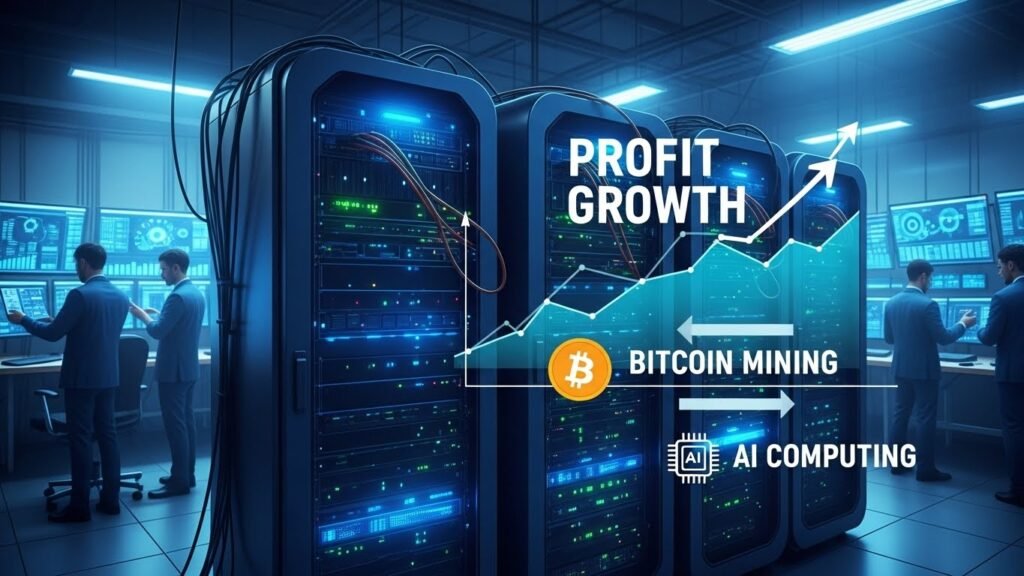
The global Bitcoin mining industry is undergoing one of the most significant transformations in its history. Once singularly focused on validating blocks and securing the Bitcoin network, mining firms are now expanding far beyond their original mandate. As margins tighten due to halving cycles, rising energy costs, and increasing competition, a growing number of Bitcoin mining firms pivot to AI computing for massive profits. This shift is not merely experimental or opportunistic; it represents a calculated strategic evolution driven by market realities and technological convergence.
Artificial intelligence has emerged as one of the most capital-intensive and infrastructure-hungry sectors in the digital economy. From training large language models to powering autonomous systems and enterprise analytics, AI workloads demand enormous computing power, reliable energy access, and sophisticated cooling systems. Ironically, these requirements mirror the very infrastructure that large-scale Bitcoin miners have spent years perfecting. The result is a natural overlap where crypto-native companies find themselves uniquely positioned to capitalize on the AI boom.
As traditional Bitcoin mining profitability becomes more cyclical and unpredictable, AI computing offers diversified revenue streams, longer-term contracts, and higher-margin opportunities. This article explores why Bitcoin mining firms are making this pivot, how the transition works, and what it means for the future of crypto, AI, and digital infrastructure at large.
Why Bitcoin Mining Firms Are Looking Beyond Crypto
The Impact of Bitcoin Halvings on Mining Economics
Bitcoin’s fixed monetary policy is both its greatest strength and its most challenging feature for miners. Every four years, the block reward is cut in half, instantly reducing miner revenue unless offset by higher prices or transaction fees. While previous halvings eventually led to bull markets, the interim periods often strain miners’ balance sheets. This recurring pressure has pushed firms to rethink their dependence on a single revenue source.
As Bitcoin mining profitability becomes increasingly sensitive to price volatility, miners are recognizing the importance of income diversification. AI computing offers a way to monetize infrastructure continuously, regardless of short-term crypto market cycles.
Rising Energy Costs and Regulatory Pressures
Energy is the single largest operational expense for Bitcoin miners. Over the past few years, global energy markets have experienced sharp price swings, while governments have introduced stricter regulations around power usage and environmental impact. These factors have compressed margins and increased operational risk.
By contrast, AI computing customers are often willing to pay premium rates for guaranteed uptime and performance. This allows mining firms to negotiate longer-term energy contracts and justify investments in renewable or low-cost power sources, aligning profitability with sustainability goals.
The Natural Synergy Between Bitcoin Mining and AI Computing
Shared Infrastructure and Technical Expertise
At the core of this pivot lies a simple truth: Bitcoin mining firms already operate massive data centers optimized for high-performance computing. These facilities feature robust power delivery systems, advanced cooling solutions, and experienced engineering teams. Transitioning from ASIC-based mining to GPU-driven AI workloads is complex, but far from starting from scratch.
Many firms are repurposing or expanding their facilities to support AI data centers, leveraging existing land, grid connections, and operational expertise. This infrastructure advantage dramatically reduces the time and capital required to enter the AI computing market.
From ASICs to GPUs and Hybrid Models
While Bitcoin mining relies primarily on ASIC hardware, AI computing depends heavily on GPUs and specialized accelerators. Leading mining firms are adopting hybrid models that allow them to allocate resources dynamically. During periods of high Bitcoin profitability, more power can be directed toward mining. When AI demand spikes, capacity can be shifted toward high-performance AI workloads. This flexibility transforms mining operations into multi-purpose computing hubs, capable of adapting to changing market conditions in real time.
AI Computing: A High-Margin Opportunity for Miners
Explosive Demand for AI Infrastructure
The rapid adoption of artificial intelligence across industries has created a global shortage of compute capacity. Tech giants, startups, and enterprises alike are racing to secure GPU resources for training and inference. This demand has driven up prices and created lucrative opportunities for infrastructure providers.
For Bitcoin miners, this translates into predictable, contract-based revenue streams. Hosting AI workloads often involves long-term agreements that provide steady cash flow, a stark contrast to the volatile nature of crypto mining rewards.
Monetizing Power and Location Advantages
Many Bitcoin mining firms operate in regions with abundant, low-cost energy and favorable climates for cooling. These same advantages are highly attractive to AI customers seeking efficient and scalable computing solutions. By offering AI hosting services, miners can monetize not just their hardware, but also their geographic and energy advantages. This repositioning turns miners into critical players in the global AI supply chain rather than niche participants in the crypto economy.
How Bitcoin Mining Firms Are Executing the Pivot
Strategic Partnerships With AI and Cloud Companies
Rather than competing directly with established cloud providers, many miners are forming partnerships with AI startups, research institutions, and enterprise clients. These collaborations allow miners to focus on infrastructure and operations while partners handle software, model development, and customer acquisition.
Such partnerships reduce execution risk and accelerate time to market, making the pivot to AI computing more attractive and sustainable.
Capital Expenditure and Financing Strategies
Transitioning into AI computing requires significant upfront investment, particularly in GPUs and cooling upgrades. However, miners are increasingly able to access capital through diversified funding channels. Equity raises, debt financing, and even tokenized funding models are being used to support expansion.
Investors, attracted by the prospect of massive profits from AI computing, are often more willing to fund diversified firms than pure-play Bitcoin miners, further reinforcing the strategic logic of the pivot.
Market Leaders Driving the Trend
Public Mining Companies Leading the Way
Several publicly traded Bitcoin mining firms have already announced major AI initiatives, signaling confidence in the strategy. By communicating clear roadmaps and revenue projections, these companies are repositioning themselves as diversified digital infrastructure providers rather than solely crypto miners. This narrative shift has important implications for valuations, as markets increasingly price these firms based on their AI exposure as well as their Bitcoin holdings.
Competitive Pressure on Smaller Miners
As large players move into AI computing, smaller mining operations face mounting pressure to adapt or consolidate. Those unable to invest in diversification risk being squeezed out by rising difficulty levels and declining margins. This dynamic is likely to accelerate industry consolidation, with AI-capable miners emerging as dominant players in both crypto and computing markets.
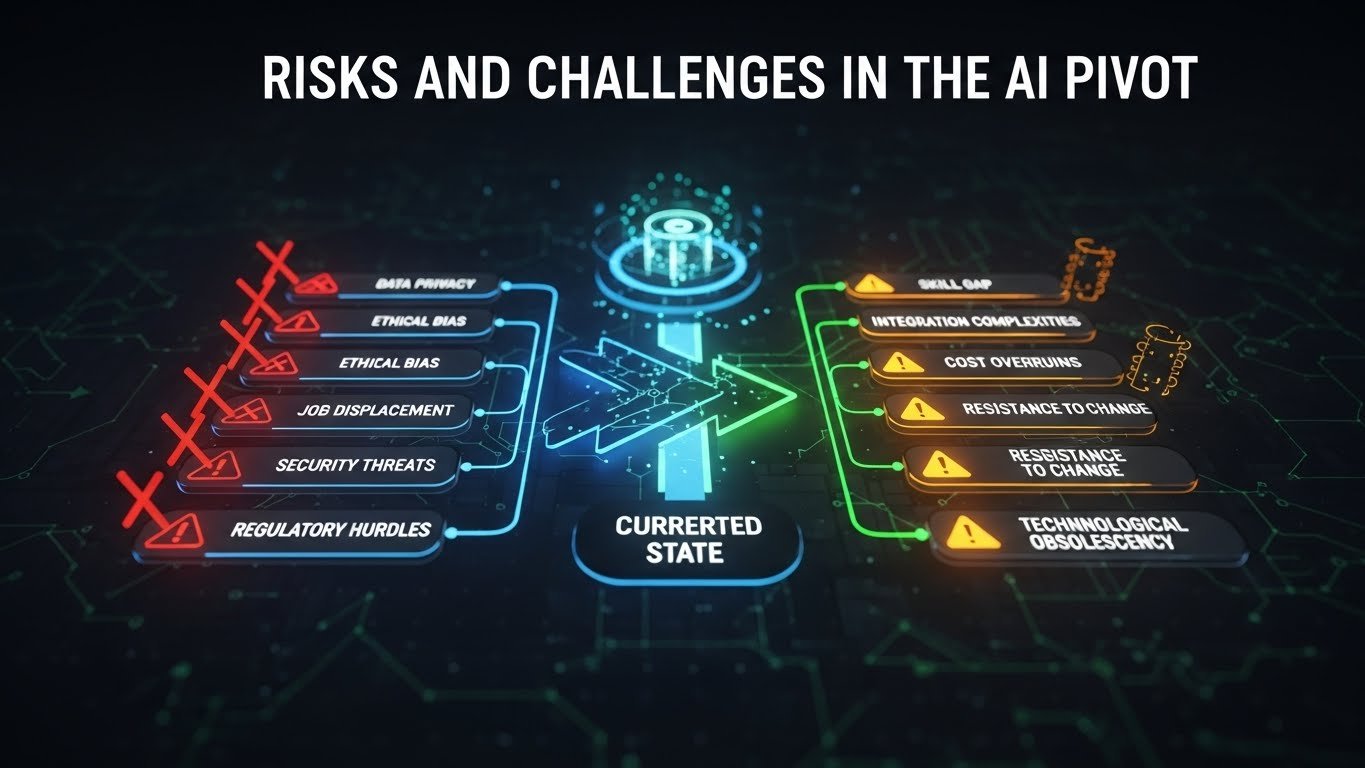
Risks and Challenges in the AI Pivot
Technical and Operational Complexity
Despite the synergies, AI computing introduces new challenges. Managing GPU clusters, ensuring low-latency networking, and meeting strict service-level agreements require different skill sets than traditional mining. Firms must invest in talent and operational processes to succeed.
Failure to execute properly can result in downtime, reputational damage, and lost contracts, making operational excellence critical.
Market Cycles and Overcapacity Risks
While AI demand is currently booming, it is not immune to cycles. Overinvestment could lead to excess capacity if demand slows or technology shifts. Bitcoin mining firms must carefully balance expansion with disciplined capital allocation to avoid repeating past boom-and-bust patterns.
Implications for Bitcoin and the Broader Crypto Ecosystem
Strengthening Miner Resilience
By diversifying into AI computing, miners reduce their dependence on Bitcoin price cycles, making the network more resilient. Financially stable miners are less likely to shut down during downturns, contributing to network security and stability.
This resilience benefits the entire Bitcoin ecosystem, from developers to long-term holders.
Blurring the Lines Between Crypto and Tech Infrastructure
The pivot highlights a broader convergence between crypto and traditional tech infrastructure. As Bitcoin mining firms pivot to AI computing for massive profits, they are redefining what it means to be a crypto company. The future may see miners functioning as backbone providers for both decentralized networks and centralized AI applications.
The Future Outlook: A New Era for Mining Firms
Long-Term Strategic Positioning
Looking ahead, the most successful mining firms are likely to be those that embrace flexibility and innovation. By positioning themselves at the intersection of Bitcoin, AI, and energy infrastructure, they can capture value across multiple high-growth sectors.
This diversified approach not only enhances profitability but also ensures long-term relevance in a rapidly evolving digital economy.
Innovation in Energy and Sustainability
The AI pivot also incentivizes investment in renewable energy and advanced cooling technologies. As both Bitcoin mining and AI computing face scrutiny over environmental impact, firms that lead in sustainability may gain competitive advantages and regulatory goodwill.
Conclusion: A Transformational Shift With Lasting Impact
The decision by Bitcoin mining firms to pivot to AI computing for massive profits marks a transformational moment for the industry. Driven by economic necessity and enabled by technological overlap, this shift is reshaping miners into diversified digital infrastructure providers. While challenges remain, the potential rewards in terms of stable revenue, higher margins, and strategic relevance are substantial.
As AI continues to redefine global industries and Bitcoin matures as a financial asset, the convergence of these two worlds could define the next decade of innovation. For mining firms willing to adapt, the pivot to AI computing is not just a survival strategy but a pathway to sustained growth and influence.
FAQs
Q: Why are Bitcoin mining firms moving into AI computing?
Bitcoin mining firms are diversifying to reduce reliance on volatile mining rewards. AI computing offers stable, high-margin revenue by leveraging existing infrastructure and expertise.
Q: Does this pivot reduce Bitcoin mining activity?
Not necessarily. Many firms adopt hybrid models that balance Bitcoin mining and AI workloads, allocating resources based on market conditions.
Q: Is AI computing more profitable than Bitcoin mining?
AI computing often provides more predictable and contract-based income, which can be more profitable and less volatile than Bitcoin mining over time.
Q: What hardware changes are required for AI computing?
AI computing primarily uses GPUs and specialized accelerators, requiring miners to invest in new hardware and adapt cooling and networking systems.
Q: How does this trend affect the future of Bitcoin?
Diversified miners are financially stronger, which enhances network security and stability, ultimately benefiting the broader Bitcoin ecosystem.