







































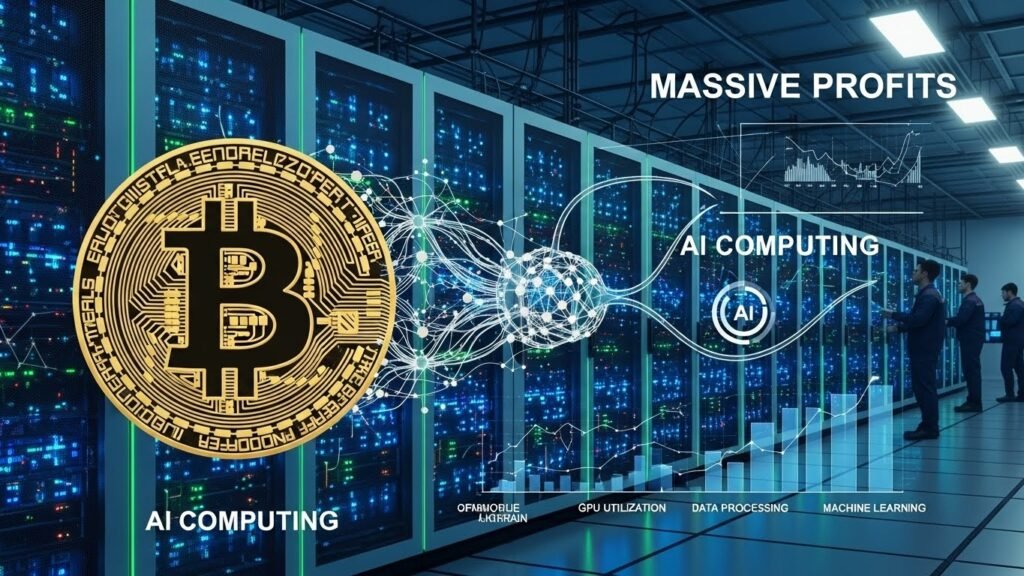
Over the past decade, Bitcoin mining has evolved from a niche hobby into a highly industrialized global business. Massive data centers packed with specialized hardware now secure the Bitcoin network, validate transactions, and compete fiercely for block rewards. However, the economics of Bitcoin mining are changing rapidly. Rising energy costs, increasing mining difficulty, and the impact of periodic Bitcoin halvings have compressed profit margins for miners worldwide. As a result, many mining firms are rethinking their business models to remain profitable and relevant.
One of the most significant shifts underway is the move toward AI computing, particularly high-performance computing (HPC) and data center services optimized for artificial intelligence workloads. Instead of relying solely on Bitcoin mining revenue, companies are increasingly repurposing or expanding their infrastructure to support AI data centers, cloud computing services, and machine learning workloads. This strategic pivot is unlocking new revenue streams and, in some cases, delivering returns that surpass traditional crypto mining profits.
The trend of Bitcoin mining firms pivoting to AI computing for massive profits reflects a broader convergence between blockchain infrastructure and artificial intelligence. Both industries rely heavily on advanced hardware, reliable power access, and scalable data center operations. By leveraging these overlapping requirements, mining firms are positioning themselves at the intersection of two of the most transformative technologies of our time. This article explores why this shift is happening, how it works, and what it means for the future of Bitcoin mining and AI-driven industries.
The Changing Economics of Bitcoin Mining
Shrinking Block Rewards and Halving Pressure
Bitcoin mining profitability is heavily influenced by block rewards, which are reduced by half approximately every four years. Each halving event cuts miners’ primary source of revenue, forcing them to operate more efficiently or exit the market altogether. While Bitcoin price appreciation can offset some of this pressure, it does not always happen immediately or predictably.
As mining rewards shrink, the reliance on transaction fees grows, but fees alone have not consistently compensated for reduced block subsidies. This uncertainty has pushed mining firms to explore alternative income sources, making diversification a strategic necessity rather than a luxury.
Rising Energy and Infrastructure Costs
Energy costs remain the single largest operational expense for Bitcoin miners. Despite efforts to secure cheap or renewable power, electricity prices have become increasingly volatile in many regions. At the same time, competition within the mining sector continues to intensify, driving up the cost of advanced ASIC hardware and data center maintenance.
These factors have squeezed margins and exposed the vulnerability of miners who depend solely on Bitcoin mining revenue. As a result, forward-looking firms are seeking ways to maximize the return on their existing infrastructure, leading to the growing interest in AI computing services.
Why AI Computing Is an Attractive Alternative
Overlapping Infrastructure Requirements
One of the main reasons Bitcoin mining firms are pivoting to AI computing for massive profits is the similarity in infrastructure needs. Both Bitcoin mining and AI workloads require robust data centers, high-capacity power connections, advanced cooling systems, and reliable network connectivity.
Mining firms already possess much of this infrastructure, allowing them to enter the AI computing market with relatively lower upfront investment compared to building new facilities from scratch. By upgrading hardware and optimizing systems, miners can repurpose their facilities to support AI model training, inference workloads, and enterprise cloud services.
Surging Demand for AI Data Centers
The rapid adoption of artificial intelligence across industries has triggered an unprecedented demand for AI-optimized data centers. Companies developing large language models, autonomous systems, and advanced analytics require massive computing power, often far exceeding traditional IT capabilities.
This demand has created a lucrative market for providers that can offer scalable, energy-efficient computing resources. Bitcoin mining firms, with their experience in operating energy-intensive facilities at scale, are uniquely positioned to capitalize on this opportunity.
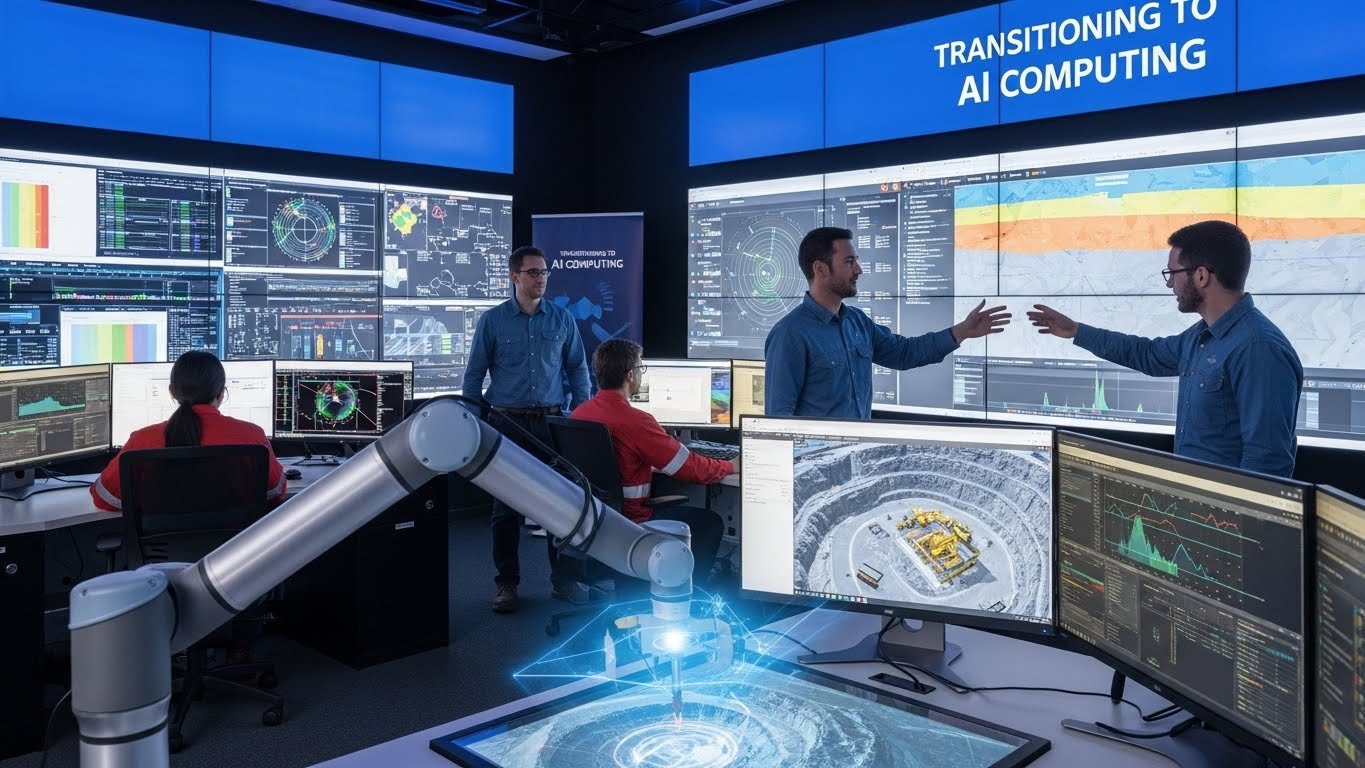
How Mining Firms Are Transitioning to AI Computing
Hardware Reconfiguration and Investment
Bitcoin mining relies primarily on ASIC machines designed for a single purpose: hashing. In contrast, AI computing requires GPUs and other flexible processors capable of handling complex mathematical operations. To pivot successfully, mining firms are investing in GPU clusters, AI accelerators, and hybrid systems that can support a wide range of workloads.
Some companies are converting entire facilities into AI-focused data centers, while others are adopting a hybrid model that balances Bitcoin mining with AI computing. This flexibility allows firms to allocate resources dynamically based on market conditions and profitability.
Partnerships With AI and Cloud Companies
Many mining firms are forming strategic partnerships with AI startups, cloud service providers, and enterprise clients. These collaborations enable miners to secure long-term contracts, stabilize cash flow, and reduce exposure to Bitcoin price volatility.
By offering colocation services or dedicated AI computing capacity, mining firms can generate predictable revenue streams while leveraging their existing operational expertise. This approach has proven particularly attractive to institutional clients seeking reliable and cost-effective AI infrastructure.
The Role of Energy Optimization in AI and Mining Synergy
Leveraging Renewable Energy Sources
Energy efficiency is a critical factor in both Bitcoin mining and AI computing. Mining firms that have invested in renewable energy sources, such as hydroelectric, solar, or wind power, are finding that these assets translate well into AI data center operations.
By using clean energy, companies can reduce operational costs and appeal to environmentally conscious AI clients. This alignment with sustainability goals enhances their competitive advantage in an increasingly ESG-focused market.
Grid Stability and Load Balancing
Bitcoin mining has often been criticized for its impact on power grids. However, advanced mining operations have demonstrated the ability to act as flexible energy consumers, adjusting usage based on grid demand. This capability is equally valuable for AI data centers, which can benefit from intelligent load balancing and demand response strategies.
By integrating AI computing with existing energy management systems, mining firms can improve grid stability while maximizing utilization of their infrastructure.
Financial Performance and Profit Potential

Higher Margins From AI Services
Compared to Bitcoin mining, AI computing services often offer higher and more stable margins. Long-term contracts, recurring revenue, and enterprise clients provide predictable income that is less susceptible to market volatility.
This financial stability has attracted investors who previously viewed Bitcoin mining as too risky. As a result, firms that successfully pivot to AI computing are seeing improved valuations and increased access to capital.
Diversification as a Risk Management Strategy
Diversification into AI computing allows mining firms to hedge against downturns in the crypto market. When Bitcoin prices fall or mining difficulty increases, revenue from AI services can help offset losses and maintain operational viability.
This balanced approach strengthens the resilience of mining businesses and positions them for long-term growth across multiple technology sectors.
Challenges Facing the AI Pivot
Capital Intensity and Competition
Despite its potential, transitioning to AI computing is not without challenges. GPU hardware, advanced cooling systems, and specialized networking equipment require significant capital investment. Additionally, competition in the AI infrastructure market is intensifying as established cloud providers and new entrants vie for market share.
Mining firms must carefully manage costs and differentiate their offerings to succeed in this competitive landscape.
Talent and Expertise Gaps
Operating AI data centers requires specialized technical expertise that differs from traditional Bitcoin mining operations. Recruiting and retaining skilled professionals in AI infrastructure, software optimization, and cloud services can be challenging.
To overcome this hurdle, many mining firms are investing in training programs, acquisitions, and partnerships to build the necessary capabilities.
Implications for the Future of Bitcoin Mining
A Hybrid Industry Model
The trend of Bitcoin mining firms pivoting to AI computing for massive profits suggests that the industry is moving toward a hybrid model. Rather than choosing between mining and AI, many firms will operate in both domains, leveraging shared infrastructure to maximize efficiency and profitability.
This evolution could redefine what it means to be a Bitcoin mining company, transforming miners into diversified digital infrastructure providers.
Strengthening Network Security
Ironically, diversification into AI computing may ultimately benefit the Bitcoin network itself. By stabilizing revenue and reducing financial stress, mining firms can maintain operations during market downturns, contributing to network security and decentralization.
This symbiotic relationship highlights the potential for innovation at the intersection of blockchain and artificial intelligence.
Conclusion
The shift toward AI computing represents a pivotal moment for the crypto mining industry. As Bitcoin mining margins tighten, firms are embracing innovation and diversification to secure their future. By leveraging existing infrastructure, optimizing energy use, and tapping into the booming demand for AI services, Bitcoin mining firms are unlocking massive profit opportunities beyond traditional mining rewards.
The trend of Bitcoin mining firms pivoting to AI computing for massive profits underscores the adaptability of the industry and its ability to evolve alongside emerging technologies. While challenges remain, the convergence of AI and crypto infrastructure offers a compelling vision of a more resilient, efficient, and profitable future for mining companies worldwide.
FAQs
Q: Why are Bitcoin mining firms moving into AI computing?
Bitcoin mining firms are diversifying into AI computing to offset shrinking mining rewards, reduce revenue volatility, and take advantage of the growing demand for AI infrastructure.
Q: Is AI computing more profitable than Bitcoin mining?
In many cases, AI computing offers higher and more stable margins due to long-term contracts and predictable demand, making it an attractive complement to Bitcoin mining.
Q: Do mining firms need entirely new infrastructure for AI?
Not entirely. Many existing data centers can be upgraded or repurposed for AI workloads, allowing mining firms to leverage their current infrastructure.
Q: How does this shift impact the Bitcoin network?
Diversification can strengthen mining firms financially, helping them remain operational during downturns and contributing to overall network security.
Q: Will Bitcoin mining disappear as firms focus on AI?
Bitcoin mining is unlikely to disappear. Instead, most firms are adopting a hybrid model that balances mining with AI computing to maximize profitability and resilience.