






































During the winter months, when temperatures drop across the United States and heating bills rise, a surprising trend has emerged among tech enthusiasts, crypto believers and everyday households looking for smarter ways to manage energy costs. Instead of relying solely on traditional space heaters or electric baseboards, a growing number of Americans are turning to bitcoin mining as a source of warmth. Although the idea may seem unconventional, the concept is simple: Bitcoin miners consume electricity and convert every bit of it into heat, just like any electrical heater. The key difference is that bitcoin miners also generate cryptocurrency while producing that heat, giving homeowners a chance to warm their living spaces and earn bitcoin simultaneously.
This unusual but increasingly popular practice has sparked conversations nationwide about energy, innovation and the creative ways people are integrating technology into their daily lives. Whether used in small apartments, suburban basements or converted garages, bitcoin mining rigs are being reimagined as modern digital heaters. To understand why this trend is spreading and why so many Americans find it appealing, it’s important to look at the physics, the economics, the cultural motivations and the evolving role of cryptocurrencies in everyday life.
How Bitcoin mining creates heat that can warm a home
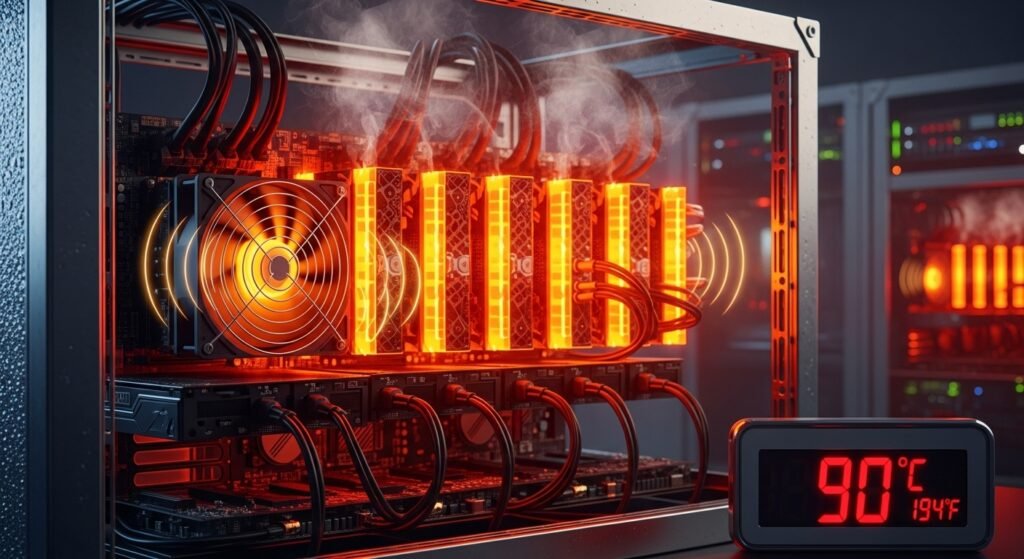
Bitcoin mining relies on powerful hardware performing complex mathematical computations that secure and validate transactions on the Bitcoin network. These calculations require substantial electrical power, and all that energy is ultimately released as heat. In essence, a bitcoin miner is nothing more than a highly specialised electrical device that produces heat as a natural byproduct of its operation.
Inside an ASIC miner, thousands of tiny circuits perform nonstop computations at incredible speeds. These circuits generate considerable thermal energy, which is transferred to metal heat sinks and expelled by strong airflow generated by built-in fans. When placed in a home environment, the warm exhaust air functions just like the heat produced by any conventional space heater. The miner runs continuously, maintaining a constant temperature output that can warm a room or, in some cases, contribute to heating an entire floor of a house.
The physics behind this process is straightforward. Electricity in equals heat out. A 1500-watt bitcoin miner releases the same amount of heat as a 1500-watt space heater. The distinction is that the miner also earns satoshis, the smallest units of bitcoin, while it produces that heat. For winter months, when homes require more heating, this dual-purpose use of energy becomes particularly attractive to people searching for ways to make their heating costs more productive.
Why Americans are using bitcoin mining as a winter heating strategy
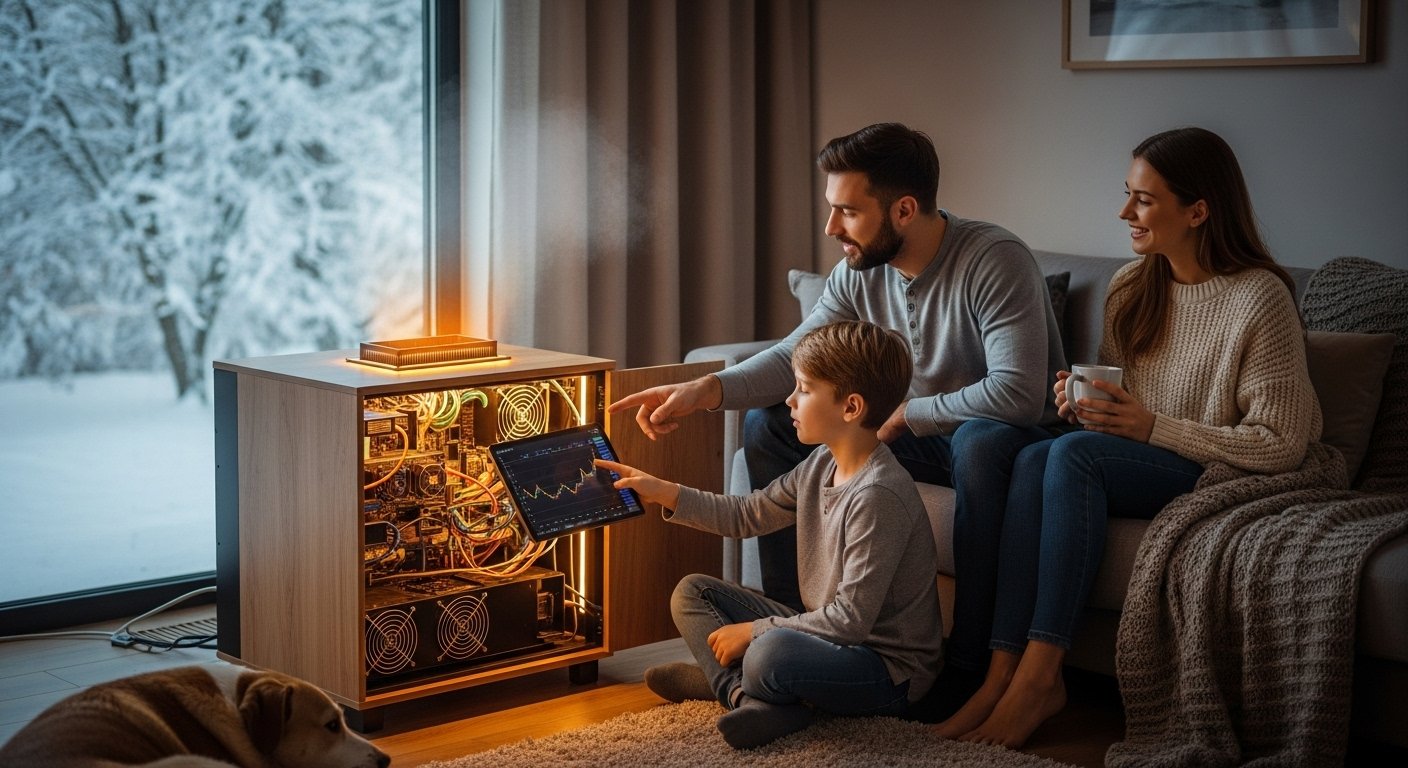
One of the main drivers behind this growing trend is the rising cost of energy. Many regions in the United States have seen electricity and natural gas prices climb steadily, and households are feeling the impact each winter. The idea that the same electricity that powers a heater could instead power a device that generates cryptocurrency makes bitcoin mining an appealing alternative for some Americans. It transforms heating from a pure expense into a potential investment that may offset a portion of the household’s energy bill.
Another factor is the appeal of participating in the Bitcoin network. Many miners are not motivated solely by money; they also value the concept of decentralisation and enjoy the feeling of contributing to the security of the global blockchain. Heating with mining rigs gives them a direct, hands-on way to take part in cryptocurrency technology. It turns a passive household necessity—heating—into an active, engaging hobby.
Additionally, the practice aligns well with the mindset of homeowners who enjoy learning new technologies and experimenting with innovative home setups. They appreciate that bitcoin mining allows them to explore networking, hardware, thermodynamics and energy efficiency. For them, heating with mining equipment is not only functional but also intellectually rewarding. It becomes both a practical heating solution and an educational experience.
The types of mining equipment Americans use to heat their homes.
Most Americans who heat with bitcoin mining use ASIC miners. These specialised machines deliver the highest efficiency and are specifically designed for Bitcoin’s proof-of-work algorithm. ASIC miners operate at high power levels and produce an enormous amount of heat, making them especially suitable for winter heating. However, they are also loud. Their fans often spin at extremely high speeds, generating noise levels comparable to household appliances like vacuum cleaners. As a result, homeowners typically place ASIC miners in basements, garages, utility rooms or custom-built enclosures that suppress sound while allowing airflow.
Some people use desktop computers or GPU mining rigs instead. Although mining bitcoin profitably on GPUs is no longer feasible, many miners run other proof-of-work cryptocurrencies that they later exchange for bitcoin. GPU rigs are generally quieter and generate less heat than ASICs, but they still produce enough warmth to heat small rooms, home offices or studios. They also blend more easily into household environments, especially for individuals who already own high-performance gaming PCs.
Creative Americans have gone even further by modifying miners to run with quieter fans, experimenting with immersion cooling systems that reduce noise and improve temperature control, and integrating ducting systems that channel warm exhaust air into specific rooms. These custom setups allow miners to deliver heat exactly where it’s most needed, transforming the machines into practical heating appliances.
The advantages of heating a home with Bitcoin mining rigs
Heating a home with bitcoin miners offers unique benefits that traditional heating methods cannot provide. The most appealing advantage is earning bitcoin while staying warm. Instead of paying for electricity strictly for heating, households using mining equipment can earn back some of the energy costs. Depending on the efficiency of the miner, the cost of electricity in the region and the price of bitcoin, the earnings may offset a noticeable portion of the heating bill. This gives homeowners a sense of financial empowerment and reduces the psychological burden of winter energy costs.
Another advantage is the continuous, stable heat output that mining rigs provide. Unlike central heating systems that turn on and off based on thermostat cycles, miners operate around the clock, producing a consistent flow of warmth. This is especially useful in home offices, bedrooms or basements where maintaining a steady temperature can greatly improve comfort. Remote workers, in particular, appreciate the even warmth produced by miners placed near their workspaces.
Many Americans also value the educational and technical benefits of using mining rigs as heaters. Setting up mining equipment teaches them about energy consumption, hardware maintenance, airflow management and digital currency networks. This knowledge often inspires broader interest in smart home technology, renewable energy systems and efficient electrical usage. For some, the process is as rewarding as the heating and bitcoin earnings themselves.
The challenges and drawbacks of bitcoin-powered heating

Despite its benefits, heating with bitcoin mining equipment is not without challenges. Noise is one of the most significant issues, especially with powerful ASIC miners. Their fans generate a loud, constant sound that can make them unsuitable for living rooms or bedrooms unless soundproofing measures are taken. This limitation often forces people to install miners in less-trafficked areas of the home, which may reduce the ability to distribute heat evenly.
Upfront hardware costs also present a potential barrier. Mining rigs are not inexpensive, and even used models can require a substantial investment. Homeowners must weigh these costs against the expected bitcoin earnings and the value of the heat produced. In regions where electricity is expensive, the financial return can be limited or even unprofitable, reducing the appeal of this approach.
Another important consideration is the longevity of the equipment. Continuous operation places stress on components, which may lead to wear and require replacements over time. Additionally, as mining difficulty increases and new machines enter the market, older rigs become less efficient. The economic landscape of cryptocurrency mining can shift rapidly, making long-term planning more complex.
How Americans integrate mining rigs into their household heating systems
Many households use basements or garages as dedicated mining zones. These spaces help contain noise while offering plenty of airflow and insulation opportunities. Homeowners often install ducting systems that redirect warm air from the miners into the living areas. As warm air naturally rises, basement installations are particularly effective, creating a gentle upward flow of heat throughout the house.
Other Americans prefer smaller, quieter rigs placed directly in rooms where heat is needed most. By lowering fan speeds, optimising airflow and using quieter models, they achieve a comfortable balance between heating and sound levels. In home offices, a compact miner often replaces a space heater entirely, creating a productive and warm workspace during long winter hours.
Some enthusiasts incorporate miners into existing HVAC systems. By channelling warm air through ducts or filtering systems, they ensure that the heat is evenly distributed without excessive temperatures in a single room. This method requires careful planning but can turn a single miner into a robust heating solution for multiple parts of the house.
The environmental conversation surrounding mining-based heating
Bitcoin mining has sparked many environmental debates, especially regarding energy use and carbon emissions. Critics argue that mining consumes too much electricity, while supporters believe miners can actually help stabilise grids and incentivise renewable energy production. When miners are used for home heating, the environmental conversation shifts in a new direction, because the heat is not wasted but intentionally used.
Traditional data centres must expend even more energy to cool mining equipment. In a home heating context, that same heat becomes useful. When a homeowner would have used an electric heater anyway, running a miner instead simply replaces one form of energy consumption with another that also performs digital work. The total energy footprint remains similar, but with added benefits in the form of cryptocurrency generation.
Some Americans combine home solar panels with bitcoin mining, creating a sustainable cycle where daytime solar power drives miners that produce heat and bitcoin. This reduces reliance on grid power and turns excess renewable energy into financial returns. Although still experimental on a small scale, the approach demonstrates how bitcoin mining and renewable energy can coexist in environmentally meaningful ways.
See More: Best Bitcoin Mining Rig 2025 Complete Guide to Profitable Mining Hardware
Practical advice for anyone considering bitcoin-powered heating
For Americans interested in heating their homes with bitcoin mining rigs, the best approach is to begin gradually and treat the process as an experiment. The first winter can serve as a learning period to understand how much heat a miner generates, how it affects the electric bill, and how comfortable the living environment becomes with mining equipment running. Careful observation allows homeowners to find the best balance between heat output, mining rewards and energy cost.
Safety is a critical priority. Mining equipment must have adequate ventilation, proper electrical support and enough space to prevent overheating. Consulting an electrician can help ensure that circuits can handle the continuous load of mining rigs. Responsible setup minimises the risk of electrical issues and protects both the equipment and the home.
Could Bitcoin mining heaters become mainstream?
Although heating a home with bitcoin mining remains a niche practice, the idea is gradually becoming more familiar to the public. Several startups are designing mining heaters that resemble modern radiators or air purifiers, offering quiet performance and user-friendly interfaces. These devices aim to make the experience of heating with mining as simple as plugging in a standard household appliance.
If the trend continues and these products become more affordable, mining heaters may become more common in American homes. Their ability to produce both heat and cryptocurrency aligns with the growing interest in smart devices and energy-efficient living. As Bitcoin continues to evolve and the public becomes more comfortable with digital assets, the concept of a heater that earns money might eventually feel as natural as solar panels on rooftops.
Conclusion
The rise of bitcoin-powered home heating illustrates how technology continues to shape everyday life in unexpected ways. What began as an experimental hobby among crypto enthusiasts has grown into a creative solution for winter warmth, particularly for Americans seeking efficient and innovative approaches to home energy use. By transforming traditional heat generation into an opportunity to participate in the Bitcoin network, homeowners are rethinking the boundaries between technology and daily comfort.
Although not a replacement for central heating systems, bitcoin mining rigs offer a unique combination of warmth, financial return and technological engagement. For some Americans, the appeal lies in reducing heating costs. For others, it is the chance to explore cryptocurrency firsthand. Whatever the motivation, the idea of using a digital machine to warm a home reflects a fascinating blend of practicality, creativity and modern innovation.
As the world continues to explore new ways to integrate digital and physical systems, the trend of heating homes with bitcoin mining stands as a testament to the resourcefulness of individuals who are always searching for better, smarter and more efficient ways to stay warm each winter.