





































Bitcoin slides below $64,000 after explosions reported in Tehra, sending shockwaves through global financial markets and reigniting debates about how geopolitical instability impacts digital assets. The sudden development in Tehran — often spelled “Tehra” in early breaking reports — coincided with a sharp intraday correction in the cryptocurrency market, as traders moved swiftly to reassess risk exposure. Within hours, Bitcoin price volatility spiked, liquidation cascades intensified, and sentiment across derivatives exchanges turned defensive.
The digital asset market has historically reacted to macroeconomic turbulence, military tensions, and unexpected geopolitical flashpoints. This latest incident underscores how Bitcoin Slides Below $64000 once championed as a hedge against global instability, continues to exhibit complex correlations with broader risk assets. While some investors view sharp pullbacks as strategic buying opportunities, others see them as signals of deeper structural fragility.
This article examines why Bitcoin slides below $64,000 after explosions reported in Tehra, analyzes the mechanics behind the sell-off, evaluates the response from institutional and retail investors, and explores what this means for the broader crypto ecosystem in both the short and long term.
Why Bitcoin Slides Below $64,000 After Tehra Explosions
When reports surfaced of explosions in Tehran, markets responded instantly. Global equities wavered, energy futures surged, and safe-haven assets such as gold recorded upward momentum. In parallel, Bitcoin slides below $64,000, marking a decisive break below a psychologically significant support zone.
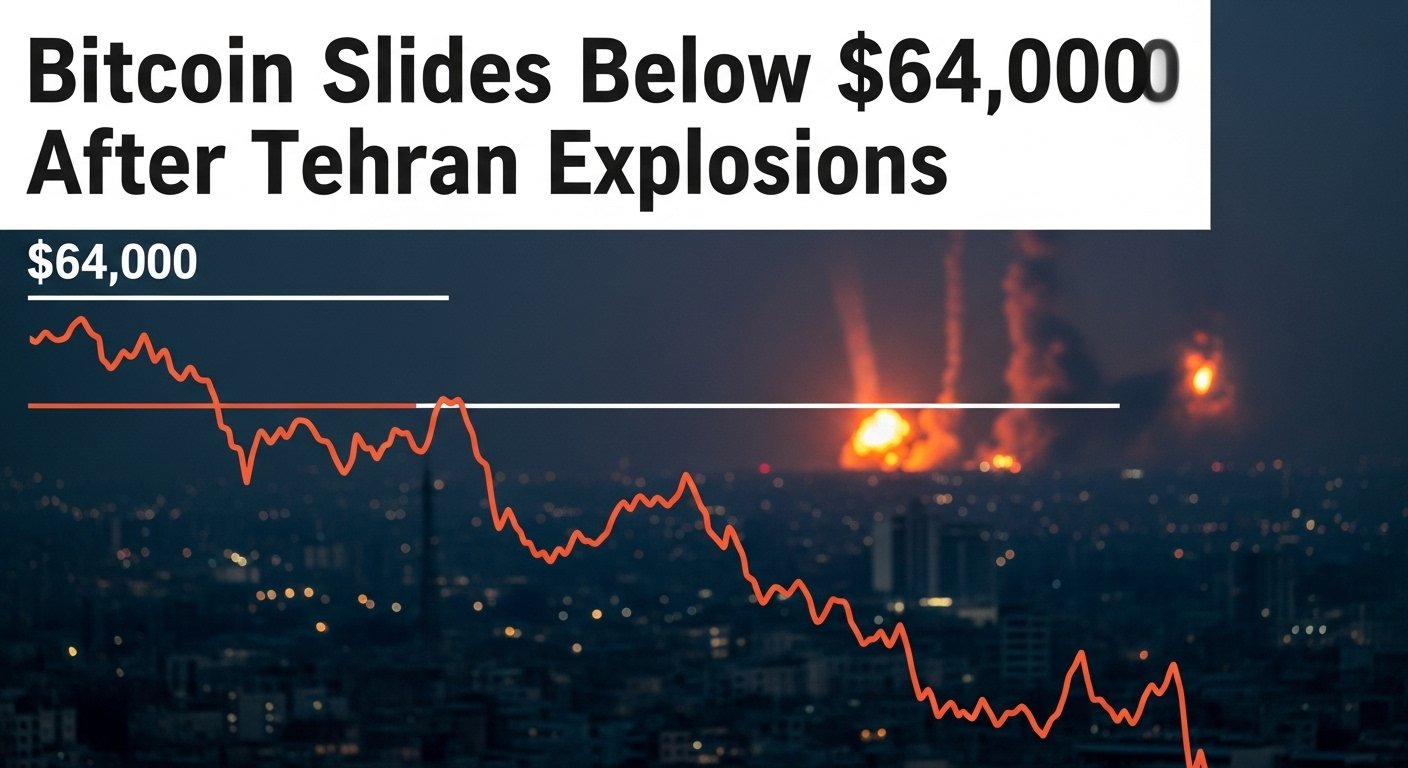
The immediate drop was not purely reactionary. Cryptocurrency markets operate 24/7, meaning traders price in geopolitical developments faster than traditional financial systems. As headlines circulated, algorithmic trading systems triggered automated sell orders. Liquidity thinned on major exchanges, amplifying downward price pressure.
The Psychological Threshold of $64,000
The $64,000 level carried symbolic weight. Historically, round-number price levels often function as technical support and resistance zones. Once breached, stop-loss orders tend to cluster, creating a cascading effect.
In this case, Bitcoin slides below $64,000 triggered forced liquidations in leveraged positions across derivatives platforms. Open interest contracts declined sharply as traders reduced exposure. The move reinforced bearish short-term sentiment even though longer-term fundamentals remained intact.
Geopolitical Risk and Cryptocurrency Correlation
The narrative that Bitcoin functions as “digital gold” suggests it should rally during geopolitical turmoil. Yet empirical evidence paints a more nuanced picture. When explosions were reported in Tehran, Bitcoin slides below $64,000 rather than rising in tandem with traditional safe-haven assets.
Risk-On vs. Risk-Off Dynamics
Bitcoin often behaves like a risk-on asset, similar to growth equities. During moments of uncertainty, investors frequently rotate into cash or established safe havens rather than speculative instruments. The immediate response following the Tehra explosions reflected this pattern.
Institutional portfolios tend to treat crypto allocations as high-volatility components. When geopolitical risk spikes, portfolio managers rebalance exposure, leading to temporary sell-offs in digital assets. This structural dynamic explains why Bitcoin slides below $64,000 despite its decentralized nature.
Energy Markets and Mining Economics
Another indirect factor involves energy pricing. If geopolitical tensions affect oil supply routes in the region, energy costs may rise. Bitcoin mining operations are sensitive to electricity prices, which influence production costs. Although the short-term price move was sentiment-driven, energy market uncertainty adds a secondary layer of pressure to mining profitability expectations.
Liquidation Cascades and Derivatives Impact
The cryptocurrency derivatives market magnifies volatility. When Bitcoin slides below $64,000, leveraged positions face margin calls. Automated liquidation engines sell assets to cover losses, accelerating the decline.
The Role of Perpetual Futures
Perpetual futures contracts allow traders to maintain leveraged positions indefinitely. Funding rates adjust based on market sentiment. During the initial drop, funding rates flipped negative, indicating increased short positioning. This dynamic reinforced downward pressure and widened spreads across exchanges.
Spot Market vs. Derivatives Reaction
Spot trading volumes increased but remained secondary to derivatives-driven flows. As Bitcoin slides below $64,000, the imbalance between short-term speculators and long-term holders became evident. On-chain data showed that long-term wallets exhibited limited movement, suggesting conviction remained stable among strategic investors.
Institutional Response to the Sell-Off
Institutional investors have significantly increased their exposure to Bitcoin in recent years. Firms such as BlackRock and Fidelity Investments have expanded digital asset offerings, bringing new liquidity and credibility to the market.When Bitcoin slides below $64,000, institutional desks often analyze whether the move reflects systemic risk or temporary sentiment shock. Early indicators suggest the latter. Exchange-traded products tracking Bitcoin did not report significant outflows immediately after the drop, implying that institutional conviction remains largely intact.
Long-Term Allocation Strategies
Many institutions view Bitcoin as a multi-year allocation rather than a short-term trade. Consequently, a geopolitical-driven dip may represent an opportunity to accumulate at discounted levels. Historical patterns indicate that similar corrections following geopolitical events have often been followed by gradual recoveries.
Retail Investor Sentiment and Social Media Reaction

Retail investors respond rapidly to news-driven volatility. As Bitcoin slides below $64,000, social media platforms and trading forums reflected heightened anxiety mixed with opportunistic optimism.
Fear and Greed Indicators
Market sentiment indices shifted toward fear territory during the correction. Historically, extreme fear can precede local bottoms. However, sentiment alone does not determine price direction; macro conditions and liquidity flows play decisive roles.
Short-Term Trading Behavior
Retail traders tend to employ higher leverage relative to capital size. Consequently, liquidation impacts are disproportionately visible in this segment. The swift drop following the Tehra explosions highlighted the risks of overleveraged exposure during unpredictable global events.
Technical Analysis: Key Levels to Watch
Technical analysts closely monitor price structure following a major support break. When Bitcoin slides below $64,000, traders assess adjacent levels for stabilization.
Immediate Support Zones
The next support band often corresponds to prior consolidation ranges. If price stabilizes above these zones, a rebound becomes plausible. Conversely, sustained trading below $64,000 could invite further downside toward medium-term moving averages.
Volume and Momentum Indicators
Relative Strength Index readings entered oversold territory during the drop. Increased trading volume confirmed conviction behind the move. For recovery to materialize, bullish divergence and declining sell-side pressure would need to emerge.
Broader Crypto Market Reaction
Bitcoin’s movement often dictates the direction of the entire crypto market. When Bitcoin slides below $64,000, major altcoins typically experience amplified declines due to higher beta characteristics.Ethereum and other large-cap digital assets mirrored Bitcoin’s drop, though percentage losses varied. Smaller tokens saw sharper corrections, underscoring their vulnerability during macro-driven turbulence.
Stablecoin Inflows
Interestingly, stablecoin inflows rose during the sell-off. Investors appeared to convert holdings into digital cash equivalents rather than exiting exchanges entirely. This pattern may indicate readiness to redeploy capital once volatility subsides.
Macroeconomic Context and Global Risk Appetite
The timing of the Tehra explosions coincided with broader macroeconomic uncertainty. Inflation data, central bank policy expectations, and global liquidity conditions all influence crypto market behavior.When Bitcoin slides below $64,000, analysts must distinguish between event-driven panic and structural macro shifts. At present, the evidence suggests the move was primarily headline-driven rather than a reflection of deteriorating macro fundamentals.
Historical Parallels: Bitcoin and Geopolitical Events
Bitcoin has experienced similar volatility during past geopolitical crises. In several instances, initial drops were followed by rapid recoveries once markets digested new information.The digital asset’s decentralized architecture insulates it from direct regional disruptions. However, sentiment-driven trading patterns ensure it remains sensitive to global risk perception. The current episode reinforces that Bitcoin’s safe-haven narrative remains conditional rather than absolute.
Long-Term Outlook After the $64,000 Breakdown
While Bitcoin slides below $64,000 in the immediate aftermath of the Tehra explosions, long-term investors evaluate structural fundamentals. Network hash rate, institutional adoption, and regulatory clarity remain central drivers.
Adoption Metrics
Wallet growth, transaction volume, and corporate treasury allocations continue trending upward. These metrics suggest underlying demand remains resilient despite episodic volatility.
Market Maturity
Each geopolitical shock tests market resilience. The speed at which Bitcoin stabilizes following such events reflects increasing maturity. Compared to early-cycle corrections, current drawdowns are relatively contained.
Conclusion
Bitcoin slides below $64,000 after explosions reported in Tehra, illustrating how rapidly geopolitical developments can reverberate across digital asset markets. The correction underscores Bitcoin’s evolving but still complex relationship with global risk dynamics. While short-term volatility remains pronounced, structural indicators suggest the sell-off was largely sentiment-driven rather than fundamentally destabilizing.
For investors, the episode reinforces the importance of disciplined risk management, diversification, and awareness of leverage exposure. As markets process unfolding developments, Bitcoin’s next trajectory will likely hinge on broader macro stability rather than localized geopolitical tension alone.
FAQs
Q: Why did Bitcoin slide below $64,000 after the Tehra explosions?
Bitcoin slides below $64,000 primarily due to risk-off sentiment triggered by geopolitical uncertainty. Automated trading systems, leveraged liquidations, and investor caution amplified the move.
Q: Is Bitcoin still considered a safe-haven asset?
Bitcoin’s safe-haven status remains debated. While it shares characteristics with digital gold, it often behaves like a risk-on asset during immediate geopolitical shocks.
Q: How do geopolitical events impact crypto markets?
Geopolitical events influence investor sentiment, energy prices, and global liquidity conditions. These factors collectively shape crypto price action.
Q: Could Bitcoin recover quickly from this drop?
Historically, Bitcoin has rebounded after event-driven corrections. Recovery depends on stabilization in global markets and renewed buying momentum.
Q: What should investors watch next?
Investors should monitor macroeconomic indicators, technical support levels, derivatives funding rates, and institutional flows to gauge whether Bitcoin stabilizes above or below $64,000.