








































When JPMorgan flags Bitcoin mining ‘relief’, the market pays attention. In a sector defined by volatility, tight margins, and relentless technological competition, even small shifts in production costs can have outsized implications. According to analysts at JPMorgan Chase, the Bitcoin mining production cost floor has dropped to $70,000, marking a significant recalibration in the economic structure underpinning the network.
For investors, miners, and institutional allocators alike, the concept of a production cost floor is not abstract. It represents a practical threshold — the estimated cost to produce one Bitcoin. When market prices fall near or below this level, miner capitulation becomes more likely. When prices remain above it, mining operations stabilize and potentially expand. A drop to $70,000 suggests that miners are gaining operational breathing room, even in a fluctuating macro environment.
This development arrives amid persistent questions about Bitcoin price support, post-halving adjustments, global hash rate competition, and rising energy efficiency across mining fleets. The implications ripple through mining equities, Bitcoin ETFs, hardware manufacturers, and even energy markets.
In this comprehensive analysis, we unpack what JPMorgan’s Bitcoin mining relief signal means, how the production cost floor is calculated, why it matters for the broader crypto ecosystem, and what investors should monitor next.
Understanding the Bitcoin Mining Production Cost Floor
What Is the Production Cost Floor?
The production cost floor refers to the estimated average expense required to mine one Bitcoin. This includes electricity consumption, hardware depreciation, facility overhead, labor, and financing costs. Because Bitcoin operates on a proof-of-work consensus mechanism, miners compete to solve cryptographic puzzles, expending real-world energy in the process.
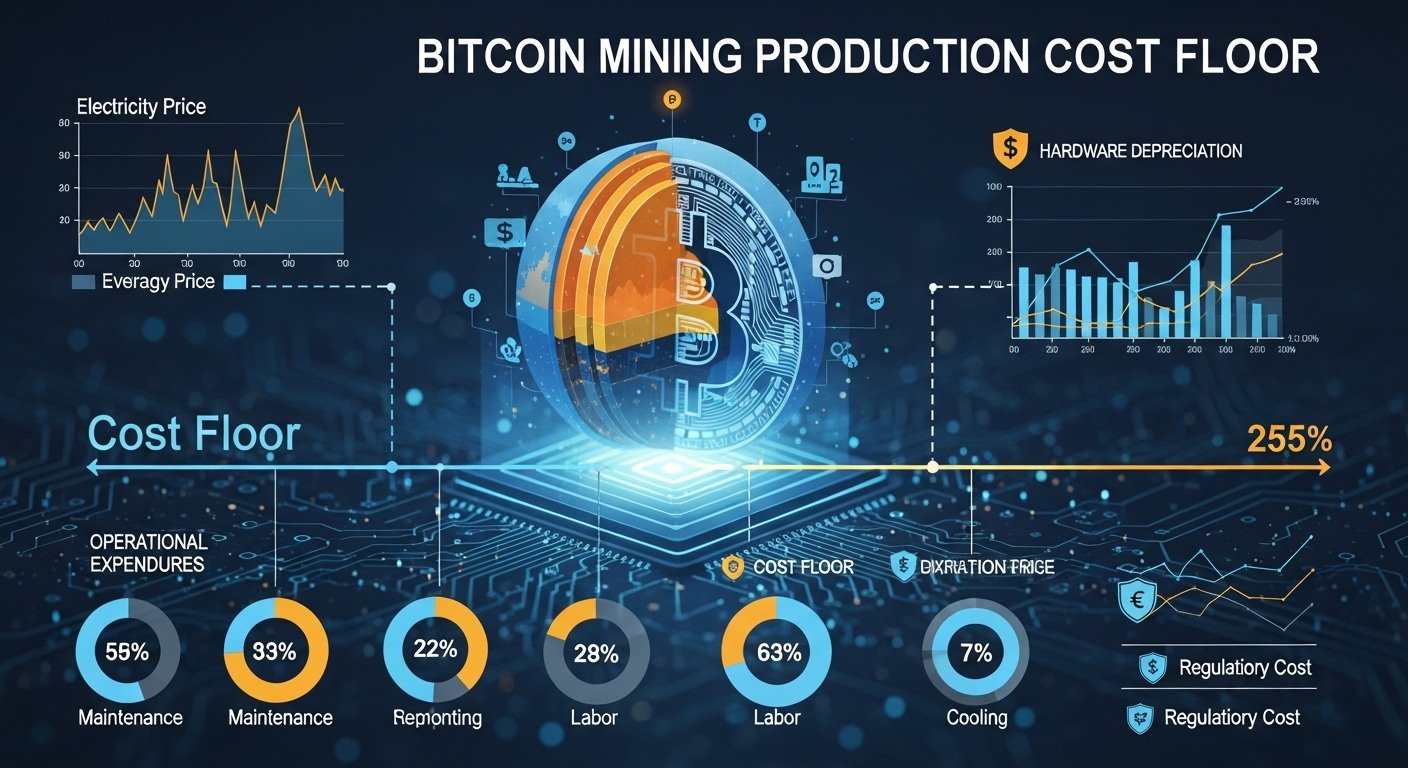
When JPMorgan flags Bitcoin mining relief at a $70,000 cost floor, it suggests that operational efficiency has improved enough to lower the economic breakeven point for many miners. Historically, the Bitcoin mining cost floor has acted as a soft support zone. While Bitcoin can temporarily trade below mining cost due to speculative pressure, prolonged periods below this level tend to squeeze weaker miners out of the market. That dynamic often results in a hash rate decline followed by stabilization.
Why the Cost Floor Changes Over Time
The mining cost floor is dynamic, not fixed. Several variables influence it:
Energy pricing fluctuations
Network difficulty adjustments
Advancements in ASIC hardware
Capital expenditure cycles
Financing conditions
As more efficient mining machines enter the network and legacy hardware is retired, the average cost per mined coin can decline. If energy contracts improve or operators relocate to cheaper jurisdictions, production costs also fall.
When JPMorgan analysts evaluate Bitcoin mining economics, they consider public mining company disclosures, network hash rate, block reward structures, and macro energy trends. A reduction to $70,000 implies meaningful efficiency gains across the sector.
JPMorgan’s View on Bitcoin Mining Relief
Why JPMorgan’s Analysis Matters
JPMorgan Chase is one of the largest global financial institutions, and its research carries weight across institutional markets. When JPMorgan flags Bitcoin mining relief, it influences sentiment among hedge funds, asset managers, and corporate treasury desks.
JPMorgan has historically maintained a cautious yet increasingly analytical stance on digital assets. Rather than speculative enthusiasm, its commentary tends to focus on structural factors such as liquidity conditions, institutional flows, and mining economics.By highlighting a $70,000 production cost floor, the bank signals that the mining sector may be transitioning from stress to stabilization.
Relief After the Halving Impact
The most recent Bitcoin halving reduced block rewards from 6.25 BTC to 3.125 BTC per block. Halving events structurally compress miner revenue overnight. Without a corresponding price increase, profitability declines.
Immediately after halving cycles, weaker miners often face financial strain. Some shut down operations, while others sell reserves to maintain liquidity. The network difficulty eventually adjusts downward, helping restore equilibrium.
If JPMorgan flags Bitcoin mining relief now, it suggests that the market has digested post-halving disruption and that efficiency gains have offset revenue compression. The lowered cost floor implies improved survivability for miners even if Bitcoin trades near $70,000.
The Role of Hash Rate and Network Difficulty
How Hash Rate Influences Mining Costs
Bitcoin’s hash rate measures the total computational power securing the network. As hash rate increases, mining competition intensifies. More competition generally raises difficulty, increasing the cost required to mine a single coin.
However, if inefficient miners exit the market, hash rate can stabilize or decline. This eases competition and reduces average production costs.
When JPMorgan flags Bitcoin mining relief, it may be reflecting a stabilization in hash rate growth relative to hardware efficiency gains. Advanced ASIC machines deliver higher terahash output per watt, improving profitability.
Network Difficulty Adjustments
Bitcoin adjusts its mining difficulty approximately every two weeks. If blocks are mined too quickly due to rising hash rate, difficulty increases. If blocks slow down, difficulty decreases. These automatic adjustments ensure predictable block timing. They also directly impact the mining cost floor. A difficulty reduction after miner capitulation can lower costs per Bitcoin. The reported $70,000 floor suggests that recent difficulty trends, combined with efficiency upgrades, have realigned operational economics.
Energy Costs and Geographic Shifts
The Importance of Energy Pricing
Energy represents the single largest operational expense in Bitcoin mining. Fluctuations in electricity costs materially affect the production cost floor. Global mining has shifted geographically over the years. After regulatory crackdowns in certain regions, mining operations migrated to North America, Central Asia, and parts of Latin America. Access to stranded energy, renewable resources, and favorable regulatory frameworks became decisive. When JPMorgan flags Bitcoin mining relief, it likely accounts for improvements in energy procurement contracts and increased renewable integration. Lower marginal energy costs directly translate to a reduced cost per coin.
Renewable Integration and Efficiency

Modern mining operations increasingly utilize hydroelectric, wind, solar, and even flare gas capture. Renewable integration lowers long-term energy exposure and can improve public perception. As sustainability pressures mount, publicly traded mining companies emphasize energy efficiency, carbon offsets, and optimized cooling infrastructure. These technological and operational improvements contribute to lowering the production cost floor.
Implications for Bitcoin Price Dynamics
Cost Floor as Psychological Support
The $70,000 mining cost floor may serve as a psychological anchor for market participants. While Bitcoin’s price is determined by supply and demand, mining economics influence supply pressure. If prices fall near or below production costs, miners may reduce output or liquidate reserves. This creates short-term volatility but can ultimately tighten supply. When JPMorgan flags Bitcoin mining relief, it suggests that miners have a buffer. As long as Bitcoin trades meaningfully above $70,000, large-scale capitulation becomes less likely.
Institutional Confidence and Market Structure
Institutional investors closely monitor mining health. Weak mining economics can signal structural fragility, while stable cost floors suggest network resilience. With increased exposure through ETFs and institutional vehicles, mining stability underpins broader confidence. JPMorgan’s signal of relief may reinforce perceptions that Bitcoin’s infrastructure is maturing.
Mining Equities and Public Companies
Impact on Publicly Listed Miners
Public mining firms are highly sensitive to changes in production cost. A lower cost floor improves gross margins, enhances cash flow visibility, and supports balance sheet strength.
When JPMorgan flags Bitcoin mining relief, mining equities may benefit from improved earnings projections. Investors often value miners based on hash rate growth, cost per coin, and treasury management strategies. Reduced cost pressure can also encourage strategic expansion, mergers, or vertical integration.
Capital Markets and Debt Sustainability
Many mining firms financed expansion through debt during bull markets. Rising interest rates strained balance sheets. Lower production costs improve debt service capacity and reduce bankruptcy risk. A $70,000 floor signals greater financial resilience across the sector, potentially reopening capital market access.
Broader Crypto Market Effects
Supply Dynamics and Scarcity Narrative
Bitcoin’s scarcity narrative depends partly on controlled issuance and predictable mining economics. If miners remain profitable, network security stays robust. When JPMorgan flags Bitcoin mining relief, it reinforces the view that the network remains economically viable even after halving-induced revenue compression.
Spillover to Altcoins and Infrastructure
Mining stability often correlates with broader ecosystem confidence. Infrastructure providers, chip manufacturers, and data center operators all benefit from improved sector health. While altcoins operate under different consensus mechanisms, Bitcoin mining economics often set sentiment tone across the digital asset market.
Risks and Variables to Watch
Energy Price Volatility
Energy markets remain susceptible to geopolitical shocks. A sudden rise in electricity costs could push the production cost floor higher.
Regulatory Shifts
Mining regulations vary by jurisdiction. Environmental restrictions or taxation changes could affect operating margins.
Hardware Supply Constraints
ASIC availability and semiconductor supply chains influence cost structures. Delays or pricing spikes in hardware could offset efficiency gains. Investors should monitor these variables even as JPMorgan flags Bitcoin mining relief.
Conclusion
When JPMorgan flags Bitcoin mining relief with a production cost floor of $70,000, it signals a meaningful recalibration in the economics underpinning the Bitcoin network. Lower operational breakeven levels provide miners with resilience, support institutional confidence, and reinforce Bitcoin’s structural integrity after the halving cycle.
While no cost floor guarantees price stability, improved mining efficiency reduces systemic stress. As long as Bitcoin trades above this threshold, miner capitulation risk remains contained. For investors, the evolving relationship between price, hash rate, and production cost remains one of the most critical metrics to monitor in the digital asset landscape.The $70,000 production cost floor may not represent a permanent baseline, but it marks a moment of relief in a sector defined by rapid adaptation and relentless competition.
FAQs
Q: What does it mean when JPMorgan flags Bitcoin mining relief?
It means analysts at JPMorgan believe mining economics have improved, reducing financial stress on miners. The reported $70,000 production cost floor suggests stronger operational sustainability.
Q: Is the Bitcoin mining cost floor a guaranteed price support?
No. While it often acts as a soft support level, Bitcoin can trade below production cost temporarily due to market volatility and speculative pressure.
Q: How is the $70,000 production cost floor calculated?
It is estimated using average energy costs, network difficulty, hardware efficiency, operational expenses, and public miner financial disclosures.
Q: Why does the halving affect mining costs?
Halving reduces block rewards by 50%, lowering miner revenue. If price does not increase proportionally, profitability declines until efficiency improves or difficulty adjusts.
Q: How should investors use mining cost data?
Investors can use production cost data to assess miner health, evaluate downside risk, and understand broader network stability within the Bitcoin ecosystem.
Also More: Bitcoin Price Prediction 2025 News Expert Analysis & Market