







































The phrase Crypto Mining ASIC Goes Deep Sub-Threshold On 3 nm signals one of the most significant technological shifts ever to hit the digital currency mining world. For more than a decade, miners have engaged in a relentless race for higher hashrates, often prioritising raw computational power over energy efficiency. While this approach once delivered impressive returns, the industry’s energy demands have since reached a point where traditional performance-driven strategies are no longer sustainable. Electricity prices have soared. Cooling costs have increased. Environmental regulations have tightened. Mining difficulty continues to rise, and block rewards continue to decline. In this environment, efficiency is no longer optional; it is the single most important factor determining long-term profitability.
This shift has pushed designers to rethink how mining hardware should be built. Instead of pursuing maximum clock speeds, newer architectures focus on reducing energy consumption per hash while maintaining competitive throughput. The most transformative approach to achieving this balance is the combination of advanced semiconductor fabrication with extremely low-voltage operation. When a crypto mining ASIC goes deep sub-threshold on a cutting-edge 3 nm process, it enters a realm where power consumption drops dramatically, allowing millions of transistors to perform useful mining work at a fraction of the energy once required.
Deep sub-threshold design on 3 nm represents a fundamental change in mining hardware philosophy. It is a deliberate decision to run transistors below their threshold voltage, reducing dynamic power to levels previously seen only in ultra-low-power wearables and IoT sensors. Yet, by leveraging the density, switching characteristics, and leakage improvements of 3 nm technology, these ASICs can operate millions of parallel hashing units simultaneously. The result is a new generation of miners that deliver competitive total hashrate while consuming significantly less energy, transforming the economics of mining and redefining efficiency standards.
The Role of ASICs in Crypto Mining
Crypto mining ASICs have long been the cornerstone of high-performance mining operations. In the early era of digital currency, miners relied on CPUs and GPUs, both of which were extremely limited in efficiency because they were never designed for the repetitive, mathematically precise algorithms required for mining tasks. ASICs changed everything by dedicating silicon exclusively to hashing, removing unnecessary features and optimizing logic paths solely for cryptographic calculations.
Over time, ASIC generations moved from older semiconductor nodes such as 28 nm and 14 nm to modern nodes like 7 nm and 5 nm. Each transition allowed designers to pack more hashing cores into the same area while also reducing power consumption. However, as nodes shrank, new challenges emerged. Leakage currents increased. Heat density rose sharply. Voltage scaling became less predictable. Designers found themselves facing diminishing returns when pushing ASICs at high frequencies, especially in realistic thermal environments where chips rarely achieved their peak theoretical performance.
The arrival of 3 nm manufacturing processes promised dramatic density and efficiency improvements. Yet, without rethinking the voltage at which miners operate, even 3 nm chips risked running too hot and consuming too much power. The industry needed an approach that aligned advanced semiconductor physics with the new priorities of energy-efficient mining. Deep sub-threshold operation provided exactly that.
What 3 nm Technology Brings to Mining
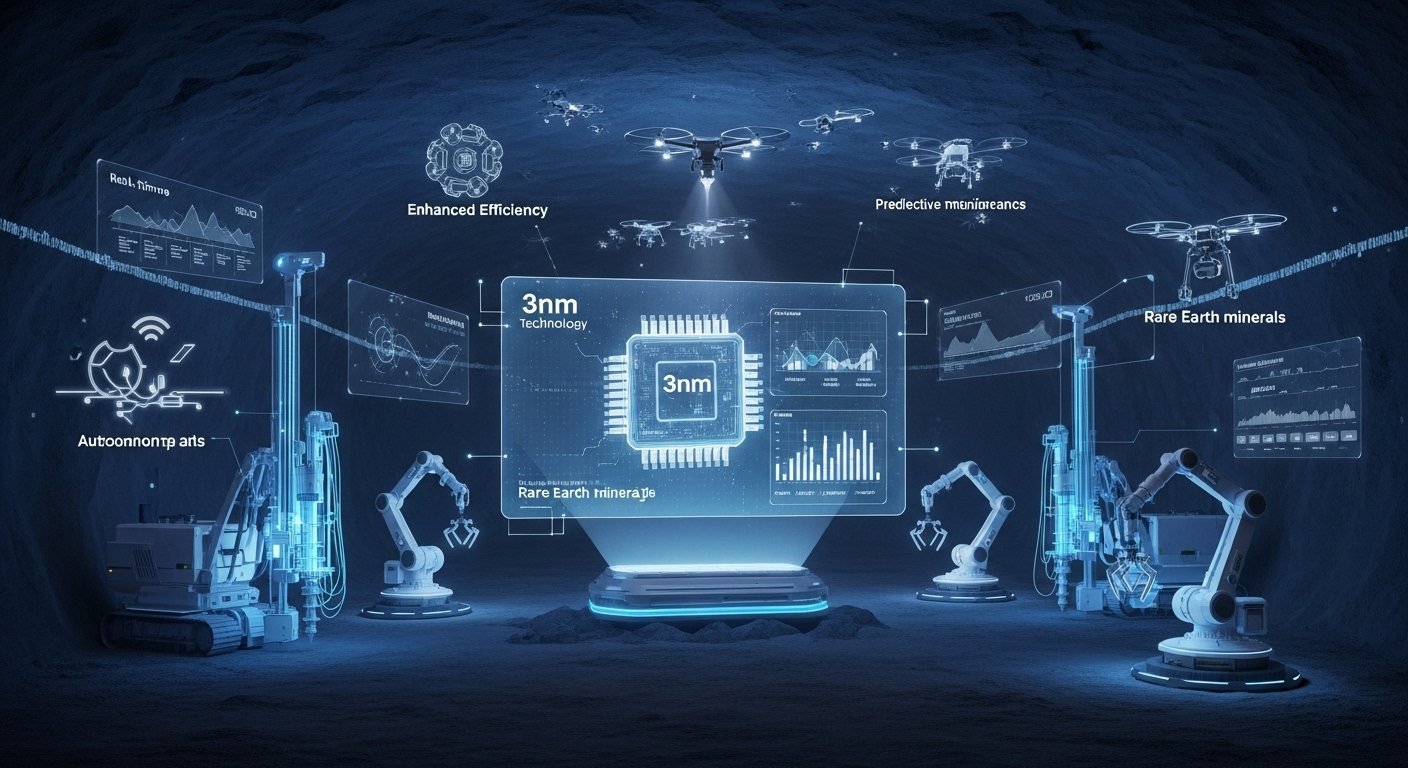
A 3 nm process node does not refer to the literal size of a transistor but to a class of manufacturing techniques that enable higher density and superior electrical characteristics. Depending on the foundry, these nodes may use advanced FinFET structures or gate-all-around nanosheet transistors. These devices offer improved control over current flow, better leakage suppression, and superior switching behavior compared to earlier nodes.
For mining ASICs, the benefits are substantial. Higher density allows manufacturers to integrate far more hashing engines into a single die. Lower fundamental operating voltages reduce baseline power consumption. Better electrostatic characteristics offer greater stability even when running at lower voltages. All these characteristics are indispensable when transitioning a mining ASIC into deep sub-threshold mode, because operating below threshold voltage magnifies any instability in transistor behavior.
At the same time, the improved characteristics of 3 nm devices make them uniquely suited for ultra-low-voltage operation. The reduced leakage, increased drive strength, and reliable channel control support a stable deep sub-threshold region that was difficult to achieve in older processes. As a result, 3 nm becomes the ideal environment to deploy a mining ASIC designed for extreme energy efficiency.
Deep Sub-Threshold Operation
At the heart of this breakthrough lies a counterintuitive idea. Transistors have a threshold voltage below which they are traditionally not considered fully “on.” Running logic circuits below this threshold historically meant accepting extremely low speed and high sensitivity to noise. This is the region engineers generally avoid when designing performance-oriented chips.
Yet deep sub-threshold operation dramatically reduces dynamic power, because dynamic energy scales quadratically with voltage. By dropping voltage well below threshold, each switching event consumes only a small fraction of the energy required at standard operating voltages. Although switching becomes slower, energy per operation declines to such a degree that total efficiency soars. Mining, which relies on repetitive operations that benefit from massive parallelism, is one of the rare workloads perfectly suited to deep sub-threshold operation.
A mining ASIC typically executes the same cryptographic function millions of times per second across thousands or millions of tiny processing units. Each unit does not need to operate at extremely high frequency. It only needs to operate consistently and predictably. This simplicity makes mining one of the best real-world applications for deep sub-threshold ASIC design. When combined with the density of 3 nm fabrication, designers can integrate far more cores running at lower speeds, maintaining total hashrate while reducing the energy required for each hash.
Why Miners Need Deep Sub-Threshold Designs
Modern cryptocurrency mining faces unprecedented economic and environmental pressures. Electricity often accounts for more than half of a mining operation’s total expenses. Cooling contributes additional cost and complexity. Regulatory pressures mount as governments closely scrutinize energy-intensive activities. Mining rewards decrease over time, while network difficulty increases, meaning miners must do more work for the same payoff.
In this environment, miners cannot simply rely on speed. They must prioritize energy efficiency above all else. A miner that consumes excessive power becomes unprofitable, regardless of its raw hashrate. A miner with high efficiency, however, remains viable even as market conditions fluctuate. This dramatic shift is why the idea that a Crypto Mining ASIC Goes Deep Sub-Threshold On 3 nm has captured the attention of the entire industry.
Operating in deep sub-threshold mode allows a mining ASIC to deliver extremely low energy consumption per hash. Even if each individual core operates more slowly than a traditional super-threshold core, the ability to integrate vast numbers of cores compensates for the reduced frequency. When the entire chip consumes significantly less power, the system requires less cooling, generates less heat, and offers more stable long-term performance.
This approach shifts the economics of mining. Instead of building massive facilities filled with high-wattage machines, operators can deploy compact clusters of energy-efficient sub-threshold ASICs, achieving equal or greater output at far lower operational cost. Over the lifecycle of the equipment, this efficiency translates into meaningful profit stability even in periods of low cryptocurrency prices.
The Architecture Behind a 3 nm Sub-Threshold ASIC
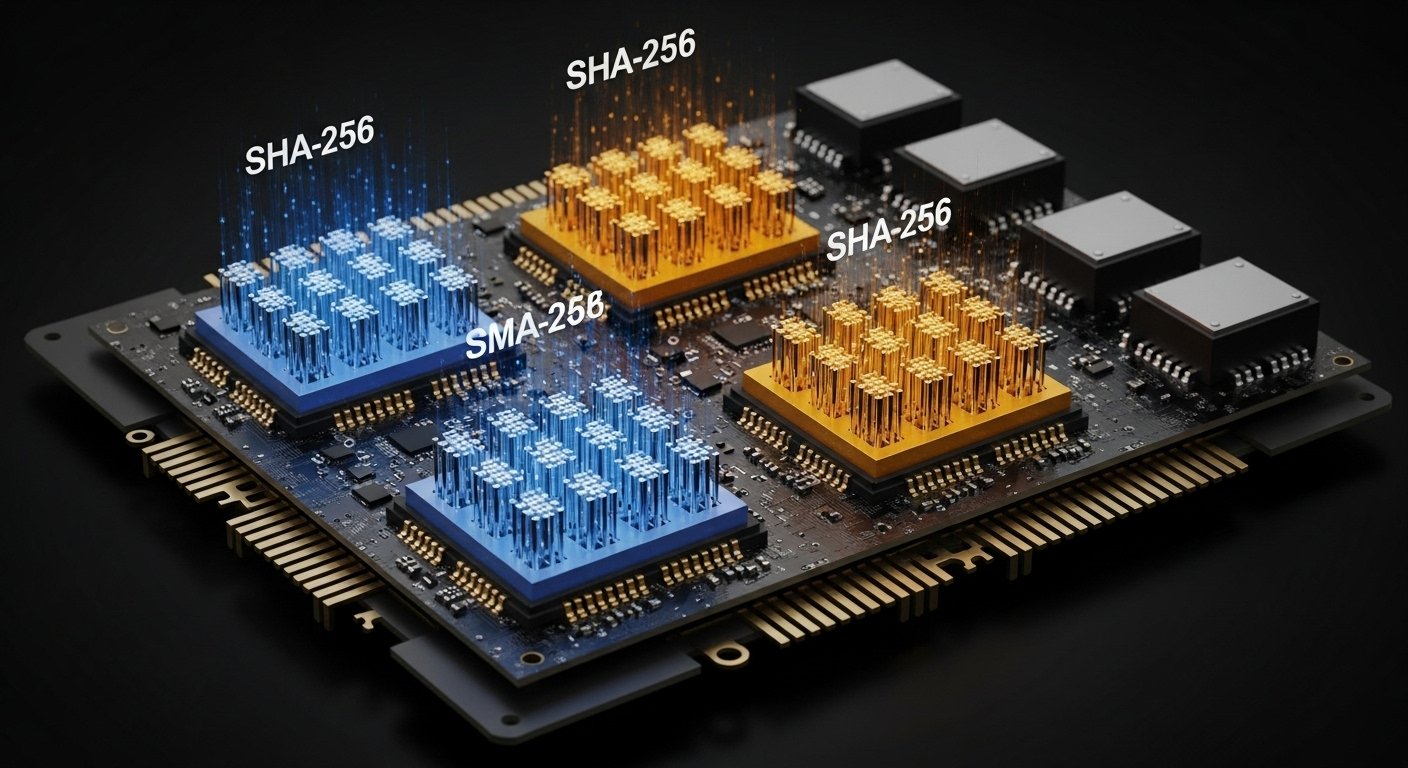
Designing a deep sub-threshold ASIC on 3 nm requires an entirely different architectural mindset. Every aspect of the chip must be optimized to reduce power consumption while maintaining reliability. Hashing cores must be carefully designed to operate at the lowest possible voltage without sacrificing correctness. Pipeline depth must be chosen strategically to balance speed against voltage. Even small variations in device parameters must be accounted for, since ultra-low-voltage circuits are sensitive to noise, temperature changes, and process variations.
One of the most important design decisions is the arrangement and replication of hashing engines. Instead of building a small number of fast cores, engineers build a vast array of small, slow cores. Each core performs a small portion of the workload at minimal power. The combined output of thousands or millions of these cores delivers competitive hashrate while consuming far less energy than a smaller number of traditional super-threshold cores.
Power delivery networks must be exceptionally robust. At deep sub-threshold voltages, even minor drops in supply voltage can cause logic failures. Designers incorporate dense metal grids, distributed voltage regulators, and advanced power domain segmentation to maintain stability. Techniques such as adaptive body biasing help regulate transistor characteristics in response to temperature shifts and manufacturing variations, ensuring consistent performance across different operating conditions.
Memory also requires careful engineering. Hashing algorithms demand repeated access to small registers and buffers, and operating SRAM at deep sub-threshold voltages is challenging. Designers often rely on specialized low-voltage memory cells with enhanced stability and use error detection methods to ensure correct data retrieval. Interconnects must be optimized to reduce capacitance and preserve signal integrity, particularly because low voltage reduces noise margins.
Together, these architectural strategies enable a chip that functions reliably in deep sub-threshold mode while achieving the energy efficiency mining operations desperately need.
Real-World Efficiency and Thermal Performance
When evaluating a deep sub-threshold mining ASIC on 3 nm, the primary metric is not maximum theoretical hashrate but hashrate per watt. This metric determines profitability, sustainability, and operating cost. A chip that delivers competitive hashrate while consuming half the power of a traditional miner represents a major breakthrough.
The thermal advantages of deep sub-threshold operation are equally significant. By generating far less heat per unit of computation, these miners reduce the burden on cooling systems. This enables higher rack density, longer component lifespan, and quieter operation. Air-cooled systems can often suffice where liquid cooling once seemed necessary. In large-scale mining centers, this reduction in cooling demand creates substantial savings in operating expenses and infrastructure investment.
Reliability becomes easier to maintain when chips operate at lower temperatures and experience less electrical stress. Although deep sub-threshold operation introduces risk due to lower noise margins, modern compensation techniques and adaptive circuits counter these effects. Over time, a well-designed sub-threshold miner can offer stable performance with minimal degradation, reducing downtime and maintenance costs.
See More: Best ASIC Miners for Bitcoin 2025 Complete Guide to Profitable Mining Hardware
The Challenges Ahead
Despite its advantages, deep sub-threshold mining on 3 nm is not without challenges. Semiconductor variability becomes more pronounced at such low voltages, requiring sophisticated statistical modeling and calibration mechanisms. Yield may become an issue, as chips that fail to meet voltage-stability requirements must be binned differently or disabled. Designers must account for unpredictable operating conditions, varying workloads, and environmental changes that affect ultra-low-voltage circuits.
Security must also be addressed. Operating near the edges of transistor behavior can expose chips to timing-based attacks or glitching techniques if proper safeguards are not implemented. Engineers must integrate detection and correction mechanisms to prevent unauthorized manipulation of mining operations or potential hardware-level exploits.
Despite these challenges, the industry trend is unmistakable. As process nodes shrink and new device architectures emerge, the principles behind deep sub-threshold mining will become increasingly relevant. Future nodes such as 2 nm and beyond may adopt complementary FETs or stacked nanosheet structures that further enhance low-voltage operation. The lessons learned from today’s 3 nm miners will guide tomorrow’s designs, enabling even higher efficiency and more sustainable mining practices.
Conclusion
When we say a Crypto Mining ASIC Goes Deep Sub-Threshold On 3 nm, we are describing a pivotal moment in mining history. This shift represents more than an incremental improvement. It signals a complete rethinking of how mining hardware should operate in a world where energy efficiency determines profitability. By embracing deep sub-threshold operation on an advanced 3 nm process, miners unlock the ability to achieve high hashrate at exceptionally low power consumption.
This approach changes the economic and environmental landscape of digital currency mining. It enables operators to reduce electricity costs, simplify cooling infrastructure, increase rack density, and maintain competitive performance in a constantly evolving market. As mining becomes more regulated and energy-conscious, the efficiency and sustainability of deep sub-threshold designs will set the standard for the future.
The transition to 3 nm deep sub-threshold ASICs marks the beginning of a new era in crypto mining. It balances performance with practicality, innovation with sustainability. It provides a path forward for miners seeking resilience in a competitive industry. Above all, it demonstrates that the future of mining belongs not to the machines that run fastest, but to the machines that run smartest.