









































The cryptocurrency market has entered another period of intense pressure as Spot Bitcoin ETF outflows surge to a staggering $2.9 billion, coinciding with Bitcoin’s decline to a new 2026 low price level. For investors who once viewed spot ETFs as a stabilizing force for Bitcoin, this development signals a major shift in sentiment. The combination of declining prices, reduced institutional confidence, and persistent macroeconomic uncertainty has created a challenging environment for both short-term traders and long-term holders.
Since their approval, spot Bitcoin exchange-traded funds were expected to attract steady institutional capital, increase market legitimacy, and reduce volatility over time. However, the reality in early 2026 paints a different picture. Instead of inflows supporting price stability, ETF products are now experiencing consistent redemptions, amplifying downward pressure on BTC. This dynamic raises critical questions about investor psychology, regulatory expectations, and Bitcoin’s role in diversified portfolios.
In this in-depth analysis, we explore why Bitcoin ETF outflows have accelerated, how the BTC price drop in 2026 is reshaping market structure, and what this trend means for the future of Bitcoin adoption. By examining macroeconomic forces, institutional behavior, and on-chain data, this article provides a comprehensive, SEO-optimized overview of one of the most important crypto market developments of the year.
Understanding Spot Bitcoin ETFs and Their Market Role
What Are Spot Bitcoin ETFs?
Spot Bitcoin ETFs are investment vehicles that directly track the price of Bitcoin by holding the underlying asset rather than derivatives. Unlike futures-based ETFs, spot ETFs require custodians to purchase and store actual BTC, making them closely tied to real market supply and demand. This structure was widely celebrated because it offered traditional investors regulated exposure to Bitcoin without the complexities of self-custody.
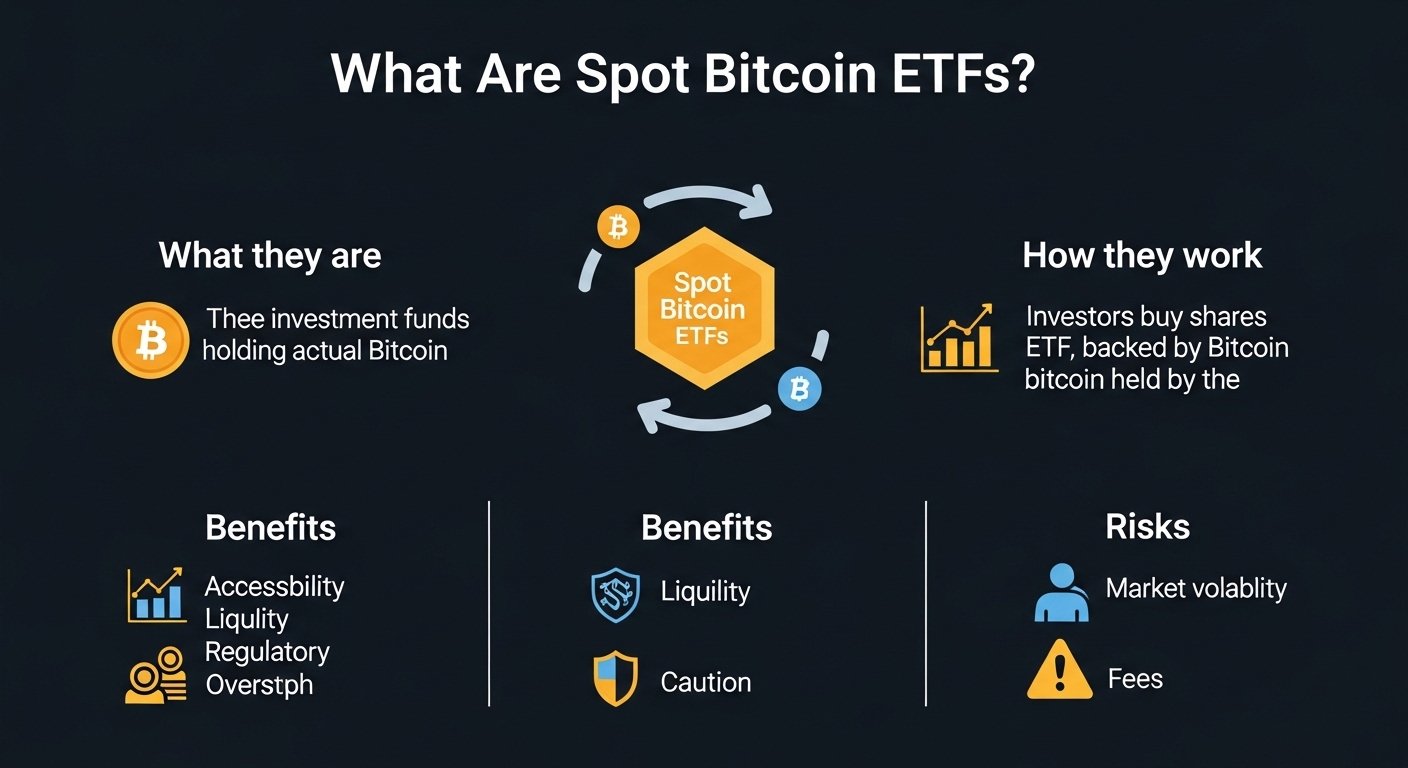
The launch of these ETFs marked a milestone for the crypto industry. Institutional investors, pension funds, and wealth managers gained easier access to Bitcoin, helping legitimize BTC as a mainstream financial asset. Initially, this led to strong inflows and optimism that spot Bitcoin ETF adoption would support long-term price growth.
Why ETFs Matter for Bitcoin Price Action
The importance of spot ETFs lies in their direct impact on Bitcoin liquidity. When ETFs see inflows, custodians buy BTC from the open market, reducing circulating supply and often pushing prices higher. Conversely, ETF outflows force custodians to sell Bitcoin, increasing selling pressure during already weak market conditions.
In 2026, the growing scale of ETFs means their behavior can significantly influence short-term price movements. The recent $2.9B in outflows highlights how institutional actions can accelerate downturns, especially when retail confidence is already fragile.
Spot Bitcoin ETF Outflows Reach $2.9B
The Scale of the Outflows
The cumulative $2.9 billion in spot Bitcoin ETF outflows represents one of the largest sustained withdrawal periods since these products were introduced. Rather than a single-day shock, the outflows have occurred steadily over several weeks, indicating a deliberate reduction in exposure rather than panic selling.
This sustained trend suggests that large investors are rebalancing portfolios, reducing risk, or reallocating capital to other asset classes. For Bitcoin, this has translated into persistent selling pressure that has made price recovery increasingly difficult.
Key ETFs Driving the Decline
While outflows are spread across multiple funds, some of the largest spot Bitcoin ETFs have seen disproportionate redemptions. Funds that once led inflows during bullish phases are now at the center of capital exits. This shift underscores how quickly institutional sentiment can change when macro conditions deteriorate.
The presence of institutional Bitcoin selling through ETFs also adds psychological weight to the market. Retail investors often interpret ETF outflows as a signal that “smart money” is losing confidence, which can amplify fear-driven selling.
BTC Price Drops to a New 2026 Low
Breakdown of Bitcoin’s 2026 Price Decline
Bitcoin’s fall to a new 2026 low is not the result of a single catalyst but rather a convergence of negative factors. Weak ETF demand, declining on-chain activity, and broader risk-off sentiment have combined to push BTC below key technical support levels.
As these supports were breached, algorithmic trading and stop-loss orders accelerated the decline. The result has been a sharp move downward, reinforcing bearish momentum and delaying any meaningful recovery.
Market Sentiment at Current Levels
Sentiment indicators suggest that fear dominates the market. Social media engagement around Bitcoin has declined, search interest is muted, and many investors are adopting a wait-and-see approach. While extreme fear has historically preceded market bottoms, there is no guarantee that current conditions represent a definitive low.
The relationship between spot Bitcoin ETF outflows and the BTC price drop remains central to this narrative. As long as ETFs continue to see redemptions, upward price momentum is likely to remain constrained.
Macroeconomic Pressures Impacting Bitcoin ETFs
Interest Rates and Global Liquidity
One of the primary drivers behind ETF outflows is the global macroeconomic environment. High interest rates and tight monetary policies have reduced liquidity across financial markets. As safer assets offer more attractive yields, speculative investments like Bitcoin face increased competition for capital.

Institutional investors, in particular, are sensitive to these conditions. When real yields rise, the opportunity cost of holding non-yielding assets like BTC increases, prompting portfolio adjustments that often include reducing crypto exposure.
Risk-Off Sentiment Across Markets
Beyond interest rates, geopolitical tensions and slowing economic growth have reinforced a risk-off environment. In such periods, investors tend to favor cash, government bonds, and defensive equities over volatile assets.Bitcoin, despite its long-term narrative as digital gold, still behaves like a high-risk asset in short-term market cycles. This perception has contributed to the ongoing Bitcoin ETF outflows in 2026.
Institutional Behavior and Changing Investment Strategies
Why Institutions Are Reducing Exposure
Institutional investors are not abandoning Bitcoin entirely, but many are scaling back positions. This is partly due to risk management mandates that require reducing exposure when volatility increases or when assets underperform benchmarks.Spot ETFs make these adjustments easier than ever. Instead of dealing with custody and on-chain transactions, institutions can simply redeem shares, making ETFs a flexible tool for tactical positioning.
Long-Term Versus Short-Term Institutional Outlook
It is important to distinguish between short-term selling and long-term conviction. Many institutions still view Bitcoin as a strategic asset but are unwilling to tolerate near-term drawdowns amid uncertain macro conditions.
This nuanced behavior explains why ETF outflows do not necessarily signal the end of institutional interest. Instead, they reflect a cautious stance that prioritizes capital preservation in the current environment.
On-Chain Data and Network Fundamentals
What Blockchain Metrics Reveal
On-chain data provides valuable context for the current downturn. Metrics such as active addresses, transaction volume, and miner revenue have shown signs of stabilization but not strong growth. This suggests that while the network remains functional and secure, user activity is not expanding rapidly enough to offset selling pressure.The lack of strong on-chain growth reinforces the bearish impact of spot Bitcoin ETF outflows, as there is limited organic demand to absorb the additional supply entering the market.
Miner Behavior During Price Weakness
Miners play a crucial role in Bitcoin’s supply dynamics. During prolonged price declines, some miners are forced to sell BTC to cover operational costs. While there is no evidence of widespread miner capitulation yet, reduced profitability at lower price levels could increase selling pressure if conditions worsen.
Regulatory and Policy Considerations
Regulatory Uncertainty and Investor Confidence
Regulation remains a double-edged sword for Bitcoin. While ETF approvals represented regulatory progress, ongoing debates around crypto oversight continue to create uncertainty. Changes in reporting requirements, custody rules, or tax treatment can influence institutional behavior.
In 2026, regulatory clarity has improved in some regions but remains inconsistent globally. This uneven landscape contributes to cautious positioning and reinforces Bitcoin ETF outflows during periods of uncertainty.
The Role of Compliance in ETF Adoption
Compliance requirements also affect ETF demand. As regulators tighten standards, some investors may find crypto exposure less attractive relative to other asset classes. While these measures aim to protect investors, they can temporarily dampen enthusiasm for Bitcoin-based products.
Historical Context: Are ETF Outflows a Bear Market Signal?
Comparing 2026 to Previous Bitcoin Cycles
Bitcoin has experienced numerous downturns throughout its history, often marked by capitulation events and prolonged consolidation phases. While spot ETFs are a relatively new factor, capital flow dynamics have always played a role in shaping market cycles.Past bear markets have shown that large outflows often precede periods of accumulation. Long-term investors typically re-enter once selling pressure subsides and macro conditions improve.
Lessons for Long-Term Investors
For patient investors, the current environment may present opportunities rather than risks. Understanding the drivers behind spot Bitcoin ETF outflows helps separate temporary sentiment shifts from fundamental weaknesses.Bitcoin’s core value proposition, rooted in decentralization and scarcity, remains unchanged despite short-term price volatility.
Future Outlook for Bitcoin and Spot ETFs
What Could Reverse ETF Outflows?
A reversal in ETF outflows would likely require a combination of factors, including easing monetary policy, improved macro stability, and renewed confidence in risk assets. Positive regulatory developments or technological advancements within the Bitcoin ecosystem could also act as catalysts.Until these conditions emerge, ETF flows are likely to remain volatile, closely tied to broader market sentiment.
Long-Term Implications for Bitcoin Adoption
Despite current challenges, spot ETFs continue to play a crucial role in Bitcoin’s integration into traditional finance. Even during periods of outflows, their existence signals growing acceptance of BTC as an investable asset.Over the long term, this infrastructure may support more sustainable growth once macro conditions become favorable again.
Conclusion
The $2.9 billion in spot Bitcoin ETF outflows and Bitcoin’s drop to a new 2026 low highlight the complex interplay between institutional behavior, macroeconomic pressures, and market psychology. While these developments underscore short-term weakness, they do not negate Bitcoin’s long-term potential.
ETF outflows reflect caution rather than collapse, driven by high interest rates, risk-off sentiment, and strategic portfolio rebalancing. For investors, understanding these dynamics is essential to navigating volatility and making informed decisions. As history has shown, periods of uncertainty often lay the groundwork for future recovery, making the current phase a critical chapter in Bitcoin’s evolving market story.
FAQs
Q: Why are spot Bitcoin ETF outflows increasing in 2026?
Spot Bitcoin ETF outflows are rising due to high interest rates, risk-off sentiment, and institutional portfolio rebalancing amid economic uncertainty.
Q: How do ETF outflows affect Bitcoin’s price?
ETF outflows force custodians to sell BTC, increasing supply in the market and adding downward pressure on the Bitcoin price.
Q: Is Bitcoin still attractive to institutional investors?
Yes, many institutions maintain long-term interest in Bitcoin but are reducing short-term exposure due to volatility and macroeconomic risks.
Q: Could Bitcoin recover despite current ETF outflows?
Bitcoin can recover if macro conditions improve, monetary policy eases, and investor confidence returns, potentially reversing ETF outflows.
Q: Are spot Bitcoin ETFs still important for adoption?
Absolutely. Spot Bitcoin ETFs remain a key bridge between traditional finance and crypto, supporting long-term adoption despite short-term fluctuations.
Also More: Bitcoin & Ethereum ETF Flows Turn Negative in 2026