








































The legal aftershocks of the 2022 crypto market collapse continue to reverberate across the digital asset industry. In a development that has drawn significant attention from investors, regulators, and market participants alike, the Terraform Estate Sues Jane Street has filed a lawsuit against Jane Street, alleging that the firm engaged in trades tied to the catastrophic implosion of Terraform Labs and its ecosystem.
According to reporting by The Wall Street Journal, the lawsuit claims that specific trading strategies involving Terra’s native tokens may have exacerbated, or at least contributed to, the market instability that ultimately led to one of the most dramatic collapses in crypto history. The case centers on trading activity surrounding TerraUSD (UST) and Luna, the two core digital assets whose downfall wiped out tens of billions of dollars in market value in May 2022.
This article provides a comprehensive examination of the lawsuit, its implications for the broader crypto industry, and how the events of the 2022 crypto market collapse continue to shape regulatory scrutiny and institutional risk management today.
The Background: Terraform’s Rise and the 2022 Crypto Market Collapse
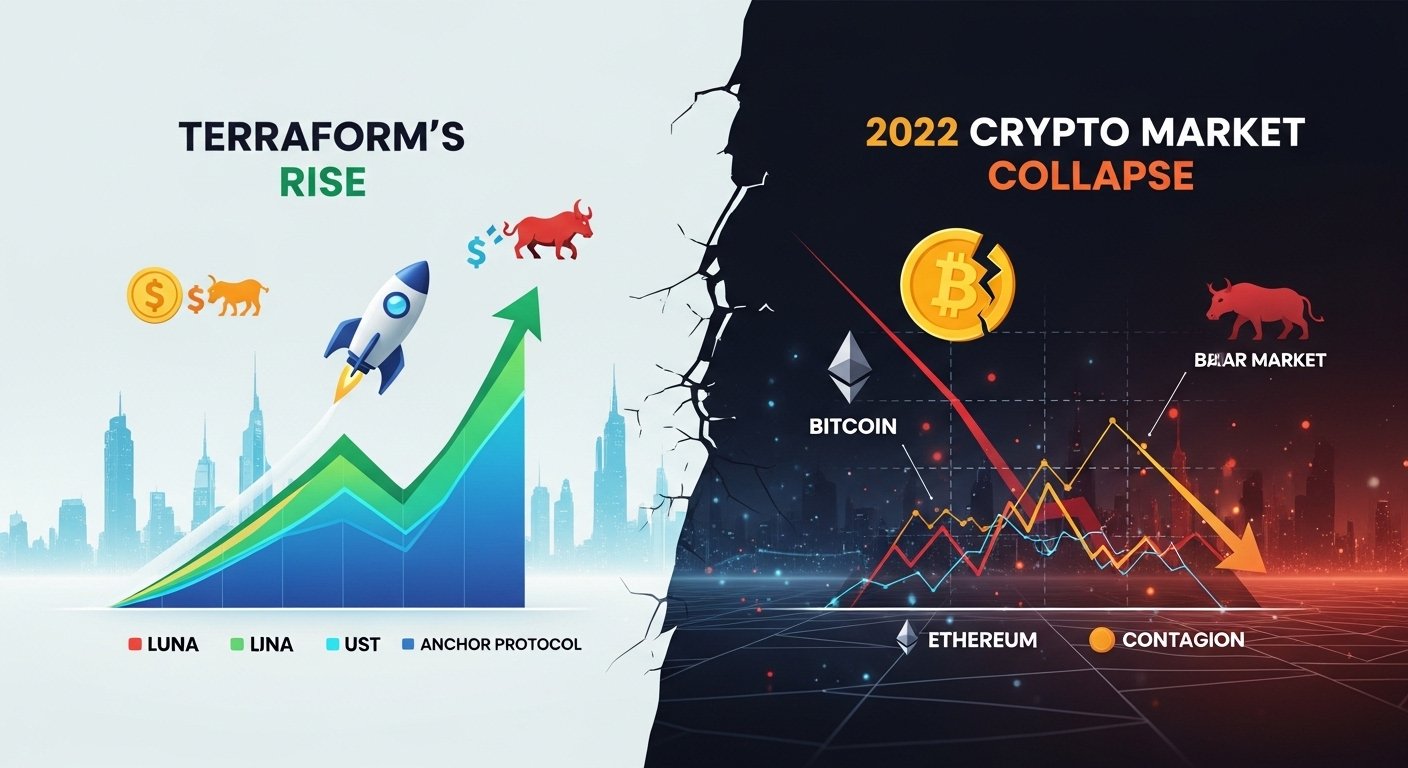
To understand why the Terraform Estate is suing Jane Street, it is essential to revisit the events that defined the 2022 crypto market collapse.
The Terra Ecosystem and Algorithmic Stablecoins
Terraform Labs built its reputation on an ambitious financial engineering model centered on an algorithmic stablecoin. TerraUSD (UST) was designed to maintain a 1:1 peg with the US dollar through an arbitrage mechanism involving its sister token, LUNA. Instead of being backed by cash reserves or Treasury holdings, UST relied on market incentives and token mint-and-burn dynamics.
At its peak, UST became one of the largest stablecoins in the crypto market, and LUNA soared into the top ranks of digital assets by market capitalization. Investors were drawn by high yields offered through decentralized finance protocols and the promise of a decentralized, scalable monetary system.
However, in May 2022, confidence in UST evaporated. A wave of redemptions triggered a death spiral. As UST lost its dollar peg, LUNA was minted in enormous quantities to defend the system, causing hyperinflation of the token and driving its value effectively to zero. The cascading effect intensified the broader 2022 crypto market collapse, contributing to liquidity crises across exchanges, hedge funds, and lending platforms.
Market Turmoil and Contagion
The collapse of Terra did not occur in isolation. It accelerated systemic stress across the digital asset ecosystem. Several crypto firms either declared bankruptcy or required emergency financing in the months that followed. The Terra implosion became a symbol of the fragility inherent in algorithmic stablecoin models and amplified calls for tighter regulatory oversight.It is within this context that the Terraform Estate’s lawsuit against Jane Street must be evaluated.
The Lawsuit: What the Terraform Estate Alleges
The central claim in the Terraform Estate lawsuit is that Jane Street engaged in trades tied to the Terra ecosystem that materially impacted market conditions during the 2022 crypto market collapse.
Allegations of Market Impact
According to reporting by The Wall Street Journal, the estate alleges that Jane Street entered into transactions involving TerraUSD and LUNA that may have placed additional stress on the ecosystem. The precise nature of the alleged trades has not been fully disclosed publicly, but the complaint reportedly suggests that certain positions or liquidity maneuvers amplified volatility during a fragile period.
The Terraform Estate argues that these trading activities contributed to destabilizing UST’s peg and accelerated the downward spiral that culminated in the broader 2022 crypto market collapse. The estate is seeking damages tied to the financial harm suffered by Terraform Labs and its stakeholders.
Jane Street’s Position
Jane Street is one of the most sophisticated quantitative trading firms globally, known for its market-making activities across asset classes, including equities, ETFs, options, and digital assets. The firm has long maintained that it operates within established regulatory frameworks and provides liquidity to markets.
While public statements from Jane Street regarding the lawsuit remain limited, the case will likely hinge on whether its trading behavior constituted lawful market-making or crossed into territory that plaintiffs argue was manipulative or destabilizing.The distinction between aggressive trading and unlawful market manipulation is a nuanced legal question that courts will need to evaluate carefully.
Legal Dimensions of the 2022 Crypto Market Collapse
The Terraform Estate lawsuit underscores how the 2022 crypto market collapse has transitioned from a market event to a prolonged legal saga.
Bankruptcy and Estate Recovery
Following the implosion of Terraform Labs, bankruptcy proceedings sought to marshal assets and pursue potential claims against third parties. The estate’s fiduciary duty includes investigating whether recoverable damages exist that could benefit creditors.
Suing Jane Street fits within this mandate. By pursuing alleged counterparties or market participants whose actions may have contributed to losses, the Terraform Estate aims to maximize recoveries for affected stakeholders.
Standards for Market Manipulation
To prevail, the Terraform Estate will likely need to demonstrate that Jane Street’s trades went beyond legitimate market participation and had manipulative intent or effect. This is a high bar, especially in volatile and relatively less-regulated markets like digital assets.Crypto markets are characterized by rapid price swings, thin liquidity in certain venues, and fragmented order books. Distinguishing between causation and correlation in such an environment is complex.
The 2022 crypto market collapse involved macroeconomic pressures, rising interest rates, risk-off sentiment, and internal structural weaknesses in Terra’s design. Any court evaluating this case will have to parse whether external trading activity was a primary driver or merely a participant in an already unstable system.
Institutional Trading and Crypto Market Structure

The lawsuit also brings into focus the evolving role of institutional trading firms in digital asset markets.
The Rise of Quantitative Market Makers in Crypto
Firms like Jane Street entered crypto markets as liquidity providers, leveraging sophisticated algorithms and arbitrage strategies. Their presence has been credited with improving spreads and enhancing efficiency. At the same time, critics argue that high-frequency trading strategies can exacerbate volatility during periods of stress.
In traditional finance, market-making firms are tightly regulated and operate under surveillance regimes designed to detect manipulation. In crypto, regulatory clarity has historically lagged innovation, particularly in offshore venues and decentralized exchanges.
The Terraform Estate lawsuit raises questions about whether the 2022 crypto market collapse revealed structural vulnerabilities that sophisticated trading firms could exploit—or whether the collapse was primarily the result of flawed tokenomics and excessive leverage.
Algorithmic Stablecoins Under Scrutiny
The implosion of TerraUSD reshaped perceptions of algorithmic stablecoins. Policymakers in the United States, Europe, and Asia cited the Terra failure when debating stablecoin legislation.Unlike fiat-backed stablecoins, algorithmic models rely on reflexive mechanisms. Once confidence erodes, self-reinforcing feedback loops can trigger collapse. Even absent external trading pressure, such systems may be inherently fragile under stress.The Terraform Estate lawsuit effectively asks whether external trading activity merely exposed this fragility or actively precipitated it.
Regulatory Implications of the Lawsuit
The outcome of the Terraform Estate’s claims against Jane Street could influence how regulators approach market conduct in digital assets.
Expanding Oversight of Crypto Trading
Regulators have increasingly focused on surveillance, disclosure requirements, and trading transparency. If courts find that certain trading strategies contributed materially to the 2022 crypto market collapse, policymakers may accelerate efforts to align crypto market structure with traditional securities markets.That could mean enhanced reporting obligations for market makers, clearer definitions of manipulation in digital assets, and more stringent oversight of cross-exchange arbitrage.
Global Jurisdictional Complexity
Terraform Labs operated across jurisdictions, and digital asset trading is inherently global. Any legal proceeding involving Jane Street will likely navigate questions of jurisdiction, applicable law, and cross-border enforcement.This complexity reflects a broader challenge: crypto markets are borderless, but legal systems are not.
Broader Impact on Investors and the Industry
For investors who suffered losses during the 2022 crypto market collapse, the Terraform Estate lawsuit represents another chapter in an ongoing effort to assign accountability.
Investor Confidence and Institutional Participation
Institutional participation in crypto has grown steadily, even after the Terra implosion. However, high-profile lawsuits reinforce the perception that market risks extend beyond price volatility to include legal and counterparty uncertainty.
If the Terraform Estate succeeds in establishing liability, it may deter certain aggressive trading strategies. Conversely, if Jane Street prevails, it could reinforce the notion that market forces—rather than specific actors—were primarily responsible for the collapse.
Lessons for Future Stablecoin Design
The Terra saga underscores the importance of transparency, risk modeling, and stress testing in stablecoin architectures. Future projects may emphasize overcollateralization, reserve audits, and clearer governance structures.The 2022 crypto market collapse remains a case study in systemic risk within decentralized finance. Whether external trading activity meaningfully accelerated the collapse is now a matter for the courts.
Conclusion
The lawsuit in which the Terraform Estate sues Jane Street over trades tied to the 2022 crypto market collapse adds a new legal dimension to one of the most consequential failures in digital asset history. At its core, the case examines whether sophisticated institutional trading amplified structural weaknesses in an already fragile ecosystem.
As proceedings unfold, the outcome could shape not only the legacy of Terraform Labs but also the regulatory trajectory of crypto markets worldwide. Regardless of the verdict, the 2022 crypto market collapse will remain a defining inflection point—one that exposed the interplay between innovation, leverage, liquidity, and trust in decentralized financial systems.The Terraform Estate’s legal action ensures that the search for accountability continues, long after the market shockwaves of 2022 first rippled across the global financial landscape.
FAQs
Q: Why is the Terraform Estate suing Jane Street?
The Terraform Estate alleges that Jane Street engaged in trades tied to TerraUSD and LUNA that contributed to instability during the 2022 crypto market collapse. The estate is seeking damages on behalf of stakeholders.
Q: What was the main cause of the 2022 crypto market collapse?
The collapse was triggered by the failure of Terra’s algorithmic stablecoin model, broader macroeconomic pressures, and contagion effects across crypto firms. The lawsuit questions whether certain trading activities intensified the crisis.
Q: What is Jane Street’s role in crypto markets?
Jane Street is a quantitative trading firm that provides liquidity and engages in market-making across multiple asset classes, including digital assets.
Q: How did TerraUSD lose its peg?
TerraUSD relied on an arbitrage mechanism with LUNA rather than traditional reserves. When confidence dropped and redemptions surged, the system entered a self-reinforcing downward spiral.
Q: Could this lawsuit change crypto regulation?
Yes. Depending on the outcome, regulators may strengthen oversight of trading practices, market-making activities, and stablecoin structures to prevent a repeat of the 2022 crypto market collapse.