







































Global financial markets are once again navigating a wave of geopolitical uncertainty as tensions escalate across the Middle East. Historically, such events have triggered sharp reactions across equities, commodities, and foreign exchange markets. Oil prices surge, stock indices retreat, and investors rush toward perceived safe-haven assets like gold and U.S. Treasuries. Yet, in this latest episode of instability, one asset appears to be charting its own path: Bitcoin.
While traditional markets show signs of strain, Bitcoin Holds Steady Amid steady, defying expectations that risk assets would buckle under geopolitical stress. The cryptocurrency’s relative stability during the Middle East conflict has sparked renewed discussions about its evolving role in global finance. Is Bitcoin transforming into a digital safe haven, or is it simply benefiting from structural demand and liquidity dynamics?
This article explores how Bitcoin holds steady as Middle East conflict rattles markets, examining the interplay between geopolitical risk, macroeconomic forces, investor psychology, and on-chain fundamentals. We will analyze price behavior, capital flows, institutional participation, and the broader implications for crypto markets moving forward.
The Immediate Market Reaction to Middle East Conflict
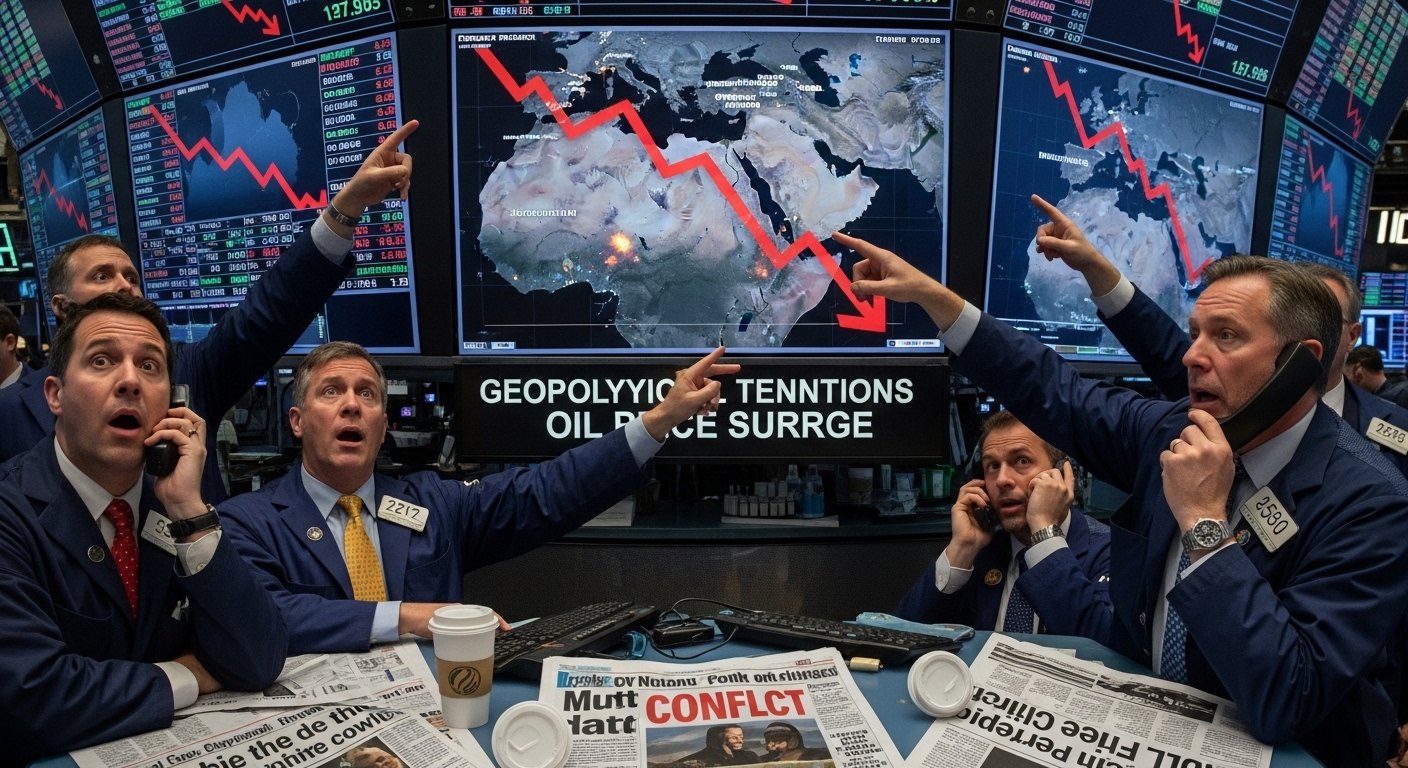
When geopolitical tensions escalate in regions as strategically significant as the Middle East, financial markets respond rapidly. Energy markets, in particular, react strongly due to supply chain concerns and the region’s central role in global oil production.
Oil Prices and Inflation Fears
A spike in crude oil prices often follows Middle East conflict developments. As energy costs rise, inflation expectations tend to increase. This dynamic pressures central banks and complicates monetary policy decisions. Higher inflation can lead to tighter financial conditions, which historically weighs on risk assets.
Yet, even as oil volatility surged, Bitcoin holds steady relative to traditional equities. This divergence raises questions about Bitcoin’s correlation structure and whether it is decoupling from broader risk sentiment.
Equity Market Volatility
Major indices such as the S&P 500 and the Nasdaq Composite often experience heightened volatility during geopolitical events. Technology stocks, in particular, are sensitive to global risk aversion.In contrast, Bitcoin’s drawdowns have been comparatively contained. While intraday volatility persists, the absence of a dramatic selloff underscores a changing investor narrative around digital assets.
Bitcoin’s Historical Performance During Geopolitical Crises
To understand why Bitcoin holds steady as Middle East conflict rattles markets, it is essential to analyze its historical behavior during past crises.
Early Years: Extreme Volatility
In its early years, Bitcoin was largely viewed as a speculative asset. During periods of market stress, liquidity dried up and price swings intensified. There was little evidence of safe-haven characteristics.
Gradual Institutionalization
As institutional participation expanded and regulated products emerged, Bitcoin’s market structure matured. The launch of futures contracts and exchange-traded products brought increased liquidity and hedging tools.
Bitcoin’s resilience in recent geopolitical flare-ups suggests a structural shift. Rather than behaving purely as a high-beta risk asset, it increasingly exhibits characteristics of a macro asset influenced by capital flows and monetary conditions.
Is Bitcoin Becoming a Digital Safe Haven?
The concept of Bitcoin as “digital gold” has been debated for years. The latest Middle East conflict reignites this discussion.
Comparison With Gold
Gold has traditionally been the primary safe-haven asset during geopolitical turmoil. The Gold market often rallies when uncertainty rises.Interestingly, Bitcoin’s price stability alongside gold’s strength suggests that investors may be allocating capital to both assets as hedges against systemic risk. However, Bitcoin’s volatility remains significantly higher, which complicates its classification as a pure safe haven.
Correlation Dynamics
Bitcoin’s correlation with equities has fluctuated over time. During periods of liquidity expansion, it often trades in tandem with growth stocks. Yet, in moments of geopolitical tension unconnected to monetary tightening, Bitcoin may decouple.The current environment shows Bitcoin holding steady despite equity turbulence, indicating that correlation regimes are not static.
Macroeconomic Forces Shaping Bitcoin’s Stability
Geopolitical conflicts do not occur in isolation. They intersect with broader macroeconomic conditions that influence asset prices.
Monetary Policy and Liquidity
Central bank decisions remain a critical driver of crypto markets. The policies of the Federal Reserve shape global liquidity conditions. If conflict-driven inflation pressures force tighter policy, risk assets could face headwinds.However, if policymakers prioritize financial stability over aggressive tightening, liquidity may remain supportive for Bitcoin.
Currency Debasement Concerns
In regions directly affected by conflict, local currencies may experience volatility. Historically, capital flight into alternative assets, including Bitcoin, increases when trust in fiat systems weakens.The narrative that Bitcoin holds steady during geopolitical instability reinforces its appeal as a decentralized store of value resistant to sovereign risk.
On-Chain Data Signals Underlying Strength

Price action alone does not fully explain why Bitcoin holds steady as Middle East conflict rattles markets. On-chain metrics provide deeper insight into network fundamentals.
Long-Term Holder Behavior
Data indicates that long-term holders are not engaging in panic selling. Dormant supply remains relatively stable, suggesting confidence in Bitcoin’s long-term trajectory.
Exchange Flows
Net outflows from centralized exchanges can indicate accumulation behavior. Reduced exchange balances imply that investors prefer self-custody, often interpreted as a bullish signal.These structural dynamics reduce immediate selling pressure, helping Bitcoin maintain price stability despite macro uncertainty.
Institutional Investors and Strategic Allocation
Institutional adoption plays a central role in Bitcoin’s evolving market behavior.
Portfolio Diversification
Asset managers increasingly view Bitcoin as a non-sovereign, alternative asset class. During periods of geopolitical conflict, diversification benefits become more attractive.Unlike region-specific equities, Bitcoin operates on a global network unaffected by localized economic shutdowns or sanctions.
Hedging Against Systemic Risk
Some institutional investors treat Bitcoin as a hedge against systemic instability. While not a direct substitute for gold, it offers exposure to a decentralized monetary network.As Middle East conflict rattles markets, strategic allocations to Bitcoin may help explain its relative steadiness.
Retail Sentiment and Market Psychology
Market behavior is not solely determined by macro fundamentals; psychology plays a powerful role.
Fear Versus Conviction
Retail investors often react emotionally to headlines. However, the absence of widespread panic selling suggests growing conviction among crypto participants.
Social Media Influence
Online communities rapidly disseminate news and analysis, shaping narratives in real time. The dominant narrative currently emphasizes Bitcoin’s resilience rather than vulnerability.This collective perception reinforces price stability, creating a self-sustaining feedback loop.
Energy Markets, Mining, and Geopolitical Risk
Middle East conflict has implications beyond price charts. Energy markets directly influence Bitcoin mining operations.
Mining Costs and Energy Prices
Higher oil and natural gas prices can increase mining costs, particularly in regions dependent on fossil fuels. However, Bitcoin mining is geographically diversified, reducing localized disruption risks.
Hash Rate Stability
Network security, measured by hash rate, remains robust. A stable or rising hash rate during geopolitical turmoil signals confidence among miners and supports the broader narrative that Bitcoin holds steady.
The Broader Crypto Market Reaction
While Bitcoin holds steady, altcoins often exhibit greater volatility.
Capital Rotation Dynamics
In uncertain environments, capital tends to rotate toward higher-liquidity assets. Bitcoin, as the largest cryptocurrency by market capitalization, benefits from this dynamic.
Risk Appetite Compression
Speculative tokens typically underperform during geopolitical stress. This pattern reinforces Bitcoin’s dominance within the crypto ecosystem.
Regulatory Implications and Geopolitical Strategy
Geopolitical tensions can accelerate regulatory developments.
Sanctions and Digital Assets
Governments may scrutinize digital assets more closely during conflict periods. Concerns about sanctions evasion can influence policy decisions.
Strategic Reserves and Sovereign Interest
Some policymakers have floated the concept of digital asset reserves. Although still speculative, the idea underscores Bitcoin’s growing relevance in geopolitical discourse.
Technical Analysis: Support and Resistance Levels
Technical traders closely monitor price levels during volatile periods.
Key Support Zones
Strong support levels can act as psychological anchors. If Bitcoin holds above major moving averages and historical accumulation zones, confidence remains intact.
Resistance and Breakout Potential
Should macro tensions ease, a sustained breakout above resistance could validate the thesis that Bitcoin holds steady not merely as a defensive asset but as a growth instrument poised for expansion.
Long-Term Implications for Bitcoin
The current geopolitical episode may prove pivotal in shaping Bitcoin’s reputation.
Narrative Evolution
If Bitcoin continues to demonstrate resilience during global crises, its safe-haven narrative gains credibility.
Structural Maturation
Each crisis tests market infrastructure, liquidity depth, and investor behavior. Relative stability during Middle East conflict indicates increasing market maturity.
Conclusion
As Middle East conflict rattles markets, Bitcoin holds steady, offering a compelling case study in asset evolution. While equities fluctuate and oil prices surge, Bitcoin’s relative resilience reflects a combination of macro liquidity conditions, institutional adoption, strong on-chain fundamentals, and shifting investor psychology.
This does not mean Bitcoin is immune to volatility or macro headwinds. However, its performance during geopolitical stress suggests that it is transitioning from a purely speculative asset toward a recognized macro instrument with unique diversification properties.
Whether Bitcoin ultimately solidifies its role as a digital safe haven remains to be seen. Yet, in the current environment of uncertainty, its stability sends a powerful signal to global investors: decentralized assets may have a growing place in diversified portfolios.
FAQs
Q: Why does Bitcoin hold steady during Middle East conflict?
Bitcoin holds steady due to diversified global participation, strong on-chain fundamentals, institutional adoption, and capital rotation toward high-liquidity crypto assets.
Q: Is Bitcoin a safe-haven asset like gold?
Bitcoin shares some characteristics with gold, particularly as a non-sovereign asset, but it remains more volatile. Its safe-haven status is still evolving.
Q: How does geopolitical conflict affect crypto markets?
Geopolitical conflict can increase volatility, influence energy prices affecting mining, and shift investor sentiment toward defensive or decentralized assets.
Q: Does rising oil impact Bitcoin mining?
Yes, higher energy costs can affect mining profitability. However, geographic diversification and renewable energy adoption mitigate concentrated risks.
Q: Should investors buy Bitcoin during geopolitical uncertainty?
Investment decisions depend on individual risk tolerance and portfolio strategy. Bitcoin may offer diversification benefits, but it remains a volatile asset requiring careful allocation planning.
Also More: Top 4 Altcoins Outperform as Bitcoin Consolidates at $121K