







































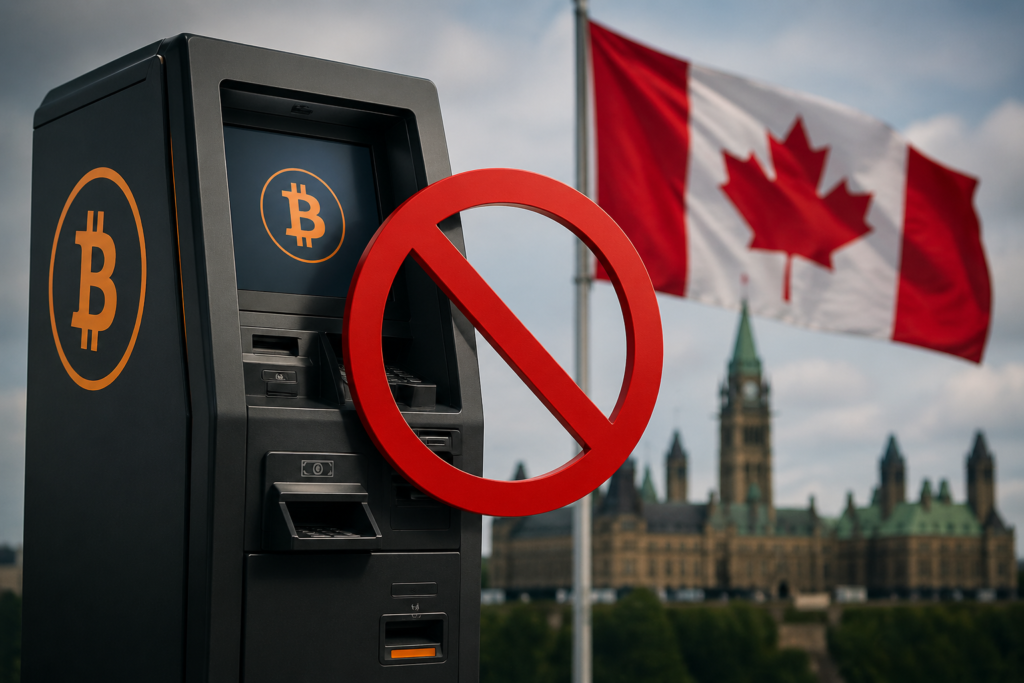
The rapid rise of cryptocurrency adoption has brought both innovation and risk. In recent years, crypto ATMs—machines that allow users to buy or sell digital currencies using cash—have become increasingly popular across the globe. However, this convenience has also opened new doors for fraudsters and criminal networks. Now, Canada plans to ban crypto ATMs used in fraud, marking a significant shift in how governments approach digital finance regulation.
The Canadian government’s decision comes amid growing concerns about financial scams, money laundering, and the misuse of crypto technologies. Reports indicate that these machines have become a key tool for scammers, particularly targeting vulnerable individuals such as seniors.
With nearly 4,000 crypto ATMs installed across the country—one of the highest densities globally—Canada is taking a bold step to protect consumers and strengthen financial security. This move is not just about banning machines; it reflects a broader effort to regulate the digital economy and prevent financial crimes tied to cryptocurrencies.
In this article, we will explore why Canada plans to ban crypto ATMs used in fraud, how these machines work, the risks involved, and what this decision means for the future of crypto adoption.
What Are Crypto ATMs and How Do They Work?
Crypto ATMs, also known as Bitcoin ATMs, are physical kiosks that allow users to convert cash into cryptocurrencies like Bitcoin or Ethereum. Unlike traditional ATMs, they do not connect to bank accounts but instead interact with blockchain networks.
Users typically scan a QR code linked to their crypto wallet, insert cash, and receive digital assets in return. Some machines also allow users to withdraw cash by selling cryptocurrency. These transactions are often quick and require minimal verification, especially for smaller amounts.
This ease of use has made crypto ATMs highly attractive. However, it is precisely this simplicity that has raised concerns. Many machines require only a phone number for transactions under a certain threshold, making them vulnerable to misuse.
Why Canada Plans to Ban Crypto ATMs Used in Fraud
Rising Fraud Cases Linked to Crypto ATMs
One of the primary reasons Canada plans to ban crypto ATMs used in fraud is the surge in scam-related activities. Authorities have identified these machines as a major channel for fraudsters to collect money from victims.
Scammers often instruct victims—through phone calls or online schemes—to deposit cash into a crypto ATM, converting it into cryptocurrency that is difficult to trace or recover.
Law enforcement agencies have reported numerous cases where individuals, particularly elderly citizens, were manipulated into depositing life savings into these machines. The irreversible nature of cryptocurrency transactions makes recovery nearly impossible.
Role in Money Laundering
Another significant concern is the role of crypto ATMs in money laundering. Criminal networks use these machines to convert illicit cash into digital assets, effectively obscuring the origin of funds.
The Canadian government has emphasized that these ATMs are frequently used to process proceeds of crime, making them a weak point in the financial system.
Because transactions can occur without direct human oversight, detecting suspicious activity becomes much harder compared to traditional banking systems.
Lack of Regulation and Oversight
Despite the widespread use of crypto ATMs, regulatory frameworks have struggled to keep pace. In Canada, there has been limited oversight specific to these machines, allowing gaps that criminals can exploit.
Authorities have acknowledged that virtual currency businesses, including crypto ATMs, pose risks related to fraud and financial crime.
The planned ban is part of a broader strategy to tighten regulations and close loopholes in the digital financial ecosystem.
Government Measures and Policy Changes
Inclusion in the 2026 Economic Update
The proposal to ban crypto ATMs was introduced as part of Canada’s Spring Economic Update 2026, highlighting its importance in the country’s financial crime strategy.
Officials described these machines as a “primary method” used by scammers to defraud victims and process illicit funds.
The move signals a shift from reactive enforcement to proactive prevention.
Crackdown on Crypto Businesses
The ban is not an isolated action. It is part of a wider crackdown on cryptocurrency-related activities, including stricter monitoring of money services businesses (MSBs).
In 2026 alone, dozens of crypto-related business registrations were revoked due to non-compliance and suspicious activities.
This indicates that Canada is adopting a more aggressive stance toward regulating the crypto industry.
Continued Access Through Regulated Channels
Despite the ban, Canadians will still be able to purchase cryptocurrencies through licensed and regulated platforms. The goal is not to eliminate crypto usage but to ensure safer and more transparent transactions.
Authorities aim to shift users away from high-risk methods like crypto ATMs toward regulated services that offer better consumer protection.
Impact on Crypto Users and Businesses
Effects on Everyday Users
For regular users, the ban may initially feel restrictive. Crypto ATMs offer convenience, especially for those without access to traditional banking services.
However, the government argues that the risks outweigh the benefits. By removing these machines, authorities hope to reduce fraud and protect consumers from financial loss.
Challenges for ATM Operators
Companies operating crypto ATMs will face significant challenges if the ban is implemented. Businesses like Bitcoin Well and Localcoin, which operate hundreds of machines, could see their operations severely impacted.
For these companies, the ban could mean restructuring their business models or exiting the market entirely.
Influence on the Crypto Market
The decision could also influence the broader cryptocurrency market. While some may view it as a setback, others see it as a step toward maturity and regulation.
By addressing fraud and illegal activities, Canada may actually strengthen trust in digital currencies over the long term.
Global Perspective: A Growing Trend
Canada is not alone in targeting crypto ATMs. Around the world, governments are increasingly recognizing the risks associated with these machines.
In the United States, for example, crypto ATM fraud has resulted in hundreds of millions of dollars in losses annually.
Similarly, regulators in other countries have introduced restrictions or are considering bans to curb misuse. This suggests a global trend toward stricter oversight of crypto-related infrastructure.
The Future of Cryptocurrency Regulation in Canada

The decision to ban crypto ATMs marks a turning point in Canada’s approach to digital finance. It reflects a broader shift toward stricter regulation, consumer protection, and financial transparency.
Moving forward, we can expect more policies aimed at monitoring crypto transactions, enforcing compliance, and preventing fraud.
At the same time, the government will likely continue supporting innovation in blockchain technology, ensuring that Canada remains competitive in the global digital economy.
Advantages and Disadvantages of Banning Crypto ATMs
Advantages
Banning crypto ATMs can significantly reduce fraud cases and limit opportunities for money laundering. It also encourages the use of regulated platforms, enhancing transparency and accountability.
Additionally, it sends a strong message that governments are serious about tackling financial crime in the digital age.
Disadvantages
On the downside, the ban may limit access to cryptocurrency for individuals who rely on these machines. It could also slow innovation and discourage investment in the crypto sector.
Critics argue that regulation—not prohibition—might be a more balanced approach.
Conclusion
The move that Canada plans to ban crypto ATMs used in fraud is a bold and significant step in the fight against financial crime. While crypto ATMs have provided convenience and accessibility, their misuse by scammers and criminals has raised serious concerns.
By targeting these machines, Canada aims to protect consumers, reduce fraud, and strengthen the integrity of its financial system. Although the ban may pose challenges for users and businesses, it also represents an opportunity to build a safer and more regulated crypto ecosystem.
As the digital finance landscape continues to evolve, one thing is clear: governments worldwide are taking a closer look at how to balance innovation with security.
FAQs
Q. Why is Canada banning crypto ATMs?
Canada plans to ban crypto ATMs due to their increasing use in fraud and money laundering schemes, which pose risks to consumers and the financial system.
Q. Are crypto ATMs illegal worldwide?
No, crypto ATMs are still legal in many countries, but some governments are introducing stricter regulations or considering bans.
Q. Can Canadians still buy cryptocurrency after the ban?
Yes, Canadians will still be able to purchase cryptocurrencies through regulated and licensed platforms.
Q. How do scammers use crypto ATMs?
Scammers often trick victims into depositing cash into crypto ATMs, converting it into cryptocurrency that is difficult to trace or recover.
Q. Will banning crypto ATMs stop crypto fraud completely?
No, but it is expected to significantly reduce fraud cases by removing a commonly exploited channel for scams.