





































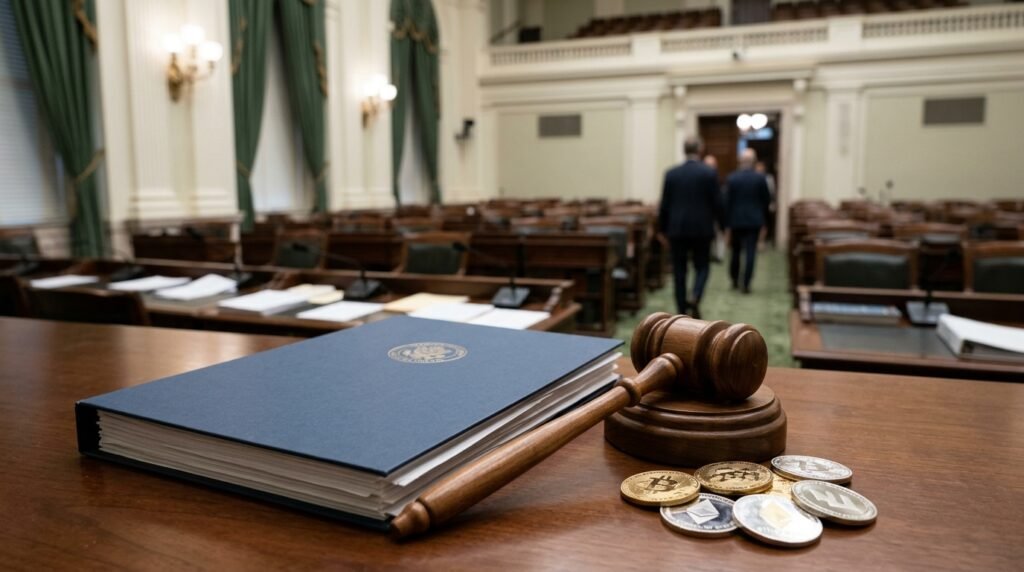
The debate surrounding cryptocurrency regulation in the United States is intensifying as lawmakers prepare for the upcoming CLARITY Act vote. While the crypto industry has pushed hard to make digital asset regulation a national political issue, recent surveys and voter sentiment suggest that crypto policy remains far from a top priority for most Americans. Instead, voters continue to focus on inflation, healthcare, immigration, jobs, taxes, and economic stability ahead of the next major election cycle.
The disconnect between Washington’s growing attention to cryptocurrency legislation and public concern highlights a critical challenge for the digital asset sector. Industry leaders have invested millions into lobbying efforts, political campaigns, and advocacy groups designed to shape the future of crypto regulation. Yet despite these aggressive efforts, many voters still view cryptocurrency as a niche financial topic rather than a pressing national issue.
The proposed CLARITY Act has become one of the most discussed crypto-related legislative initiatives in Congress. Supporters argue the bill could finally provide clear rules for digital assets, blockchain innovation, and crypto exchanges operating in the United States. Critics, however, worry that the legislation may favor large corporations while failing to adequately protect retail investors and consumers.
As the vote approaches, political analysts are paying close attention to how crypto policy influences voter behavior, campaign messaging, and broader financial regulation debates. The outcome could shape the future of the American crypto industry while also revealing whether digital assets truly carry political weight among the electorate.
Understanding the CLARITY Act and Its Purpose
The CLARITY Act was introduced as an effort to address the ongoing regulatory confusion surrounding cryptocurrencies and digital assets in the United States. For years, crypto companies have faced uncertainty over whether tokens should be classified as securities, commodities, or entirely new financial instruments. This lack of clarity has led to legal battles between regulators and crypto firms, creating concerns about innovation moving overseas.
The legislation seeks to establish clearer guidelines for the oversight of blockchain projects, stablecoins, decentralized finance platforms, and crypto exchanges. Lawmakers supporting the bill believe that transparent regulation could encourage investment while protecting consumers from fraud and market manipulation.
One of the primary goals of the CLARITY Act is to define the roles of major regulatory agencies such as the Securities and Exchange Commission and the Commodity Futures Trading Commission. The crypto industry has repeatedly criticized overlapping jurisdiction and inconsistent enforcement actions. By setting clearer boundaries, supporters claim the bill could reduce uncertainty for businesses operating in the digital asset economy.
At the same time, opponents argue that some provisions may weaken regulatory enforcement or create loopholes that sophisticated market players could exploit. Consumer advocacy groups continue to push for stronger protections against scams, misleading token offerings, and cybersecurity risks associated with crypto trading platforms.
The debate surrounding the CLARITY Act reflects broader tensions between innovation and regulation. Policymakers must balance economic growth with financial stability, investor protection, and national security concerns tied to digital assets.
Why Crypto Policy Ranks Low Among U.S. Voters
Despite growing media coverage of cryptocurrency legislation, most American voters do not consider crypto policy a deciding factor at the ballot box. Polling data consistently shows that economic concerns dominate voter priorities, particularly inflation, wages, housing affordability, and healthcare costs.
For many Americans, cryptocurrency still feels disconnected from everyday life. While millions have invested in Bitcoin and other digital assets, a large portion of the population either does not own crypto or lacks a deep understanding of blockchain technology. As a result, regulatory debates in Congress often appear technical and distant compared to issues that directly impact household finances.
Another reason crypto policy ranks low is the volatility associated with digital assets. The collapse of several high-profile crypto firms and token projects over the past few years damaged public trust in the industry. Many voters now associate cryptocurrency with speculation, fraud, and financial instability rather than innovation or economic opportunity.
Political strategists also recognize that crypto remains a niche issue compared to broader economic themes. Even voters who support blockchain innovation rarely prioritize crypto regulation above concerns like employment, public safety, education, or healthcare access.
The relatively low importance of crypto policy among voters may influence how aggressively politicians campaign on digital asset issues. While some lawmakers position themselves as pro-crypto advocates, most candidates continue focusing on traditional economic and social issues that resonate more strongly with the general public.
The Growing Political Influence of the Crypto Industry
Although crypto policy ranks low among voters, the cryptocurrency industry has gained substantial influence in Washington through lobbying and campaign spending. Major crypto firms, venture capital groups, and blockchain advocacy organizations have collectively spent millions of dollars supporting candidates viewed as favorable to digital asset innovation.
This growing political involvement reflects the industry’s desire to shape regulations before stricter enforcement measures are introduced. Crypto companies fear that unclear or hostile regulation could drive innovation away from the United States and toward more crypto-friendly jurisdictions.
Political action committees backed by digital asset investors have become increasingly active during election cycles. These groups often support candidates who advocate for reduced regulatory uncertainty and clearer legal frameworks for blockchain technology.
The industry’s influence extends beyond campaign donations. Crypto executives regularly testify before congressional committees, meet with lawmakers, and participate in policy discussions involving financial innovation and technology development. Their arguments often emphasize job creation, technological leadership, and the importance of maintaining America’s competitive edge in the global digital economy.
However, critics argue that excessive industry influence could weaken consumer protections or prioritize corporate interests over public accountability. Concerns have also emerged about whether lawmakers fully understand the technical and financial complexities of cryptocurrency markets.
The tension between political influence and public interest continues shaping the national conversation around digital asset regulation.
How the CLARITY Act Could Impact the U.S. Crypto Market
If passed, the CLARITY Act could significantly reshape the American cryptocurrency landscape. Clearer regulations may encourage institutional investment and provide crypto companies with a more predictable legal environment. Many industry leaders believe regulatory certainty is essential for mainstream adoption of blockchain technology.
Crypto exchanges operating in the United States could benefit from more consistent compliance requirements. Businesses have long complained about conflicting guidance from federal agencies, making it difficult to expand operations confidently. The CLARITY Act aims to reduce these regulatory conflicts.
Institutional investors may also gain greater confidence in digital assets if the legislation establishes clearer oversight mechanisms. Pension funds, asset managers, and traditional financial institutions have shown growing interest in blockchain-based products but remain cautious due to regulatory ambiguity.
At the same time, stricter compliance standards could increase operational costs for smaller crypto startups. Some decentralized finance projects may struggle to adapt if new reporting or registration requirements are introduced.
The legislation could also influence global crypto markets. Because the United States remains one of the world’s largest financial centers, American regulatory decisions often shape international approaches to digital asset oversight. Other countries may closely monitor the CLARITY Act as they develop their own crypto frameworks.
Ultimately, the bill’s impact will depend on how regulators interpret and enforce its provisions after passage.
Voter Perception of Cryptocurrency and Blockchain Technology

Public opinion surrounding cryptocurrency remains deeply divided. Some Americans view digital assets as a revolutionary financial innovation capable of transforming payments, banking, and investment systems. Others see crypto as highly speculative and risky.
Generational differences play a major role in shaping voter attitudes. Younger voters are generally more open to blockchain technology and digital asset adoption, particularly those familiar with online investing and decentralized finance platforms. Older voters, however, tend to express greater skepticism regarding crypto’s stability and long-term value.
Media coverage has also influenced public perception. High-profile exchange collapses, hacking incidents, and fraud investigations have reinforced concerns about consumer protection and financial security. Many voters associate cryptocurrency with volatility rather than practical economic use.
Despite skepticism, blockchain technology itself receives broader support than speculative trading activity. Some Americans recognize the potential benefits of decentralized systems for supply chains, digital identity verification, and cross-border payments.
Political leaders attempting to build voter support for crypto legislation must therefore navigate a complex public landscape. Advocating for innovation while addressing concerns about fraud and market instability remains a difficult balancing act.
The Role of the SEC and CFTC in Crypto Regulation
One of the central issues addressed by the CLARITY Act involves the division of authority between the SEC and the CFTC. Both agencies have claimed oversight roles in different segments of the cryptocurrency market, leading to confusion among businesses and investors.
The SEC has generally argued that many crypto tokens qualify as securities and should therefore fall under existing securities laws. This position has led to enforcement actions against multiple crypto firms accused of offering unregistered securities.
Meanwhile, the CFTC has taken a more commodity-focused approach, particularly regarding Bitcoin and certain digital asset derivatives. Industry advocates often prefer CFTC oversight because it is viewed as more innovation-friendly.
The lack of a unified regulatory framework has created uncertainty for crypto businesses trying to comply with federal laws. The CLARITY Act attempts to clarify agency responsibilities and establish clearer definitions for digital asset classifications.
Regulatory clarity could reduce costly legal disputes while helping investors better understand the risks associated with different crypto products. However, disagreements between agencies and lawmakers may continue even if the legislation passes.
The future relationship between the SEC, CFTC, and crypto companies will likely shape the next phase of blockchain innovation in the United States.
Crypto Lobbying and Election-Year Politics
Election-year politics have amplified the visibility of cryptocurrency lobbying efforts. Digital asset companies increasingly view political engagement as essential for protecting their business interests in Washington.
Several lawmakers have openly embraced pro-crypto messaging, arguing that the United States should become a global leader in blockchain innovation. These politicians often frame crypto regulation as an economic competitiveness issue tied to technological leadership and financial modernization.
At the same time, some candidates remain cautious about aligning too closely with the crypto industry due to public concerns over scams and financial instability. The collapse of major crypto firms in recent years continues influencing public trust and regulatory attitudes.
Political campaigns have also begun accepting crypto donations in some cases, further highlighting the growing relationship between digital assets and electoral politics. However, despite increased industry spending, crypto policy still ranks relatively low among broader voter priorities.
Most campaign strategists continue focusing on traditional economic issues rather than cryptocurrency regulation. As a result, the CLARITY Act vote may matter more to industry stakeholders and financial markets than to average voters heading into elections.
Economic Concerns Overshadow Digital Asset Regulation
One of the biggest reasons crypto policy struggles to gain traction among voters is the dominance of broader economic concerns. Inflation, housing costs, healthcare expenses, and wage growth continue shaping public opinion more than blockchain legislation.
For many households, immediate financial pressures outweigh debates about digital asset oversight. Even individuals who own cryptocurrency often prioritize broader economic stability over regulatory reforms targeting the crypto industry.
This political reality creates challenges for lawmakers attempting to elevate digital asset policy within national campaigns. While crypto advocates frame blockchain innovation as economically important, voters often focus on more tangible issues affecting daily life.
Economic uncertainty can also influence attitudes toward speculative investments like cryptocurrency. During periods of financial stress, many consumers become more risk-averse and less interested in volatile asset classes.
As long as inflation and cost-of-living concerns remain dominant, crypto policy may continue occupying a secondary position in the minds of most voters.
Could the CLARITY Act Change the Future of Crypto in America?
The CLARITY Act represents a potentially pivotal moment for the U.S. cryptocurrency industry. Supporters believe the legislation could provide the legal certainty necessary for long-term growth and innovation. Clearer rules may encourage businesses to remain in the United States rather than relocating to countries with more predictable regulatory environments.
If successful, the legislation could help integrate blockchain technology more deeply into the American financial system. Institutional adoption may accelerate, and traditional financial firms could expand their involvement in digital assets.
However, the bill alone is unlikely to resolve every issue facing the crypto sector. Regulatory enforcement, cybersecurity threats, market volatility, and consumer education will remain major challenges regardless of legislative outcomes.
Public trust will also play a critical role in determining crypto’s future. Without stronger confidence in market integrity and investor protections, cryptocurrency may continue struggling to gain mainstream political importance.
The CLARITY Act could therefore mark the beginning of a broader regulatory evolution rather than a final solution.
Conclusion
As lawmakers prepare for the CLARITY Act vote, the debate over cryptocurrency regulation continues intensifying in Washington. Yet despite the growing influence of the crypto industry and increasing political attention toward digital assets, crypto policy still ranks relatively low among U.S. voters.
Most Americans remain focused on broader economic issues such as inflation, healthcare, wages, and housing affordability. Cryptocurrency regulation, while important to investors and industry stakeholders, has not yet become a major electoral priority for the general public.
The CLARITY Act nonetheless carries significant implications for the future of blockchain innovation, digital asset regulation, and financial markets in the United States. By attempting to clarify regulatory authority and establish clearer rules, the legislation could shape the next chapter of the American crypto industry.
Whether the bill ultimately succeeds or fails, the broader conversation surrounding crypto regulation is likely to continue evolving as blockchain technology becomes increasingly integrated into the global economy.