



































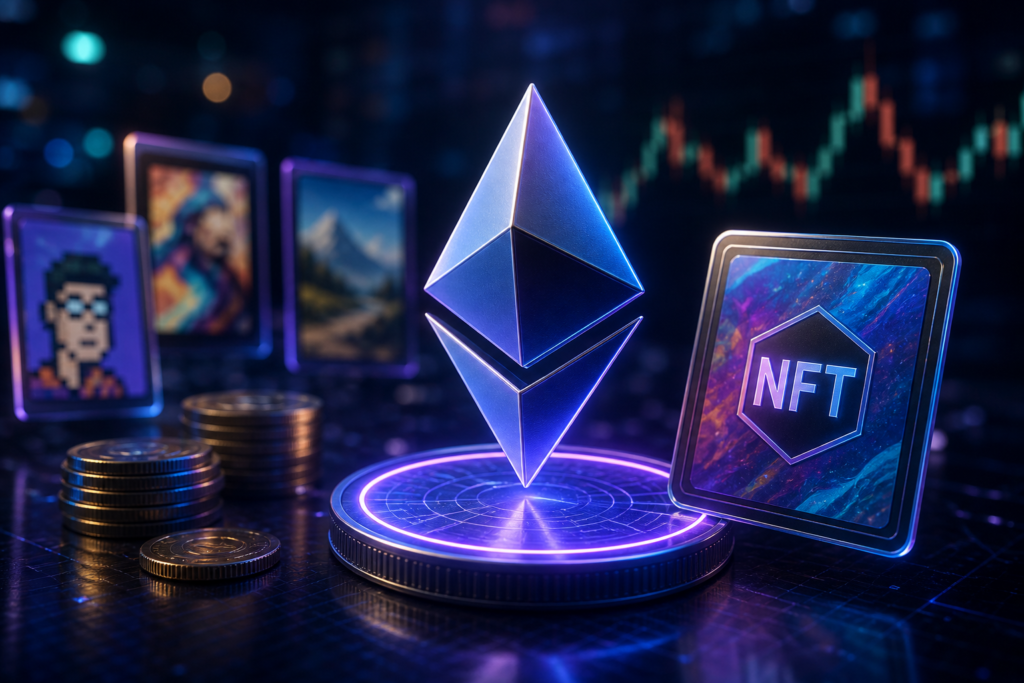
The cryptocurrency market has always been known for its volatility, unpredictability, and rapid evolution. Recently, a fascinating trend has emerged: Ethereum NFTs surge while market is mixed, creating a compelling contrast that has caught the attention of investors, collectors, and analysts alike. While major cryptocurrencies show inconsistent price movements and uncertain momentum, the NFT sector—particularly on Ethereum—has experienced renewed energy and growth.
This divergence signals a deeper shift in how digital assets are perceived and utilized. NFTs, or non-fungible tokens, have evolved beyond simple digital collectibles into complex assets tied to art, gaming, identity, and even real-world ownership. Ethereum remains the dominant blockchain powering this ecosystem, thanks to its smart contract capabilities and extensive developer community.
As the broader crypto market struggles to find clear direction, Ethereum NFTs are demonstrating resilience and, in some cases, explosive growth. This article explores why Ethereum NFTs are surging, what factors are influencing this trend, and what it means for the future of digital ownership in a mixed market environment.
Understanding the Current Mixed Crypto Market
The broader cryptocurrency market has entered a phase of uncertainty, marked by fluctuating prices, cautious investor sentiment, and macroeconomic pressures. While Bitcoin and other major altcoins show signs of both recovery and hesitation, the overall market lacks a consistent bullish or bearish trend.
Several factors contribute to this mixed outlook. Global economic conditions, including inflation concerns and shifting interest rates, have made investors more risk-averse. Regulatory developments in various regions also add layers of uncertainty, influencing how capital flows into crypto assets.
Despite these challenges, not all sectors within the crypto ecosystem are moving in tandem. The phrase “mixed crypto market” accurately reflects this divergence, where some segments struggle while others thrive. Ethereum NFTs are a prime example of a sector that is bucking the trend and gaining momentum even as the broader market hesitates.
Why Ethereum NFTs Are Surging
Renewed Interest in Digital Ownership
One of the key reasons Ethereum NFTs surge while market is mixed is the renewed interest in digital ownership. NFTs represent unique assets stored on the blockchain, giving users verifiable ownership of digital items. As the concept of digital identity and ownership becomes more mainstream, NFTs are gaining traction beyond niche communities.
This shift is particularly evident in industries such as art, gaming, and entertainment. Creators are leveraging NFTs to monetize their work directly, bypassing traditional intermediaries. Meanwhile, collectors are drawn to the uniqueness and scarcity of these digital assets.
Growth of NFT Utility
Another major driver behind the surge is the increasing utility of NFTs. Initially, NFTs were primarily associated with digital art and collectibles. However, their use cases have expanded significantly. Today, NFTs are used in gaming ecosystems, virtual real estate, ticketing systems, and membership programs.
This expansion has strengthened the value proposition of NFTs, making them more than just speculative assets. As NFT utility continues to grow, more users are entering the space, fueling demand on the Ethereum network.
Strong Ecosystem and Developer Activity
Ethereum’s robust ecosystem plays a crucial role in the NFT surge. The blockchain supports a wide range of decentralized applications (dApps), marketplaces, and tools that facilitate NFT creation, trading, and management.
Developers continue to innovate, introducing new standards and improving user experience. These advancements make it easier for both creators and buyers to participate in the NFT market, further driving growth.
Key Trends Driving Ethereum NFT Growth
Rise of Blue-Chip NFT Collections
The resurgence of established NFT collections has significantly contributed to the recent surge. These “blue-chip” projects often serve as benchmarks for the overall market, attracting both institutional and retail investors.
As confidence in these collections grows, so does the overall market activity. High-value transactions and increased trading volumes signal renewed interest and liquidity within the ecosystem.
Integration with Gaming and Metaverse
The intersection of NFTs with gaming and the metaverse is another major trend. Blockchain-based games are incorporating NFTs as in-game assets, allowing players to truly own and trade their items.
This integration creates new economic opportunities and enhances user engagement. As more gaming platforms adopt NFT technology, the demand for Ethereum-based NFTs continues to rise.
Institutional Interest in NFTs
Institutional players are gradually entering the NFT space, bringing credibility and capital. Their involvement signals long-term confidence in the technology and its potential applications.
This institutional interest also contributes to market stability, as larger investors tend to adopt more strategic and less speculative approaches.
Challenges Facing the Ethereum NFT Market

High Gas Fees and Scalability Issues
Despite its dominance, Ethereum faces challenges related to transaction costs and scalability. High gas fees can deter smaller investors and limit accessibility, especially during periods of high network activity.
Efforts to address these issues, including layer-2 solutions and network upgrades, are ongoing. However, scalability remains a critical factor influencing the long-term growth of NFTs on Ethereum.
Market Saturation and Quality Concerns
As the NFT market expands, concerns about saturation and quality have emerged. Not all projects offer genuine value, and the influx of low-quality NFTs can dilute the market.
Buyers are becoming more selective, focusing on projects with strong fundamentals, utility, and community support. This shift may lead to a healthier, more sustainable market in the long run.
Regulatory Uncertainty
Regulation remains a significant challenge for the NFT space. Governments around the world are still determining how to classify and regulate NFTs, creating uncertainty for investors and creators.
Clear regulatory frameworks could provide stability and encourage broader adoption, but the lack of clarity currently poses risks.
How Ethereum NFTs Compare to Other Blockchains
While Ethereum leads the NFT market, other blockchains are gaining traction. Networks offering lower fees and faster transactions are attracting users seeking alternatives.
However, Ethereum’s first-mover advantage, extensive infrastructure, and strong community continue to give it a competitive edge. The phrase “Ethereum NFT dominance” remains relevant, even as competition intensifies.
The ecosystem’s maturity and widespread adoption make it the preferred choice for high-value transactions and premium NFT projects.
Investor Sentiment and Market Behavior
Investor sentiment plays a crucial role in the NFT market. The current surge reflects a mix of optimism and strategic positioning. While the broader crypto market remains uncertain, NFTs are seen as a unique opportunity for diversification.
Traders and investors are increasingly focusing on long-term value rather than short-term speculation. This shift in behavior contributes to a more stable and sustainable market environment.
At the same time, the emotional and cultural aspects of NFTs continue to drive engagement. Unlike traditional assets, NFTs often carry personal and artistic significance, adding another layer of appeal.
Future Outlook for Ethereum NFTs
Continued Innovation and Adoption
The future of Ethereum NFTs looks promising, driven by continuous innovation and expanding use cases. As technology evolves, new applications will emerge, further integrating NFTs into everyday life.
From digital identity to decentralized finance, the potential of NFTs extends far beyond current use cases. This ongoing evolution will likely sustain growth even in a mixed market.
Role of Layer-2 Solutions
Layer-2 solutions are expected to play a critical role in addressing Ethereum’s scalability challenges. By reducing transaction costs and improving efficiency, these solutions can make NFTs more accessible to a broader audience.
As adoption of these technologies increases, the overall NFT ecosystem will benefit from enhanced usability and performance.
Increasing Mainstream Acceptance
Mainstream acceptance of NFTs continues to grow, with brands, artists, and organizations exploring their potential. This trend is likely to drive further adoption and legitimize the market.
As more users become familiar with NFTs, the barrier to entry will decrease, encouraging wider participation.
Conclusion
The phenomenon where Ethereum NFTs surge while market is mixed highlights the dynamic and multifaceted nature of the cryptocurrency ecosystem. While traditional crypto assets face uncertainty, NFTs are carving out a unique path driven by innovation, utility, and cultural relevance.
Ethereum remains at the center of this growth, supported by its मजबूत infrastructure and active community. Despite challenges such as high fees and regulatory uncertainty, the NFT market continues to evolve and expand.
This divergence between NFTs and the broader market underscores the importance of understanding different segments within the crypto space. As technology advances and adoption increases, Ethereum NFTs are well-positioned to remain a key driver of growth and innovation.
FAQs
Q. Why are Ethereum NFTs surging while the crypto market is mixed?
Ethereum NFTs are surging due to increased utility, strong ecosystem support, and growing interest in digital ownership, even as other crypto assets show inconsistent performance.
Q. What makes Ethereum the leading platform for NFTs?
Ethereum’s smart contract capabilities, large developer community, and established infrastructure make it the most popular and trusted platform for NFTs.
Q. Are NFTs a good investment in a mixed market?
NFTs can offer diversification and unique opportunities, but they also carry risks. Investors should focus on quality projects with strong fundamentals.
Q. What challenges do Ethereum NFTs face?
Key challenges include high gas fees, scalability issues, market saturation, and regulatory uncertainty.
Q. What is the future of Ethereum NFTs?
The future looks promising, with continued innovation, increased adoption, and the development of solutions to improve scalability and accessibility.