







































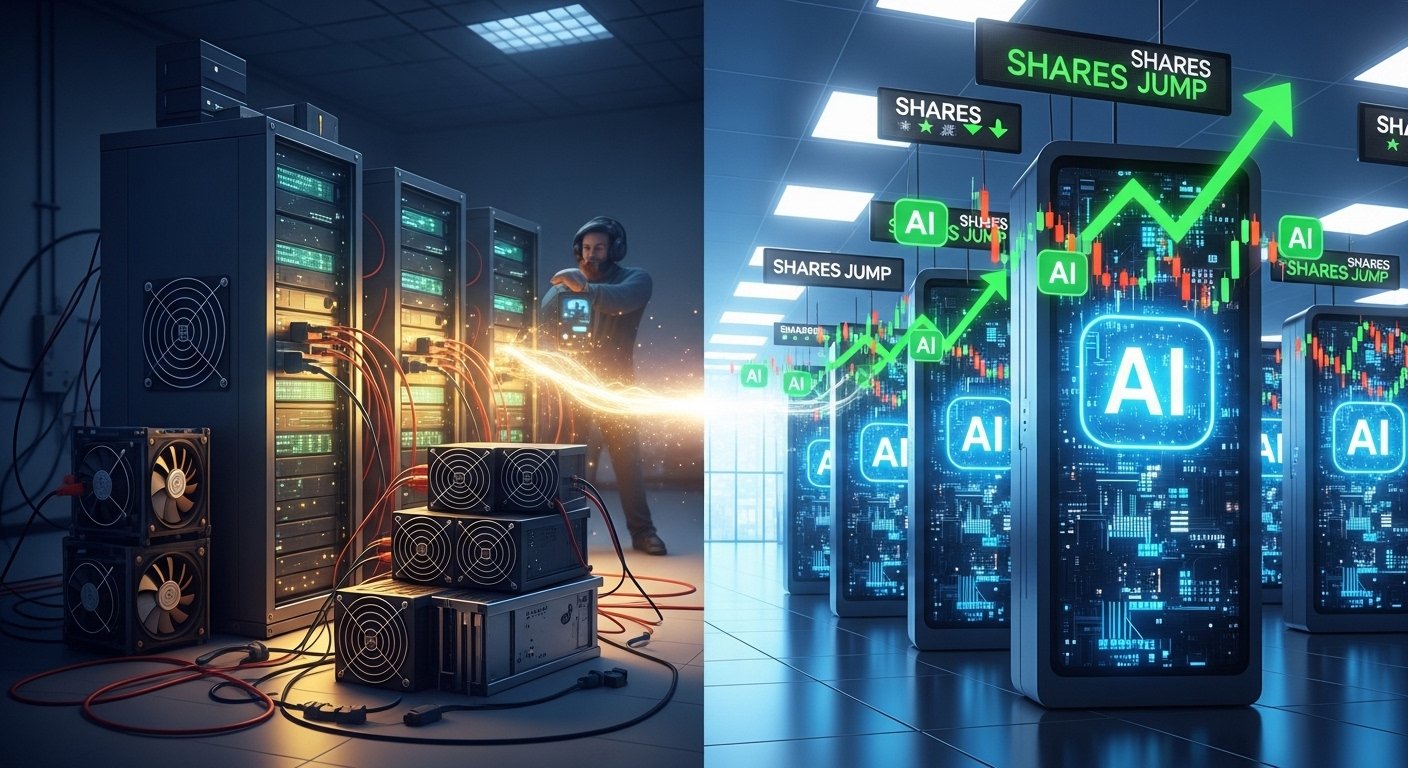
The digital asset industry is undergoing a profound transformation. For years, Bitcoin mining dominated headlines as companies invested heavily in hardware and infrastructure to validate transactions and earn rewards. However, a new trend is rapidly gaining momentum: a strategic pivot toward artificial intelligence (AI). This shift has not only redefined business models but has also significantly impacted market performance. Recently, Keel and Hive have experienced notable stock surges, signaling growing investor confidence in this transition.
The rise of AI-driven computing, combined with increasing pressure on mining profitability, has pushed companies to rethink their long-term strategies. As energy costs rise and regulatory scrutiny intensifies, firms that once relied heavily on cryptocurrency mining are now exploring high-performance computing (HPC) and AI infrastructure as more sustainable and lucrative alternatives.
This article explores why Keel and Hive shares are climbing, what’s driving the broader shift from Bitcoin mining to AI, and what it means for investors, the tech industry, and the future of digital infrastructure.
The Decline of Bitcoin Mining Profitability
Rising Costs and Market Volatility
The profitability of Bitcoin mining has become increasingly uncertain. Mining operations require massive energy consumption, and with global electricity prices fluctuating, operational costs have surged. Additionally, the periodic Bitcoin halving events reduce mining rewards, making it harder for companies to maintain margins.
At the same time, the volatile nature of cryptocurrency markets introduces further uncertainty. When Bitcoin prices drop, mining revenues decline sharply, often below breakeven levels. This has forced companies like Keel and Hive to reassess their dependence on mining as a primary revenue stream.
Regulatory Pressures
Governments worldwide are tightening regulations around cryptocurrency mining, particularly due to environmental concerns. Restrictions on energy usage and carbon emissions have made it more challenging for mining firms to operate freely. These regulatory hurdles have accelerated the search for alternative revenue streams, with AI infrastructure emerging as a promising solution.
The Rise of AI as a Strategic Alternative
Why AI Infrastructure Is Attractive
Artificial intelligence has become one of the fastest-growing sectors in technology. From machine learning models to generative AI applications, demand for computational power is skyrocketing. This demand aligns perfectly with the existing capabilities of mining companies, which already operate large-scale data centers.
By repurposing their infrastructure, firms can transition into AI data processing, cloud computing, and GPU-based workloads. Unlike Bitcoin mining, which depends on unpredictable market conditions, AI services offer more stable and recurring revenue streams.
Leveraging Existing Assets
One of the biggest advantages for companies like Keel and Hive is their existing investment in hardware and facilities. Their mining farms can be adapted for AI workloads with relatively lower additional investment compared to building new data centers from scratch.
This strategic reuse of infrastructure not only reduces costs but also accelerates entry into the competitive AI market. As a result, companies are able to pivot quickly while maintaining operational efficiency.
Keel’s Strategic Shift Toward AI
Transforming Business Operations
Keel has been at the forefront of the transition from Bitcoin mining to AI. The company has started reallocating resources toward high-performance computing services, targeting clients in sectors such as healthcare, finance, and autonomous systems.
This shift has been well-received by investors, leading to a noticeable increase in Keel’s share price. The market views this move as a forward-thinking strategy that positions the company for long-term growth.
Investor Confidence and Market Reaction
The surge in Keel shares reflects broader investor sentiment favoring companies that embrace innovation. As AI continues to dominate tech investments, firms that align with this trend are likely to outperform those that remain tied to traditional mining operations.
Hive’s Evolution Beyond Cryptocurrency Mining
Diversification Into AI and Cloud Services
Hive has also embraced the transition, focusing on AI computing infrastructure and cloud-based services. By leveraging its extensive GPU capabilities, Hive is positioning itself as a key player in the AI ecosystem.
This diversification strategy reduces reliance on volatile cryptocurrency markets while opening new revenue streams. As a result, Hive shares have experienced a significant uptick, mirroring the positive market response seen with Keel.
Strengthening Competitive Position
By entering the AI space, Hive is not only diversifying but also strengthening its competitive position. The company is now competing in a high-growth sector with strong demand, giving it a strategic edge over firms that remain solely focused on mining.
Market Trends Driving the Shift
Explosive Growth in AI Demand
The demand for artificial intelligence technologies is expanding rapidly across industries. From natural language processing to computer vision, businesses are increasingly relying on AI to drive innovation and efficiency.
This surge in demand has created a lucrative market for companies capable of providing the necessary computational power. As a result, the shift from Bitcoin mining to AI is becoming a logical and profitable transition.
Institutional Investment in AI
Institutional investors are pouring billions into AI development, further validating its long-term potential. This influx of capital is encouraging companies to pivot toward AI, as it offers more predictable growth compared to the cyclical nature of cryptocurrency markets.
Impact on Investors and the Broader Market
A Shift in Investment Strategies
The rise of AI is reshaping investment strategies. Investors are increasingly favoring companies that demonstrate adaptability and innovation. The surge in Keel and Hive shares highlights this trend, as markets reward firms that align with future growth sectors.
Long-Term Growth Potential
The transition from Bitcoin mining to AI offers significant long-term growth potential. As AI continues to evolve, companies that invest in this space are likely to benefit from sustained demand and revenue stability.
The Future of Bitcoin Mining and AI Integration
Coexistence of Mining and AI
While many companies are shifting toward AI, Bitcoin mining is unlikely to disappear entirely. Instead, a hybrid model may emerge, where firms balance mining operations with AI services to diversify revenue streams.
Innovation and Sustainability
The integration of AI into existing infrastructure also promotes sustainability. By optimizing resource usage and reducing reliance on energy-intensive mining, companies can improve their environmental footprint while enhancing profitability.
Conclusion
The surge in Keel and Hive shares marks a significant turning point in the digital asset industry. As companies continue their shift from Bitcoin mining to AI, they are redefining their business models and positioning themselves for future growth. This transition reflects broader market trends, including rising demand for AI technologies and increasing challenges in the mining sector.
For investors, this shift represents both an opportunity and a signal of where the industry is headed. Companies that embrace innovation and adapt to changing market conditions are likely to thrive in the evolving landscape. As AI continues to shape the future of technology, the transformation of mining firms into AI powerhouses may become one of the most defining trends of the decade.
FAQs
Q. Why are companies shifting from Bitcoin mining to AI?
Companies are moving toward AI because it offers more stable revenue, lower regulatory risk, and growing demand compared to the volatile nature of Bitcoin mining.
Q. How does AI benefit former mining companies?
AI allows these companies to repurpose their existing infrastructure for high-performance computing, creating new revenue streams and improving efficiency.
Q. Are Keel and Hive fully exiting Bitcoin mining?
Not necessarily. Many companies are adopting a hybrid approach, maintaining some mining operations while expanding into AI services.
Q. What risks are involved in this transition?
Challenges include high competition in the AI sector, technical complexities, and the need for significant investment in new capabilities.
Q. Is investing in companies shifting to AI a good idea?
While no investment is risk-free, companies embracing AI are generally seen as having strong long-term growth potential due to increasing demand for AI technologies.