





































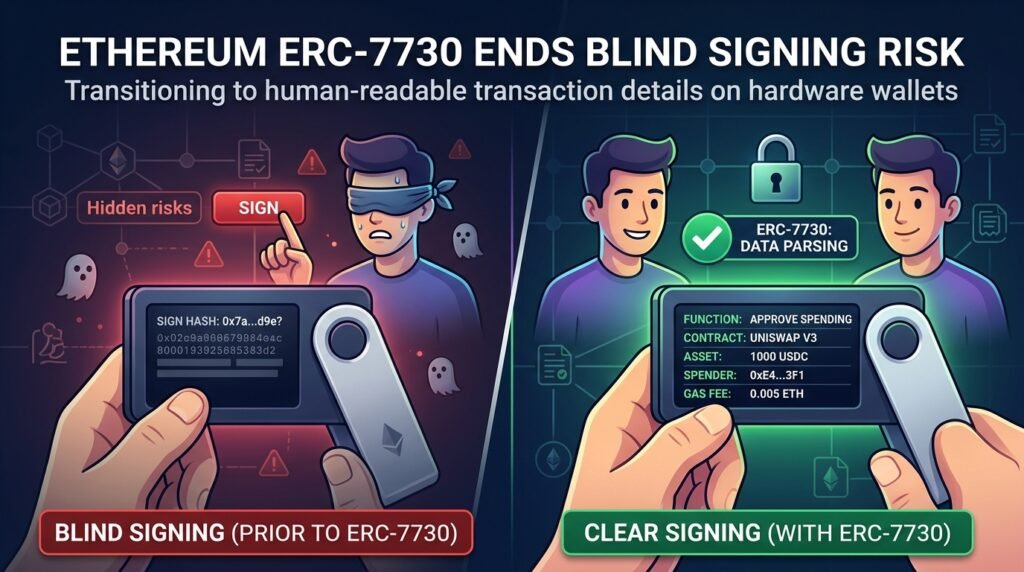
Ethereum has taken a major step toward improving user safety in decentralized finance with the introduction of the Clear Signing standard (ERC-7730). This new framework directly addresses one of the most dangerous weaknesses in the crypto ecosystem: blind signing, where users approve transactions without fully understanding what they are authorizing. For years, attackers have exploited unreadable transaction data, tricking users into signing malicious smart contract interactions that drain wallets or grant unlimited token approvals.
The new ERC-7730 standard aims to change this by transforming raw, technical blockchain data into clear, human-readable transaction summaries inside crypto wallets. Instead of seeing confusing hexadecimal code or incomplete ABI decoding, users will now see structured explanations of exactly what a transaction will do before they confirm it. This shift represents a major evolution in Ethereum wallet security, on-chain transaction clarity, and user experience design across Web3.
Developed through collaboration between the Ethereum Foundation ecosystem and wallet infrastructure contributors, Clear Signing is designed to eliminate ambiguity at the moment of approval. With phishing attacks and wallet exploits continuing to rise across decentralized applications, ERC-7730 arrives as a critical defense layer for the entire blockchain ecosystem.
What Is Ethereum’s Clear Signing Standard (ERC-7730)?
The ERC-7730 Clear Signing standard is a technical specification that defines how wallets should display transaction intent in a readable format before a user signs it. Instead of exposing users to raw calldata or cryptographic hashes, the standard allows smart contracts to attach structured metadata describing the transaction in plain language.
At its core, ERC-7730 introduces a structured JSON format that wallets can interpret to display human-friendly messages such as token transfers, swaps, NFT approvals, or DeFi interactions. This eliminates the gap between what users think they are approving and what the blockchain actually executes.
According to the specification, ERC-7730 enhances existing Ethereum standards like EIP-712 typed data signing by adding contextual display layers, formatting rules, and field-level interpretation. This means wallets can now translate complex contract interactions into understandable summaries without altering the underlying transaction logic.
In simple terms, ERC-7730 does not change Ethereum itself—it changes how transactions are shown to users, making approval screens far more transparent and secure.
The Problem of Blind Signing in Crypto Wallets
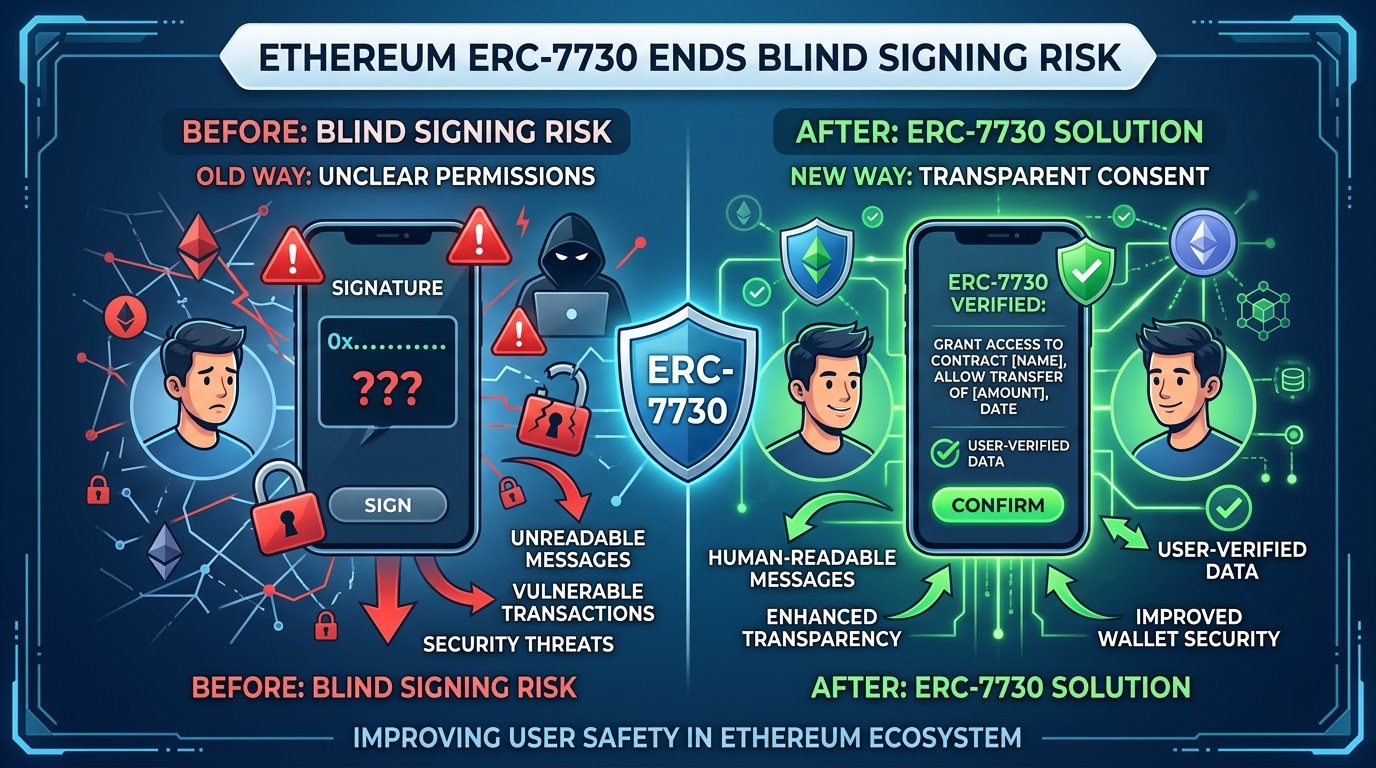
Before Clear Signing, most Ethereum wallets suffered from a critical usability flaw known as blind signing. This occurs when users are asked to approve transactions that they cannot fully interpret.
In many cases, wallets display raw hexadecimal calldata or vague prompts such as “Unknown Contract Interaction.” This creates a dangerous gap between user intent and blockchain execution, which attackers frequently exploit.
How Blind Signing Becomes a Security Risk
Blind signing is one of the most common attack vectors in Web3 phishing schemes. Malicious decentralized applications often present harmless-looking interfaces while embedding harmful instructions within the transaction data. Once a user signs, they may unknowingly:
- Approve unlimited token spending rights
- Transfer NFTs or assets to attacker-controlled wallets
- Execute hidden smart contract calls
- Grant permanent access to wallet funds
Reports from security analysts and wallet providers show that blind signing has contributed significantly to major losses in DeFi exploits and phishing campaigns. Some incidents have even resulted in losses exceeding billions across the industry, highlighting the urgency for a solution.
ERC-7730 directly targets this issue by replacing unreadable data with structured, verified transaction intent descriptions.
How ERC-7730 Improves Wallet Transparency
The key innovation behind ERC-7730 is its ability to create a clear, verifiable mapping between smart contract data and human-readable intent. Instead of displaying raw code, wallets can show users exactly what they are approving in structured language.
From Raw Data to Readable Intent
This transformation is achieved through a combination of structured metadata, standardized formatting rules, and contract-level descriptors that wallets can interpret consistently across ecosystems.
The standard also supports advanced cases such as batch transactions, DeFi interactions, and smart wallet operations, ensuring that even complex multi-step actions can be clearly explained to users before approval.
By introducing this clarity layer, ERC-7730 significantly reduces the risk of user error and phishing exploitation.
Why Clear Signing Is a Major Security Upgrade for Ethereum
The introduction of Clear Signing in Ethereum wallets represents one of the most important security improvements in recent years. It directly addresses the human factor in crypto security, which is often the weakest link in the system.
Reducing Phishing Attacks and Wallet Drains
Most successful crypto attacks do not rely on breaking cryptography—they rely on deceiving users into approving malicious transactions. Clear Signing disrupts this model by ensuring that users always see what they are signing in understandable terms.
By removing ambiguity, ERC-7730 makes it significantly harder for attackers to disguise harmful actions as legitimate ones.
Strengthening Hardware Wallet Security
Hardware wallets benefit especially from Clear Signing because they rely on secure displays for transaction verification. When combined with ERC-7730, hardware wallets can show exact transaction intent on-device, ensuring that what users see is what they sign.
This closes the gap between frontend deception and backend execution, strengthening trust in self-custody solutions.
The Role of ERC-7730 in the Future of Web3 UX
Beyond security, ERC-7730 plays a major role in improving Web3 user experience (UX). One of the biggest barriers to mainstream crypto adoption has been complexity. Most users struggle to understand smart contract interactions, which limits confidence in decentralized applications.
Clear Signing helps solve this by standardizing how information is presented across wallets and applications. This creates a more consistent and intuitive experience for users interacting with DeFi platforms, NFT marketplaces, and blockchain games.
Building Trust Through Standardization
When every wallet uses the same structured format for transaction descriptions, users gain a predictable experience. This consistency builds trust and reduces confusion, especially for newcomers entering the crypto ecosystem.
It also benefits developers, who can now design applications knowing that their transaction flows will be displayed clearly across compatible wallets.
Challenges and Adoption Barriers for ERC-7730
Despite its promise, the adoption of ERC-7730 will take time. The standard requires coordination between wallets, decentralized applications, and smart contract developers.
Key Challenges Include:
- Legacy smart contracts that lack Clear Signing metadata
- Wallets needing infrastructure upgrades to support the standard
- Risk of inconsistent implementation across platforms
- Need for widespread developer adoption
Additionally, ensuring that all transaction metadata is accurate and not manipulated remains a critical concern. Wallets must carefully verify and standardize how Clear Signing data is sourced to avoid introducing new attack vectors.
The Bigger Picture: Toward Safer Ethereum Transactions
ERC-7730 is part of a broader movement within Ethereum toward improving transaction transparency, wallet security, and user protection. As decentralized finance continues to grow, the need for readable and verifiable transaction intent becomes more important than ever.
Clear Signing represents a shift from machine-readable systems to human-centered blockchain design. Instead of forcing users to interpret complex code, Ethereum is evolving to meet users at their level of understanding.
This transition could significantly reduce losses from phishing attacks, improve user confidence, and accelerate mainstream adoption of decentralized applications.
Conclusion
Ethereum’s Clear Signing standard (ERC-7730) marks a major milestone in the evolution of blockchain usability and security. By replacing blind signing with structured, human-readable transaction descriptions, it directly addresses one of the most persistent risks in the crypto ecosystem.
As wallets and applications begin adopting this standard, users will gain a far clearer understanding of what they are approving on-chain. This not only reduces the risk of scams and wallet drains but also enhances trust in decentralized systems overall.
While adoption challenges remain, ERC-7730 lays the foundation for a safer and more transparent Web3 experience. In the long run, Clear Signing could become a fundamental building block of Ethereum’s user interface layer, ensuring that users always know exactly what they are signing.