





































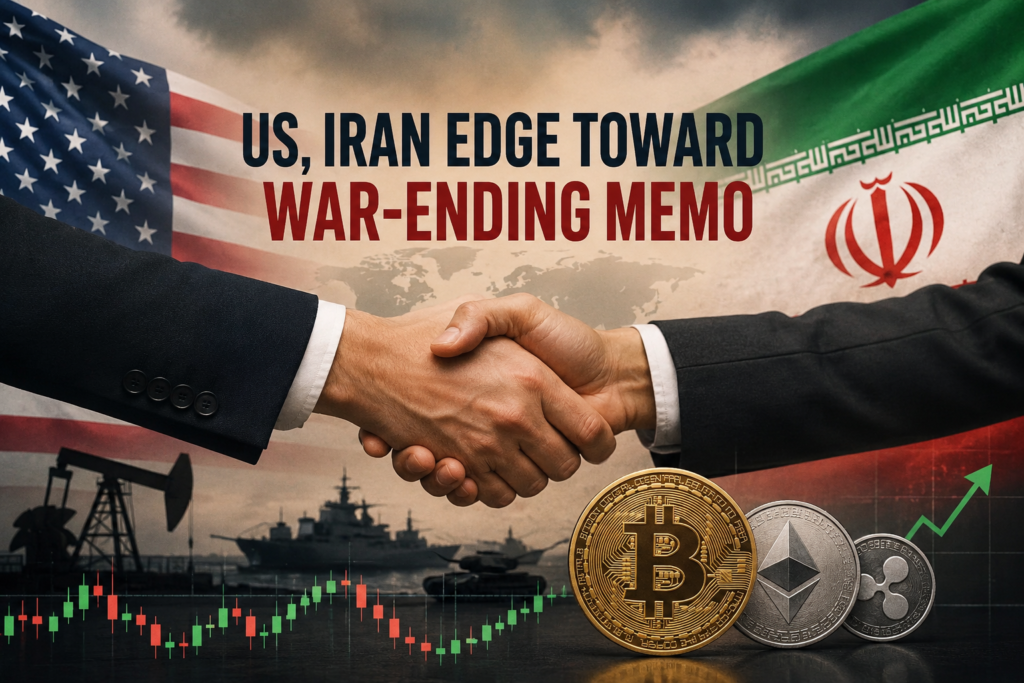
The geopolitical relationship between the United States and Iran has shaped global financial markets for decades. Every diplomatic breakthrough or military escalation between the two nations sends shockwaves through commodities, equities, and digital assets. Now, reports suggesting that the US and Iran may be moving closer to a war-ending memorandum have triggered renewed attention across the global investment landscape. At the same time, the cryptocurrency market is carefully tracking the situation as traders evaluate how a potential diplomatic resolution could reshape the broader risk environment.
The possibility of a war-ending memo arrives during a period of heightened economic uncertainty. Investors remain cautious because inflation pressures, interest rate concerns, and fragile global growth continue to influence financial markets. Consequently, crypto traders are responding to geopolitical headlines more aggressively than before. Bitcoin, Ethereum, and other digital assets increasingly behave like macro-sensitive investments rather than isolated speculative tools.
As discussions between Washington and Tehran progress, analysts are debating whether easing tensions could ignite a broader “risk-on” rally across crypto markets. Others warn that temporary agreements often fail in the Middle East, meaning volatility could remain elevated. Nevertheless, the current negotiations represent one of the most closely watched geopolitical developments for both traditional finance and digital asset investors.
This evolving situation highlights how global politics now directly affects crypto sentiment. Digital assets no longer operate outside the financial system. Instead, they react to oil prices, military risks, Federal Reserve policy, and international diplomacy. Therefore, the developing US-Iran story has become a major narrative shaping short-term crypto trading behavior.
Why the US-Iran Relationship Matters to Global Markets
The relationship between the United States and Iran has long carried enormous economic implications. Whenever tensions rise, investors typically move capital into safer assets such as gold, US Treasury bonds, and the US dollar. Conversely, signs of diplomatic progress often encourage investors to return toward higher-risk investments, including equities and cryptocurrencies.
Iran occupies a strategically critical position in global energy markets. The country sits near the Strait of Hormuz, a shipping route responsible for transporting a significant portion of the world’s oil supply. As a result, even minor military confrontations can disrupt oil flows and trigger immediate energy price spikes. Higher oil prices then create inflationary pressure across the global economy.
Because inflation influences central bank policy, crypto traders closely monitor geopolitical developments involving Iran. If tensions ease and oil prices stabilize, investors may believe that inflation could cool more quickly. Consequently, markets may expect more favorable monetary conditions, which historically support digital assets and speculative investments.
At the same time, geopolitical uncertainty often drives sharp swings in investor sentiment. Crypto markets react especially fast because digital assets trade continuously without traditional market closures. Therefore, headlines surrounding the potential war-ending memo immediately influence Bitcoin and altcoin price movements.
The Meaning Behind a Potential War-Ending Memo
A war-ending memorandum does not necessarily mean a full peace treaty. Instead, it generally represents a formal understanding designed to reduce military escalation, establish communication frameworks, and create pathways for future negotiations. In the current context, the memo reportedly focuses on reducing regional tensions while preventing further military confrontation.
For investors, the symbolism matters almost as much as the actual policy details. Financial markets often respond positively when major geopolitical risks appear manageable. Consequently, even limited diplomatic progress can improve global market sentiment.
Crypto traders are particularly sensitive to these signals because digital assets thrive in environments where investors feel comfortable taking risks. When fear dominates markets, speculative investments usually suffer. However, when confidence improves, capital often flows back into growth-focused sectors such as technology stocks and cryptocurrencies.
Moreover, a reduction in Middle Eastern tensions could stabilize energy markets. Lower oil volatility may ease inflation concerns, which in turn could reduce pressure on central banks to maintain aggressive interest rate policies. This chain reaction directly influences crypto valuations because lower rates typically increase liquidity in financial markets.
How Bitcoin Reacts to Geopolitical Uncertainty
Bitcoin was originally promoted as a decentralized hedge against traditional financial instability. Yet over the last several years, its behavior has evolved significantly. Today, Bitcoin frequently trades like a high-risk macro asset rather than a defensive safe haven.
When geopolitical tensions intensify, Bitcoin sometimes experiences short-term inflows because investors seek alternatives outside government-controlled systems. However, broader market panic usually pushes institutional investors toward cash and low-risk assets instead. Therefore, Bitcoin often falls alongside technology stocks during major crises.
The current US-Iran developments illustrate this changing market dynamic. Traders are not simply viewing Bitcoin as “digital gold.” Instead, they are evaluating how the diplomatic situation may affect interest rates, inflation expectations, and global liquidity conditions.
If the war-ending memo successfully reduces uncertainty, Bitcoin could benefit from improved investor confidence. Additionally, easing oil prices may reduce inflationary fears, allowing markets to anticipate looser monetary conditions. Historically, these environments have supported crypto rallies.
Nevertheless, the relationship between geopolitics and crypto remains complex. Sudden diplomatic failures or unexpected military incidents could rapidly reverse positive sentiment. Therefore, volatility will likely remain elevated while negotiations continue.
Ethereum and Altcoins Face a Different Challenge
While Bitcoin dominates discussions around macroeconomic trends, Ethereum and altcoins often react more aggressively to changes in investor sentiment. These assets typically experience larger gains during bullish periods but also suffer sharper losses during uncertainty.
A successful diplomatic breakthrough between the US and Iran could encourage investors to move further out on the risk curve. Consequently, speculative altcoins may attract renewed attention. Sectors such as decentralized finance, artificial intelligence tokens, gaming cryptocurrencies, and meme coins could see increased trading activity.
However, Ethereum faces additional considerations beyond geopolitics. Investors continue monitoring network scalability improvements, staking growth, and regulatory developments. Therefore, while macro conditions matter, Ethereum’s price trajectory also depends on internal blockchain ecosystem factors.
Altcoins remain especially vulnerable to sudden market reversals. If negotiations collapse or geopolitical tensions re-emerge, smaller digital assets could experience substantial sell-offs. As a result, many traders are maintaining cautious positioning despite recent optimism.
Oil Prices Remain the Key Variable
Oil prices may ultimately determine how strongly crypto markets react to the US-Iran negotiations. Energy costs influence inflation, consumer spending, corporate profitability, and central bank policy. Therefore, oil sits at the center of the global economic equation.
When tensions rise in the Middle East, crude oil prices usually surge because traders fear supply disruptions. Higher oil prices often increase inflationary pressure worldwide. Central banks then respond with tighter monetary policy, which generally hurts speculative investments.
Conversely, diplomatic progress between the US and Iran could reduce fears surrounding oil supply disruptions. Lower energy prices may improve global economic stability while supporting investor appetite for risk assets. Consequently, crypto traders are closely tracking crude oil movements alongside diplomatic headlines.
Furthermore, Iran’s potential return to broader energy markets could reshape supply expectations. Increased oil exports may place downward pressure on global prices over time. This possibility adds another layer of complexity to investor calculations.
Because crypto markets increasingly respond to macroeconomic conditions, oil volatility now plays a larger role in shaping digital asset sentiment than many investors previously believed.
Institutional Investors Are Watching Closely
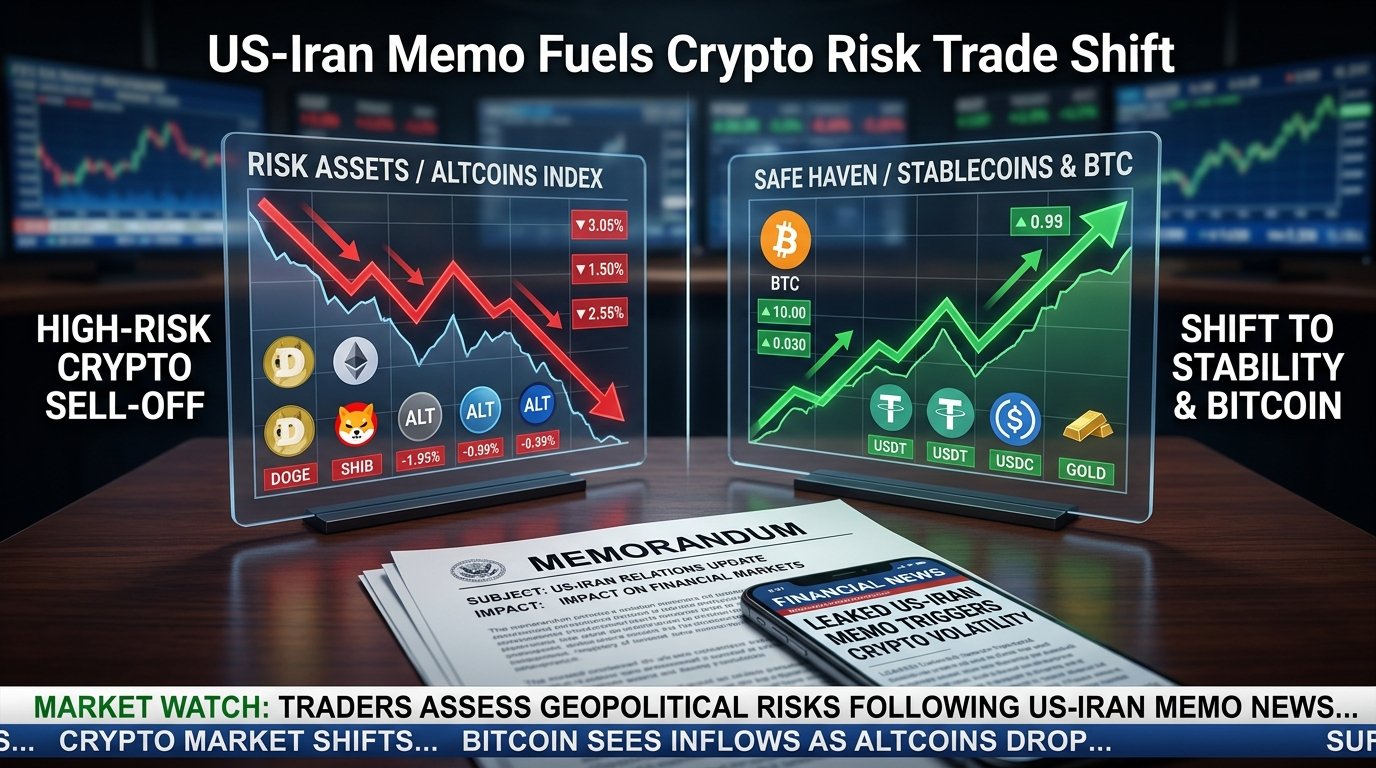
Institutional participation has transformed the cryptocurrency market over the past several years. Hedge funds, asset managers, pension funds, and large corporations now influence crypto price action significantly. These institutions often approach digital assets through a macroeconomic lens.
As a result, geopolitical developments like the US-Iran negotiations matter more than ever for crypto trading. Institutional investors analyze how diplomatic progress may affect interest rates, energy markets, inflation, and global liquidity before adjusting their crypto exposure.
Many institutions also use Bitcoin as part of broader portfolio strategies tied to risk management. Therefore, improving geopolitical conditions could encourage greater institutional participation in crypto markets. Increased confidence often leads to stronger capital inflows into both Bitcoin exchange-traded products and direct crypto investments.
At the same time, institutional traders remain cautious about geopolitical unpredictability. Diplomatic negotiations can shift rapidly, especially in the Middle East. Consequently, many firms are maintaining flexible strategies rather than making aggressive directional bets.
This cautious optimism explains why crypto markets have shown resilience without entering full speculative euphoria. Investors recognize the opportunity for improved market conditions, but they also understand the risks of sudden geopolitical deterioration.
The Federal Reserve Connection
The Federal Reserve plays a critical role in how crypto markets respond to geopolitical developments. Although the US-Iran situation appears primarily diplomatic, its economic consequences could directly influence monetary policy expectations.
If easing tensions contribute to lower oil prices and softer inflation readings, markets may believe the Federal Reserve could adopt a more accommodative stance. Lower interest rates generally support risk assets because borrowing costs decline and liquidity conditions improve.
Crypto markets have historically performed well during periods of abundant liquidity. Therefore, traders are connecting the US-Iran negotiations to broader expectations surrounding future Federal Reserve policy decisions.
Additionally, reduced geopolitical uncertainty may strengthen overall market confidence. Investors often become more willing to allocate capital toward innovative sectors such as blockchain technology during stable economic periods.
However, inflation remains stubborn in many parts of the global economy. Even if oil prices stabilize, the Federal Reserve may continue prioritizing inflation control. Consequently, crypto investors must balance optimism surrounding diplomacy with realistic expectations regarding monetary policy.
Market Psychology and the Crypto Risk Trade
The concept of the “risk trade” has become central to understanding modern crypto behavior. Risk trades involve investments that typically perform well when economic confidence improves and struggle during uncertainty. Cryptocurrencies increasingly fall into this category.
The current US-Iran developments highlight how strongly market psychology influences digital assets. Traders are reacting not only to concrete policy outcomes but also to broader emotional shifts in investor sentiment.
When markets perceive geopolitical progress, optimism spreads quickly. Investors become more willing to buy speculative assets because they expect improved economic stability. As a result, Bitcoin and altcoins often rally alongside technology stocks and other growth-oriented investments.
Conversely, fear can trigger rapid sell-offs. Crypto markets remain especially vulnerable because of their high volatility and 24-hour trading structure. Negative headlines can spark immediate liquidations across leveraged trading positions.
Therefore, the developing diplomatic situation represents more than a political story. It has become a powerful psychological driver shaping short-term crypto market behavior.
Could Crypto Become a Safe Haven Eventually?
Despite Bitcoin’s recent correlation with risk assets, some analysts still believe cryptocurrencies could evolve into long-term safe-haven investments. They argue that decentralized systems may eventually provide protection against geopolitical instability, currency debasement, and financial system risks.
The US-Iran situation provides an interesting test case for this theory. During periods of uncertainty, some investors do turn toward Bitcoin as an alternative store of value. Moreover, citizens in politically unstable regions sometimes rely on cryptocurrencies to preserve wealth or move capital across borders.
However, institutional participation has changed Bitcoin’s trading profile. Large investors frequently treat crypto like a technology-oriented growth asset rather than a defensive hedge. Consequently, Bitcoin currently behaves more like a high-volatility macro investment.
Still, the long-term evolution of crypto remains uncertain. If global confidence in traditional financial systems weakens over time, decentralized assets could gradually strengthen their safe-haven reputation.
For now, though, most traders continue viewing crypto through the lens of the global risk trade rather than as a fully defensive asset class.
What Traders Should Watch Next
Crypto traders monitoring the US-Iran negotiations should focus on several critical indicators over the coming weeks. Diplomatic statements from both governments will remain important, but broader market signals may prove equally influential.
Oil price movements will likely serve as the clearest real-time indicator of market confidence. If crude prices stabilize or decline, investors may interpret that as evidence of improving geopolitical conditions. Conversely, sudden spikes could signal renewed tension.
Federal Reserve commentary also deserves close attention. Even positive diplomatic developments may not trigger sustained crypto rallies if central banks maintain restrictive monetary policies.
Additionally, traders should watch institutional investment flows into Bitcoin products and crypto-related equities. Strong inflows would suggest growing confidence in the broader risk environment.
Finally, volatility itself may remain elevated regardless of diplomatic progress. Geopolitical negotiations rarely follow a smooth path, especially in regions with long histories of conflict and mistrust. Therefore, investors should prepare for sudden sentiment swings.
Conclusion
The emerging possibility of a war-ending memo between the United States and Iran has become a major focal point for global financial markets. While diplomats attempt to reduce tensions, crypto investors are carefully analyzing what the negotiations could mean for risk sentiment, oil prices, inflation, and monetary policy.
This moment highlights how interconnected the cryptocurrency market has become with the broader global economy. Bitcoin and Ethereum no longer trade in isolation. Instead, they react to geopolitical developments, central bank expectations, and macroeconomic trends just like traditional financial assets.
If diplomatic progress continues, crypto markets could benefit from improving investor confidence and easing inflation concerns. However, uncertainty remains high, and geopolitical negotiations can change rapidly. Consequently, traders must balance optimism with caution.
Ultimately, the US-Iran story demonstrates that digital assets now occupy a central position within the global financial system. As geopolitical events continue shaping economic expectations, crypto markets will likely remain highly sensitive to developments far beyond blockchain technology itself.
FAQs
Q. What is the proposed US-Iran war-ending memo?
The proposed memo is believed to be a diplomatic framework designed to reduce military tensions, improve communication, and prevent further escalation between the United States and Iran.
Q. Why are crypto markets reacting to US-Iran negotiations?
Crypto markets respond because geopolitical developments influence oil prices, inflation expectations, investor sentiment, and central bank policies, all of which affect digital asset valuations.
Q. How could lower oil prices impact Bitcoin?
Lower oil prices may reduce inflation pressure, which could encourage more supportive monetary policies from central banks. This environment often benefits Bitcoin and other risk assets.
Q. Is Bitcoin acting as a safe haven during geopolitical crises?
Bitcoin sometimes attracts investors during uncertainty, but it currently behaves more like a high-risk macro asset than a traditional safe haven such as gold.
Q. What should crypto investors monitor during the negotiations?
Investors should track diplomatic updates, oil price movements, Federal Reserve commentary, institutional crypto inflows, and overall market sentiment for signs of changing risk conditions.